How Zambian Startup ZeroAI Brings STEM to Underserved Schools
Zambian startup ZeroAI Technologies is changing how robotics and intelligent systems are introduced in schools. This is especially true in places where infrastructure is limited. Instead of relying on internet access or stable electricity, the company builds practical, self-contained lab setups. These allow students to learn by doing, regardless of their environment. Founded in 2014
How Zambian Startup ZeroAI Brings STEM to Underserved Schools
Zambian startup ZeroAI Technologies is changing how robotics and intelligent systems are introduced in schools. This is especially true in places where infrastructure is limited. Instead of relying on internet access or stable electricity, the company builds practical, self-contained lab setups. These allow students to learn by doing, regardless of their environment.
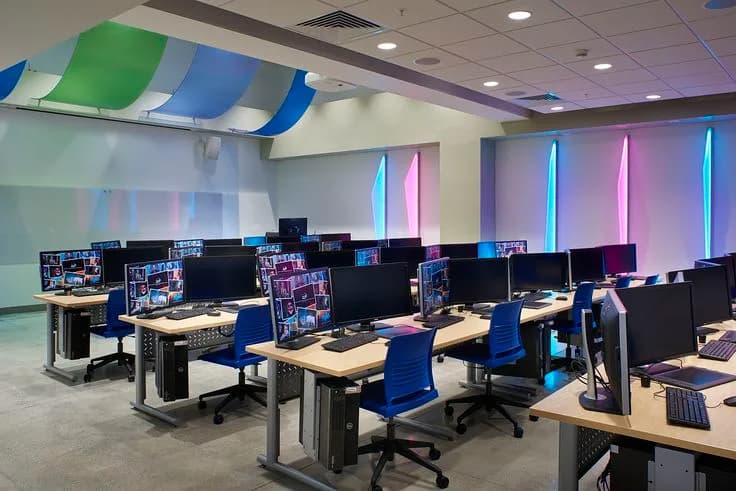
Founded in 2014 by Lottie Mukuka, ZeroAI doesn’t just supply equipment. It delivers complete lab environments that schools can run on their own. Each setup includes custom-built furniture, Arduino and ESP32 kits, and sensors. It also comes with offline simulation tools, a structured learning programme, and teacher training. Everything is designed to work together as one system.
Designed for the Schools Often Overlooked
What makes the model stand out is its ability to function without the basics most education technology depends on. Many schools across Africa and similar markets want to introduce STEM subjects. However, they often lack connectivity, devices, or technical support. ZeroAI was built with these exact constraints in mind.
“We built for the schools everyone else ignores under-resourced, rural, or infrastructure-poor,” Mukuka said.
While other providers offer individual kits or tools, ZeroAI focuses on the full setup. It combines hardware, content, and training in a way schools can sustain. According to Mukuka, there was a clear gap in the market. Schools needed something practical, affordable, and designed for their reality.
The company has been fully bootstrapped. It has already worked with more than 10,000 students across 40 schools in Zambia, Zimbabwe, South Africa, and India. It is now moving into larger infrastructure projects. This includes a recent agreement in India to build a full robotics lab.
That project is an important step in ZeroAI’s growth. The plan is to deliver the lab successfully and use it as proof of concept. From there, the company aims to expand further within the Indian school system. The refined model will then be brought back into Zambia.
A Model Built on Sustainability
ZeroAI generates revenue through lab installations, training programmes, and remote technical support. Training has helped sustain operations, but larger contracts drive growth. According to Mukuka, a single full lab deployment can cover several months of operating costs. The business is still building toward profitability at scale.
At a time when access to quality education remains uneven, ZeroAI’s approach is grounded in practicality. It is less about advanced technology and more about making learning possible where it usually isn’t.