Africa is getting more Big Tech investment, but the basics are still holding it back
Google, Meta, Microsoft, Amazon and Starlink are putting more money into Africa's digital infrastructure. Subsea cables are reaching more parts of the continent, satellite internet is expanding and cloud companies are adding services for African customers. For businesses that have spent years dealing with unreliable connections, that is useful. There is still a problem underneath
Africa is getting more Big Tech investment, but the basics are still holding it back
Google, Meta, Microsoft, Amazon and Starlink are putting more money into Africa’s digital infrastructure. Subsea cables are reaching more parts of the continent, satellite internet is expanding and cloud companies are adding services for African customers. For businesses that have spent years dealing with unreliable connections, that is useful. There is still a problem underneath all of this investment. Africa does not have enough data centres or reliable electricity to support the amount of computing that is expected to come online. The African Data Centres Association estimates that the continent has only about 0.6% of global data-centre capacity. The internet connections are improving, but much of the infrastructure needed to process and store the data is still limited.
More internet does not mean more local computing
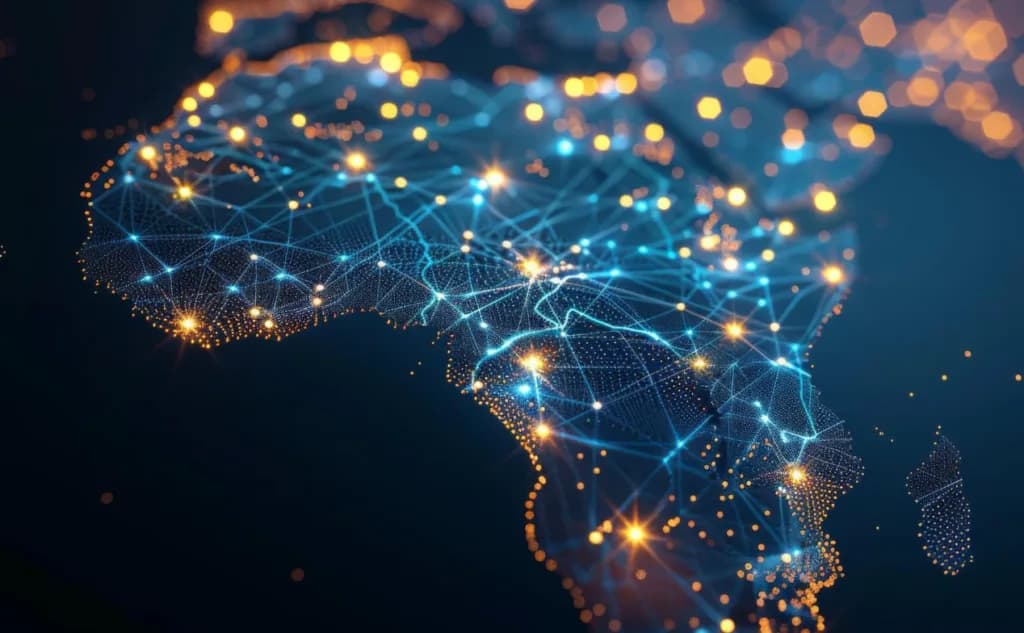
Google’s Equiano cable connects Africa with Europe, while the Umoja project is adding another route between Africa and Australia. Meta’s 2Africa cable is increasing international connectivity between African countries and other regions. Starlink is approaching the market differently, using satellites to provide internet access in places where fibre networks are difficult or expensive to build. Amazon is also working on its own satellite network. For a business, better connectivity can make a real difference. The next step is what happens after the connection is established. Cloud software, customer databases and AI applications all need computing infrastructure somewhere. If there is not enough capacity locally, that data may have to be processed in another country.
Data centres remain concentrated in a few markets
South Africa has the largest data-centre market on the continent. Nigeria and Kenya are also attracting major investment, while many other African countries have relatively little local capacity. The African Data Centres Association estimates that Africa has around 360MW of operational data-centre capacity, with more facilities under construction and in the pipeline. A business operating outside the main data-centre markets may therefore depend on facilities in another country. For an ordinary business using email or accounting software, this may not make much difference. Banks, fintech companies, governments and businesses running AI applications have different requirements. They need reliable access to larger amounts of computing power, and distance can affect cost and performance.
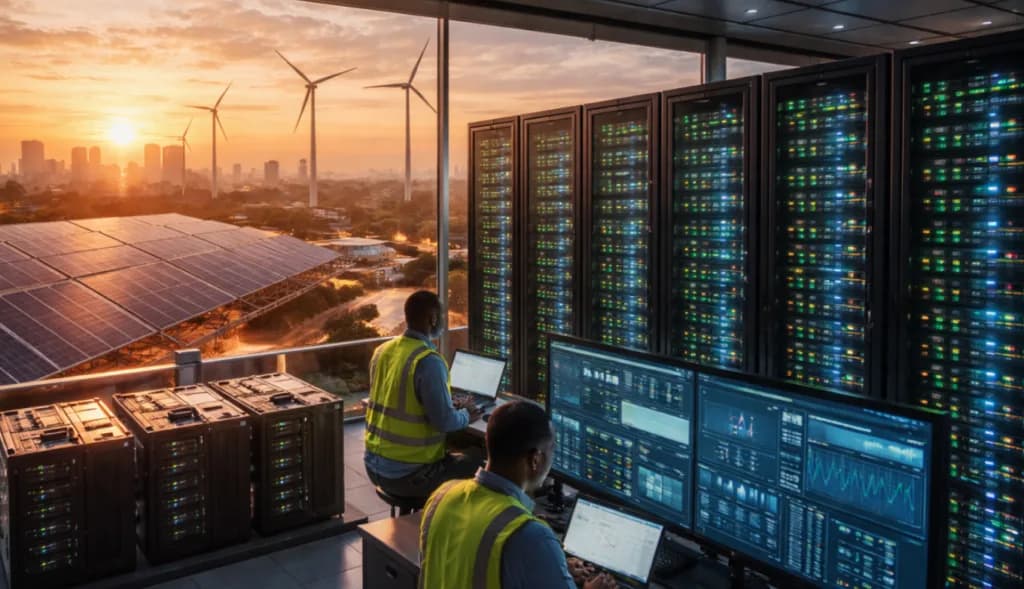
Data centres use electricity around the clock. Servers have to keep running, cooling systems have to keep working and backup systems need to be available when the main supply fails. That is difficult in markets where electricity supply is already under pressure. About 600 million people in sub-Saharan Africa still do not have access to electricity, according to the World Economic Forum. At the same time, electricity demand from African data centres is expected to rise from around 0.4GW to 2.2GW by 2030. That puts a new type of demand on countries that are still trying to expand electricity access for households and existing businesses.
Kenya shows how big the demand can be
Kenya provides a good example. A planned Microsoft and G42 data-centre project could eventually require up to 1GW of electricity. Kenya’s effective grid capacity is estimated at around 2.4GW. A single project requiring that much power would therefore be a significant customer for the country’s electricity system. Geothermal energy has been considered as part of the solution because Kenya already has substantial geothermal resources and can generate electricity from them more consistently than some other renewable sources. Other African countries hoping to attract large cloud and AI facilities will have to deal with the same calculation. The question is not only whether a country has land, fibre and customers. It also needs enough electricity to keep the facility operating.
South Africa has more infrastructure, but power remains an issue
South Africa has the largest data-centre market in Africa and already has the fibre networks, international cables and cloud infrastructure that large technology companies need. Electricity remains something operators have to plan around. Some data centre companies are turning to private power agreements, renewable energy and battery storage to reduce their dependence on the national grid. Those options can improve reliability, but they also increase operating costs. That becomes important when technology companies compare different African markets. A country may have good connectivity and attractive investment incentives, but unreliable or expensive electricity can still make a project difficult to justify.
The infrastructure behind the internet needs to catch up
Big Tech’s investment in Africa is likely to continue. More subsea cables will arrive. Satellite services will reach more customers. Cloud computing and AI will become more common among African businesses. The question is whether the infrastructure underneath those services can grow at the same pace. More data centres are needed. Electricity networks need to become more reliable. Countries outside the main technology hubs also need enough infrastructure to attract their own investment. For businesses, this is not simply a technology issue. It affects the cost of cloud services, the performance of online applications and how much a company depends on infrastructure outside its own country. Africa is becoming better connected. The next challenge is making sure there is enough power and computing capacity behind those connections.