AMACO’s $1.5bn Kenya AI project puts the power problem in focus
Africa is talking more about AI data centres, but there is a basic question that comes with every large project: where will the electricity come from? AMACO Energy Group, a Greek multinational, is proposing a $1.5 billion data-centre project in Mombasa, Kenya. Its HERCULES system would combine the data centre with electricity generation and cooling,
AMACO’s $1.5bn Kenya AI project puts the power problem in focus
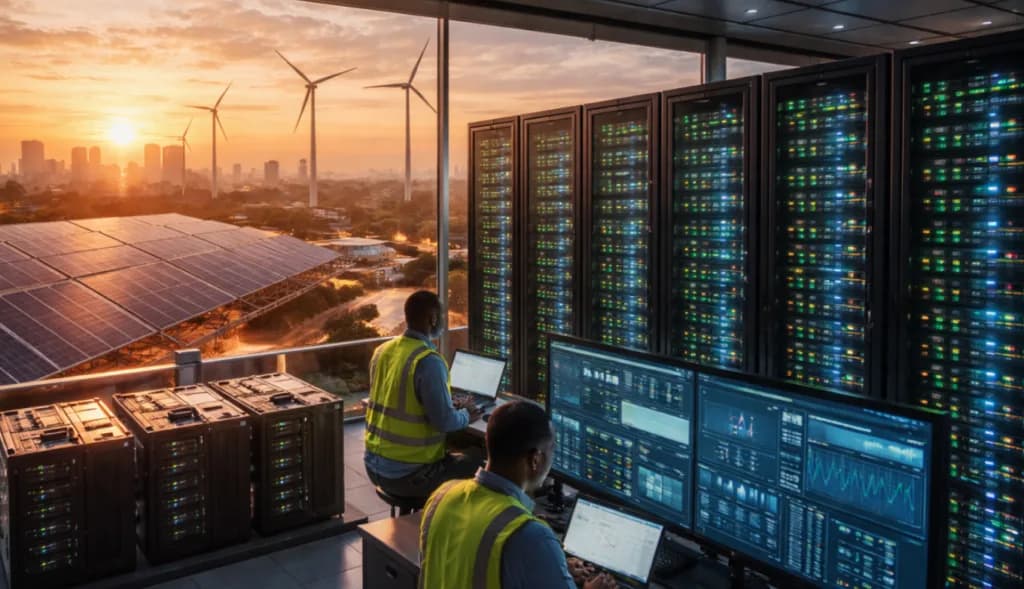
Africa is talking more about AI data centres, but there is a basic question that comes with every large project: where will the electricity come from? AMACO Energy Group, a Greek multinational, is proposing a $1.5 billion data-centre project in Mombasa, Kenya. Its HERCULES system would combine the data centre with electricity generation and cooling, allowing it to operate without depending entirely on Kenya’s national grid. The initial plan uses liquefied natural gas (LNG), with the option of adding renewable energy and hydrogen later. AMACO founder and CEO Theodore Theodoropoulos is in Nairobi discussing the project with Kenyan officials and potential partners.
There is still a lot that is unknown. The project has not been built. Its financing, customers, approvals, fuel requirements and environmental impact still need to be worked out. But the proposal is useful because it puts the electricity question right next to the data-centre question. That is going to matter as African countries try to attract larger AI infrastructure projects.
AI data centres need a lot more power
The difference between a traditional data centre and an AI facility can be significant. A conventional data centre might use 10MW to 25MW. An AI-focused facility can require 100MW or more, while some of the biggest projects being planned globally are measured in gigawatts. For a country like Kenya, a 100MW customer cannot simply be treated like another commercial development. The electricity has to be available around the clock. That is partly why AMACO wants to generate power alongside the data centre.
The International Energy Agency says data centres can be built in two or three years, while the electricity infrastructure needed to support them can take considerably longer. It estimates that grid constraints could delay about 20% of planned data-centre projects globally. The problem for African markets could be even more practical. A country can attract the investment, approve the site and connect the fibre, only to find that the electricity system cannot support the facility at the required scale.
Kenya is already dealing with higher demand
Kenya’s electricity demand reached a record peak of 2,439MW in December 2025. Thermal generation also increased during the first half of the 2025/26 financial year, while electricity imports from Ethiopia and Uganda rose. Put a 100MW data centre into that system and it becomes a noticeable new load. The facility would have potential demand equal to roughly 4% of Kenya’s current peak electricity demand. Kenya does have an advantage.
It has around 1GW of geothermal capacity and gets most of its electricity from renewable sources. But that does not mean there is unlimited spare capacity. A large data centre still needs additional electricity, and someone has to pay for the generation and transmission needed to provide it. That could mean dedicated power plants, more transmission capacity, renewable projects with storage or a separate power system built for the data centre. AMACO is going with the last option. Whether that proves cheaper or more reliable than connecting to the wider grid will depend on the final numbers.
Water could become another constraint
Then there is cooling. AI chips generate a lot of heat, and higher computing density means more heat has to be removed from the facility. AMACO says its HERCULES system would combine cooling with the power infrastructure and that the Mombasa project would avoid putting additional pressure on local water resources. That is important in Mombasa. The city has experienced water shortages and relies partly on supplies from outside the county.
So the cooling system is not something that can be left to the end of the project. Different data centres use different amounts of water depending on how they are cooled. Some newer facilities use liquid cooling and closed loop systems to reduce consumption. The questions are fairly simple. How much water will the facility use? Where will it come from? Will it need potable water? And what happens when there is a shortage? Those answers matter if a large industrial facility is being built in a city where water is already under pressure.
Mombasa has a few things going for it
Mombasa also has something Nairobi does not. Most of Kenya’s existing data-centre capacity is concentrated around Nairobi because that is where the country’s banks, telecoms companies, technology businesses and government institutions are based. Mombasa is closer to the international connectivity coming into the country. Several submarine cables land along the coast, while the city also has a major port. That fits with AMACO’s proposed use of LNG. The choice of Mombasa therefore makes some sense on infrastructure grounds. It also raises a question for other African markets. Does the next data centre really need to be built where the technology companies are?
If electricity and fibre are available elsewhere, it may make more sense to put the computing infrastructure there. Kenya has geothermal resources. Ethiopia has hydro. Nigeria and Mozambique have gas. Morocco has invested heavily in solar and wind. Those resources could have more influence on data-centre locations as AI facilities get larger.
LNG is not an automatic win
AMACO’s decision to start with LNG is another part of the proposal that will need to be tested. Gas has an obvious advantage for a data centre: it can generate electricity continuously. The IEA estimates that natural gas currently supplies about 26% of global data-centre electricity. But Kenya already has geothermal power that can provide steady electricity. That means AMACO’s LNG model will have to compete on cost and reliability. There is also the emissions question. Many of the technology companies that could become customers are trying to reduce the carbon footprint of their data centres. The source of the electricity can therefore affect which facilities they choose. AMACO says HERCULES can incorporate renewable energy and hydrogen later. For Kenya, the question will be whether that flexibility becomes part of the actual project or remains a future option.
The investment figure is large, but it does not tell us whether the project will work. The financing still needs to be confirmed. So does the size of the data centre, who will use it, how much electricity it will consume and how much LNG and water it will require.Those details will matter more than the headline figure once the project moves beyond the proposal stage.For Kenya, this is not only about getting a $1.5 billion investment. It is about whether the country can add a large, always-on electricity customer without putting more pressure on the rest of the system. That is the calculation other African countries will have to make too. The AI opportunity may be attractive, but the infrastructure underneath it still has to work.