Spiro’s $100 Million Bet Is on Keeping African Riders Moving
Spiro has raised $100 million in what is being described as Africa’s largest ever investment in electric mobility. The interesting part is not only the size of the investment. It is where Spiro is putting its money.The company is building around electric motorcycles, but more importantly, it is building the infrastructure needed to keep those
Spiro’s $100 Million Bet Is on Keeping African Riders Moving
Spiro has raised $100 million in what is being described as Africa’s largest ever investment in electric mobility. The interesting part is not only the size of the investment. It is where Spiro is putting its money.The company is building around electric motorcycles, but more importantly, it is building the infrastructure needed to keep those motorcycles working. Africa has around 27 million motorcycles, with roughly 80% used for passenger transport or deliveries. That means millions of riders are not using motorcycles simply to get from one place to another. They are using them to earn. And that changes the electric vehicle question.
A rider cannot afford to wait for a battery
When we were in Rwanda in 2018, we spoke to Ama, a delivery rider who starts her day at around 5:30 a.m. Her motorcycle is part of her job. If it is moving, she can take deliveries. If it is parked, she is not earning. When the conversation turned to electric motorcycles, her concern was straightforward: “What happens when the battery dies in the middle of the day?” It is not the kind of question that usually leads the EV conversation. But for someone earning from a motorcycle, it matters more than a lot of the usual arguments around electric vehicles. A rider cannot spend hours waiting for a battery to charge in the middle of a working day.
Spiro went after the downtime
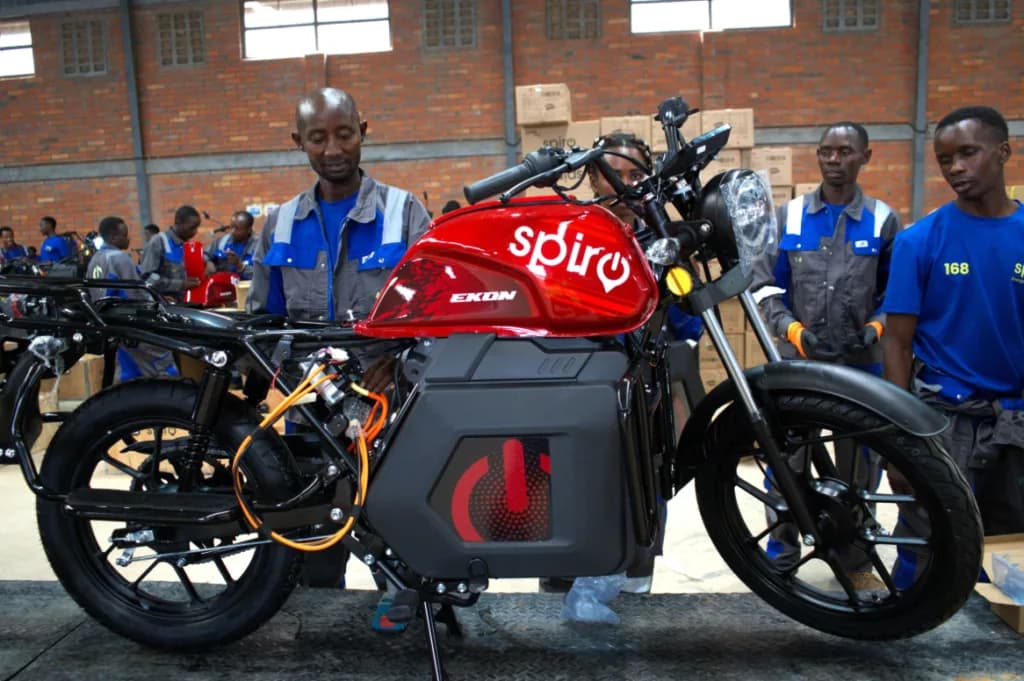
This is where Spiro’s model gets interesting. The company is not only selling electric motorcycles. It has built a battery-swapping network around them. Instead of waiting for a battery to recharge, a rider can swap it for a charged one and continue working. Spiro says it now supports more than 95,000 electric motorcycles and has facilitated more than 45 million battery swaps. Those numbers show how much of the business sits outside the motorcycle itself. The vehicle gets sold once. The battery network is used again and again.
Infrastructure becomes part of the product
For African riders, the success of an electric motorcycle depends on what happens after the sale. Are there enough batteries? Are swap stations close to where riders work? Can the rider change a battery quickly and get back to making deliveries or carrying passengers? If the answer to those questions is no, the electric motorcycle becomes difficult to use as a working vehicle. This is why Spiro’s infrastructure investment matters. It is trying to solve the part of the EV market that becomes obvious when the vehicle is someone’s workplace.
The bigger opportunity
The $100 million investment gives Spiro more room to expand its network and put more electric motorcycles on African roads. But there is also a wider business lesson here. African markets often require companies to solve the problem around the product, not just the product itself. For a rider, an electric motorcycle is useful only if it can stay on the road. Ama’s question in Rwanda was not really about batteries. It was about whether she could keep earning. That is the problem Spiro has built its business around.