SafeSip Uses Smart Water Stations to Tackle Rural Water Supply in Tanzania
Water projects across Africa often struggle long after construction is complete. Equipment breaks down, maintenance budgets disappear and communities return to unsafe water sources. Tanzanian startup SafeSip is trying a different model. The company has built a network of solar-powered water stations that sell treated drinking water while generating enough income to pay for maintenance
SafeSip Uses Smart Water Stations to Tackle Rural Water Supply in Tanzania
Water projects across Africa often struggle long after construction is complete. Equipment breaks down, maintenance budgets disappear and communities return to unsafe water sources. Tanzanian startup SafeSip is trying a different model. The company has built a network of solar-powered water stations that sell treated drinking water while generating enough income to pay for maintenance and day to day operations. Founded by Constantine Edward, Herman Edward and Faith Kuya, SafeSip combines water treatment equipment with remote monitoring technology. The system tracks equipment performance and alerts technicians when components such as filters need servicing, allowing maintenance to take place before breakdowns interrupt supply. The founders developed the business after working in rural communities during a university internship in Dodoma, where they saw the health impact of unsafe drinking water. They argue that the bigger challenge is maintaining water infrastructure once donor funding ends rather than finding water itself.
Combining Water Infrastructure with Digital Technology
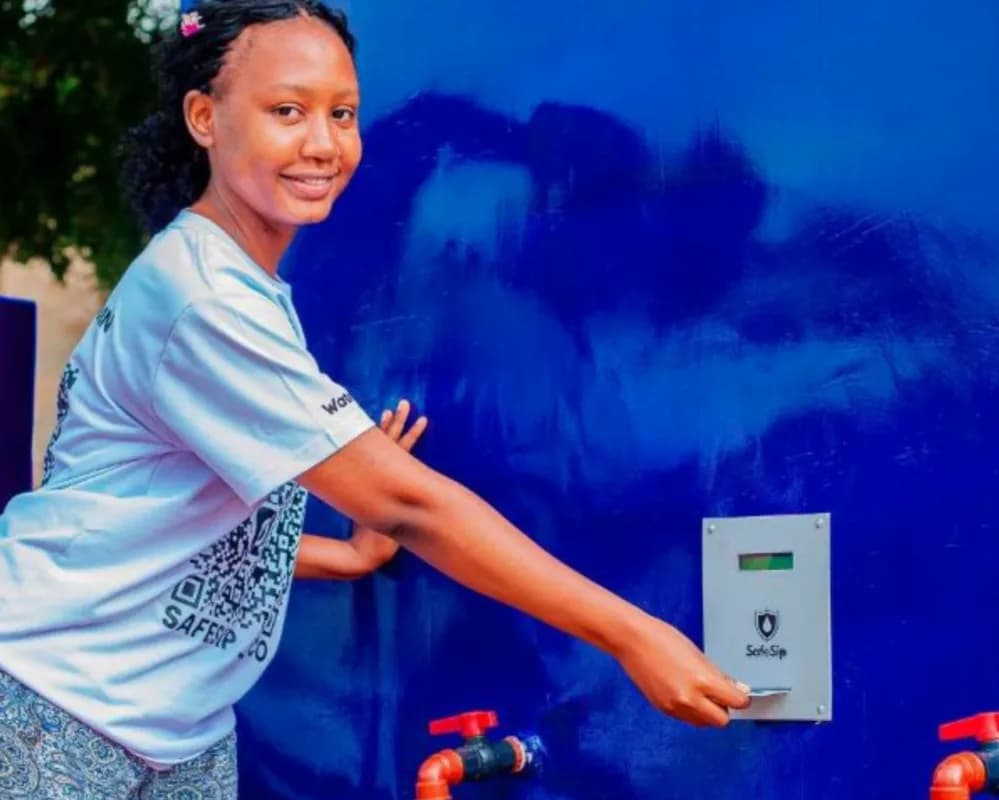
SafeSip’s water stations operate with prepaid access cards that customers use to collect water. The digital payment system also gives the company data on usage across different locations and helps it manage operations remotely. Instead of relying on grants to keep the service running, SafeSip generates revenue from water sales. Customers currently pay about 250 Tanzanian shillings for a 20-litre container collected at a water station or 500 shillings for home delivery. According to the founders, the pricing model was developed to keep water affordable while covering operating costs.
Building Trust in Local Communities
The company says attracting customers required more than installing the technology. Early on, many residents assumed the water stations were intended for higher-income households. SafeSip responded by improving signage, making access cards easier to buy and demonstrating how the service worked within each community.
Supporting Local Economic Activity
The founders say reliable access to treated water has also supported small business activity in some communities. Some customers resell water, while others use the supply to operate businesses that depend on consistent access to water, including car washes. They also say households spend less time collecting water and less money treating illnesses linked to unsafe drinking water. SafeSip is now expanding its network of water stations in Tanzania as it looks to show that rural water infrastructure can be supported through a commercial operating model rather than ongoing donor funding.