Smallest.ai Secures $13 Million to Develop Human-Like Voice AI
Voice AI startup Smallest.ai has raised $13 million in Series A funding to develop conversational AI that responds more like a human, using lightweight voice models built specifically for real-time interaction. The funding round was led by Seligman Ventures, with participation from Sierra Ventures and 3one4 Capital, bringing the company's total funding to more than
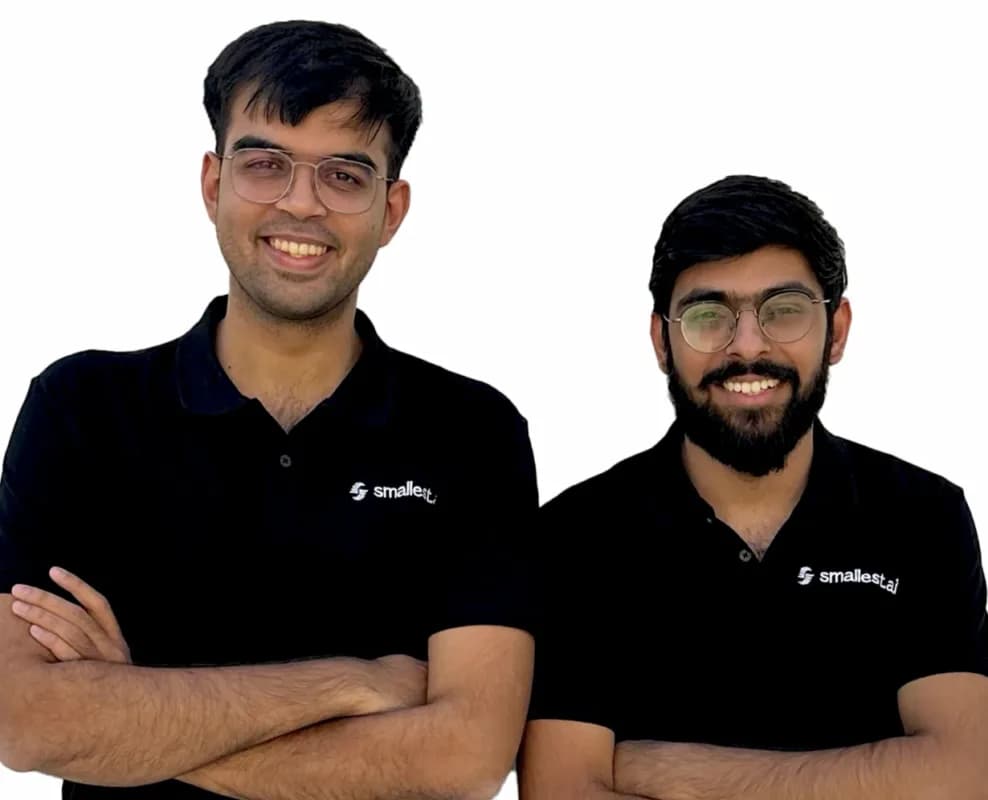
Smallest.ai Secures $13 Million to Develop Human-Like Voice AI
Voice AI startup Smallest.ai has raised $13 million in Series A funding to develop conversational AI that responds more like a human, using lightweight voice models built specifically for real-time interaction.
The funding round was led by Seligman Ventures, with participation from Sierra Ventures and 3one4 Capital, bringing the company’s total funding to more than $21 million. Founded in late 2024, Smallest.ai is taking a different approach to voice AI by focusing on specialised models designed for conversation rather than relying solely on increasingly larger language models.
Building Voice AI Around Human Conversation
According to founder and CEO Sudarshan Kamath, the company’s technology is designed to replicate the way people naturally communicate. Instead of waiting for a speaker to finish before processing information, the model listens, thinks and responds simultaneously, allowing conversations to flow with minimal delay.
Kamath argues that while response latency may be acceptable in text-based AI, even brief pauses can make voice interactions feel unnatural. By reducing this delay, Smallest.ai aims to create AI conversations that feel more responsive and intuitive for users.
A Hybrid AI Architecture
The startup achieves this through a hybrid architecture. A lightweight voice model manages real-time conversations with virtually no response lag, while a larger language model is only called upon when more complex questions arise. If additional information is required, the AI briefly pauses the conversation to retrieve the answer before continuing, similar to how a customer service representative may place a caller on hold while researching an issue.
Kamath believes this combination of specialised voice models and large language models will become the standard approach for conversational AI. In his view, smaller models are better suited to handling the speed and responsiveness required during live conversations, while larger models provide the deeper reasoning needed for more complex requests.
Targeting Enterprise Voice Applications
Unlike general-purpose AI models, Smallest.ai focuses exclusively on voice applications. Its technology is designed to recognise different accents, support dozens of languages and maintain performance in noisy environments where speech recognition systems often struggle.
The company’s customer base already includes RingCentral and Truecaller, while it also sees opportunities to supply voice technology to customer support software providers. Kamath argues that companies building customer support platforms benefit from integrating specialised voice technology rather than investing resources in developing their own voice models.
Smallest.ai competes with established voice AI providers including ElevenLabs, Cartesia and regional players such as Sarvam. However, while several competitors have expanded into applications such as audio dubbing, voice cloning and podcast production, Smallest.ai remains focused on enterprise voice agents designed for customer interactions.
The company’s long-term objective is to develop conversational AI that users cannot distinguish from a human. Achieving that level of natural interaction remains the central focus of its product development as demand for AI-powered customer engagement continues to grow.