VAT Threshold Increase – A Practical Win for South African SMEs
Finance Minister Enoch Godongwana announced a long-overdue adjustment to South Africa’s Value-Added Tax (VAT) registration thresholds In his 2026 National Budget Speech. Effective from1 April 2026, the compulsory VAT registration threshold has risen from R1 million to R2.3 million in annual taxable turnover. The voluntary registration threshold has also increased from R50,000 to R120,000. For
VAT Threshold Increase – A Practical Win for South African SMEs
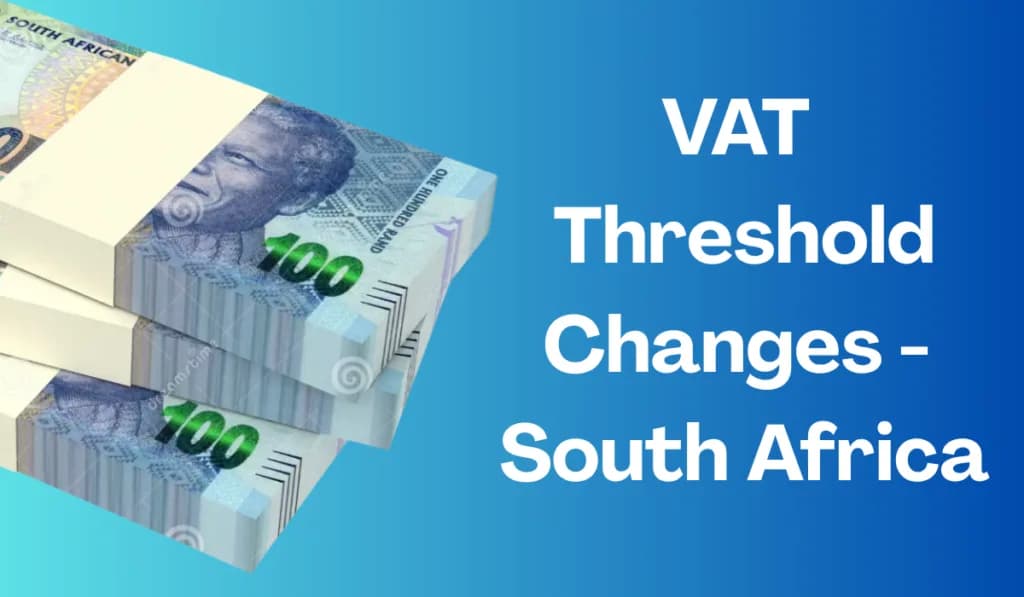
Finance Minister Enoch Godongwana announced a long-overdue adjustment to South Africa’s Value-Added Tax (VAT) registration thresholds In his 2026 National Budget Speech. Effective from1 April 2026, the compulsory VAT registration threshold has risen from R1 million to R2.3 million in annual taxable turnover. The voluntary registration threshold has also increased from R50,000 to R120,000.
For the first time since 2009, small businesses now have significantly more breathing room before they are pulled into the VAT compliance net. This move is one of the few genuinely practical steps the National Treasury has taken in recent years to support small business growth by directly reducing administrative burdens for new and emerging enterprises. This was essentially an acknowledgment of the reality that inflation and rising costs of doing business have made the old R1 million threshold an unreasonable barrier for thousands of SMEs.
Shaheeda Solomon, Finance Manager at SME funder Lula, captured the sentiment well when she welcomed the change:
“The threshold increase is a positive move in reducing administrative pressure on SMEs.”
A Glass Ceiling Has Been Removed
By lifting the threshold, the government has effectively removed a “glass ceiling” that forced many small businesses to deliberately limit turnover or face disproportionate compliance costs. Businesses operating below the R2.3 million turnover limit, no longer have to register for VAT, submit bi-monthly returns, reconcile input and output tax, or deal with the cash-flow strain of paying VAT before customers settle invoices. This frees up owner-managers to focus on growth, hiring, and reinvestment rather than focussing on complex paperwork.
The adjustment is a welcome and timely move. South Africa’s SME sector employs millions and is widely regarded as the engine of job creation, yet it has been weighed down by regulatory red tape. The unchanged R1 million threshold acted as a disincentive to expansion in many cases and particularly for consumer retail focused small businesses..
Many entrepreneurs reported capping their turnover artificially to avoid the administrative burden. The new R2.3 million level better reflects current economic realities and gives genuine small businesses room to scale without immediate compliance overload.
Important to note here is that this is not a tax cut — VAT remains at 15% — but it is a meaningful reduction in the compliance burden.
SARS is now able to redirect its resources on higher-turnover vendors, while smaller firms gain cash-flow relief and administrative simplicity. In a country where SMEs often struggle with high electricity costs, interest rates, and slow economic growth, this is one of the few tangible, pro-business reforms that directly lowers the cost of operating legally.
Caveats Businesses Should Consider
However, the change comes with important caveats that every affected business owner must understand.
The most significant risks related to the change, concerns businesses that are already VAT-registered but whose turnover now falls below the new R2.3 million threshold. Deregistering from VAT is not automatically a straightforward event, and doing so without proper planning can trigger an unexpected tax account.
When a business deregisters, it will need to account for the input tax it previously claimed on assets and stock still on hand. This “clawback” can create a sudden VAT liability. Lula has been vocal about this risk, warning that deregistration could lead to an “unexpected VAT event” for unprepared SMEs. In practice, this means a business that has claimed VAT on vehicles, equipment, or inventory may now owe SARS a portion of that input tax if those assets are still in use at the time of deregistration.
Shaheeda Solomon of Lula explained the practical headache:
“Deregistration reduces the administrative burden and compliance costs. You no longer need to submit VAT returns… but the VAT consequences of leaving the system remain unchanged.”
Businesses must therefore conduct a careful cost-benefit analysis. Some may choose to remain voluntarily registered (now possible up to R120,000 for voluntary registration) if they have significant input tax credits or export customers who prefer dealing with VAT-registered suppliers. Others may decide to deregister but should first consult a tax practitioner to quantify any potential clawback and plan cash flow accordingly.
The sudden change in VAT status can create multiple headaches for SMEs. These include:
- Re-negotiating contracts with suppliers and customers who may have built VAT into pricing.
- Updating accounting systems and invoicing processes.
- Managing the transition period where some sales are still subject to the old rules.
- Potential cash-flow strain if a deregistration tax liability arises at an inconvenient time.
For businesses that have never been VAT-registered, the higher threshold is almost entirely positive. They can now grow turnover up to R2.3 million without the immediate need to register, file returns, or maintain complex VAT records. This is especially beneficial for startups, sole proprietors, and micro-enterprises in sectors such as retail, services, and light manufacturing.
Positive Directive from Treasury – More Needs to Follow
The Treasury’s move stands out as one of the more pragmatic and business-friendly adjustments in an otherwise challenging fiscal environment. It directly addresses years of advocacy from SME organisations that argued the old threshold had become outdated and punitive. In real terms, R1 million in 2009 had far greater purchasing power than it does today. The new R2.3 million level is a long-overdue correction that recognises the cost pressures facing small businesses.
That said, the reform is not a silver bullet. South African SMEs still face a multitude of other challenges: high interest rates, electricity costs, crime, slow economic growth, and skills shortages. While reducing the VAT administrative burden is a welcome step, it must be part of a broader package of support if the sector is to thrive.
For business owners, the key takeaway should be caution and careful planning. The threshold increase creates genuine opportunity for growth without immediate compliance drag, but any decision to deregister (or to remain registered voluntarily) should be made with professional tax advice. A sudden change in VAT status can trigger unexpected liabilities and operational disruptions if not handled correctly.
Overall, the R2.3 million threshold adjustment is a positive, practical signal from National Treasury that small business growth matters. It reduces red tape, improves cash flow for thousands of enterprises, and removes an artificial barrier to scaling. With careful navigation of the transition rules and potential de-registration pitfalls, many SMEs stand to benefit meaningfully in the months ahead.