Commonwealth Honours Ugandan AgriTech Entrepreneur
Ugandan technology entrepreneur Shifra Ainomugisha has been named the 2026 Commonwealth Young Person of the Year for developing AI and solar-powered agricultural technologies that help smallholder farmers reduce post-harvest losses, improve productivity and increase rural incomes. The award, presented during the 2026 Commonwealth Youth Awards in London, recognised Ainomugisha's work through Solafam Uganda Ltd., a
Commonwealth Honours Ugandan AgriTech Entrepreneur
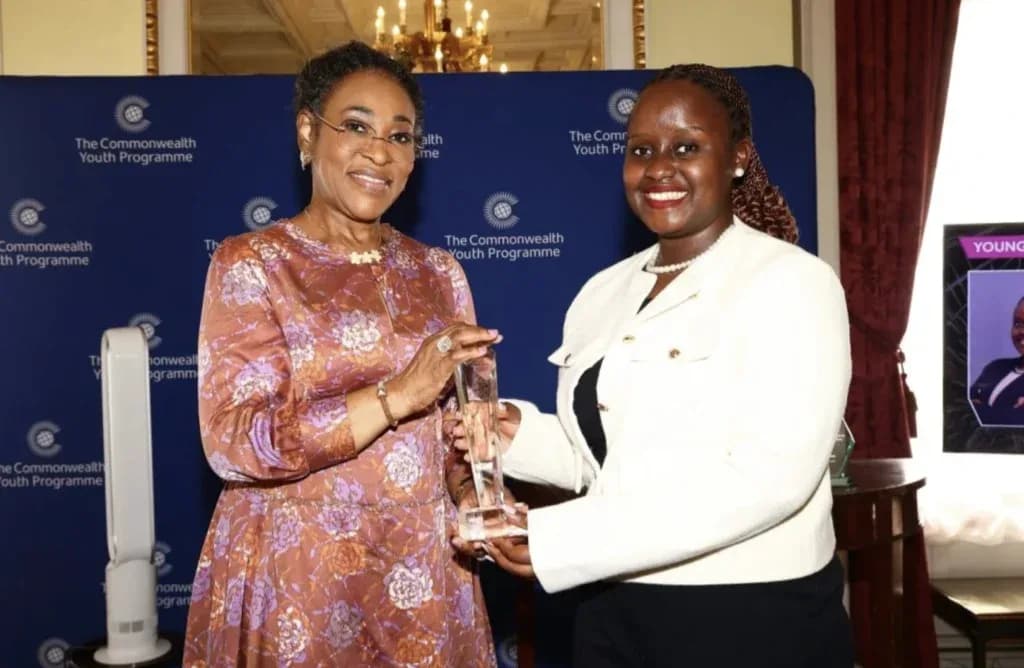
Ugandan technology entrepreneur Shifra Ainomugisha has been named the 2026 Commonwealth Young Person of the Year for developing AI and solar-powered agricultural technologies that help smallholder farmers reduce post-harvest losses, improve productivity and increase rural incomes.
The award, presented during the 2026 Commonwealth Youth Awards in London, recognised Ainomugisha’s work through Solafam Uganda Ltd., a social enterprise combining solar-powered cold storage, renewable energy irrigation and artificial intelligence to address some of agriculture’s most persistent challenges. Selected from nearly 1,000 applicants across the Commonwealth’s 56 member countries, she also received the regional award for Africa under Sustainable Development Goal 2 on Zero Hunger.
Agri-Tech Innovation
The idea behind Solafam was shaped by personal experience rather than academic research. Growing up on her family’s tomato farm in western Uganda, Ainomugisha watched nearly half of each harvest spoil before reaching market because of inadequate storage and limited infrastructure. Although the farm produced enough food, the losses made it difficult for the family to earn a stable income or meet everyday expenses, including school fees.
Those early experiences inspired her to build practical technologies that could help farmers preserve more of what they produce while improving productivity and profitability.
Today, Solafam combines three complementary technologies. Solar-powered cold storage extends the shelf life of fresh produce, giving farmers more time to sell their harvests instead of accepting low prices immediately after harvest. Solar irrigation systems support year-round cultivation while reducing reliance on diesel-powered pumps. Completing the platform is Lean AI, a WhatsApp-based advisory service that provides farmers with guidance on planting, irrigation scheduling, pest management, post-harvest handling and market access.
Tackling Agricultural Challenges
The technologies address several of the structural challenges facing African agriculture. Post-harvest losses continue to reduce farm incomes across much of sub-Saharan Africa, while limited storage, unreliable electricity and restricted access to extension services make it difficult for smallholder farmers to maximise production. By combining renewable energy with digital advisory tools, Solafam aims to improve productivity without placing additional pressure on natural resources.
According to the company, participating farmers have reduced post-harvest losses by around 30% while increasing household incomes by almost 28%.
The platform continues to evolve beyond smartphone users. Solafam is adapting its AI advisory service to operate through USSD technology, allowing farmers with basic mobile phones to access agronomic information without requiring internet-enabled devices.
Recognition
Ainomugisha’s recognition highlights the growing contribution of African entrepreneurs developing practical solutions for agriculture, climate resilience and rural development. It also reflects increasing interest in technologies that combine artificial intelligence with renewable energy to address long-standing challenges affecting food production across the continent.
While Solafam currently operates in Uganda, its model demonstrates how locally developed innovations can help strengthen food security, reduce waste and improve the livelihoods of smallholder farmers. As investment in agricultural technology continues to grow across Africa, solutions built around local challenges are increasingly shaping the future of the continent’s food systems.