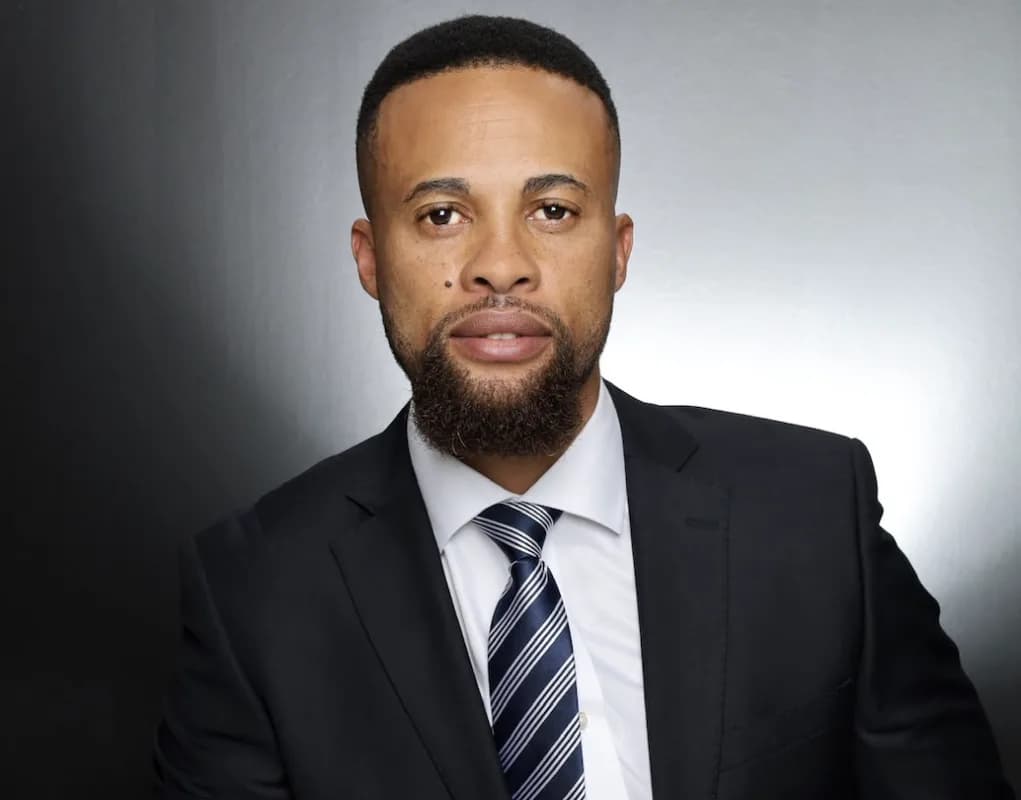
Founder Friday : Ulwazi Resource Consulting
There is a certain kind of founder who does not just build a business they build access, opportunity, and pathways for others to rise. Thabang Mabuza fits that description, and his journey began with clear intent. Founded in 2012, Thabang Mabuza’s journey as a social entrepreneur is rooted in one mission: creating meaningful opportunities for

Founder Friday : Ulwazi Resource Consulting
There is a certain kind of founder who does not just build a business they build access, opportunity, and pathways for others to rise. Thabang Mabuza fits that description, and his journey began with clear intent.
Founded in 2012, Thabang Mabuza’s journey as a social entrepreneur is rooted in one mission: creating meaningful opportunities for young people in underserved communities. As the founder of Ulwazi Resource Consulting, he has spent more than a decade designing platforms that connect youth, entrepreneurs, and institutions in ways that drive real economic participation.
His work began in the social activism space while still in high school, where early exposure to community challenges shaped his lifelong commitment to social impact. When he transitioned into entrepreneurship, that purpose became the foundation of his business model.
Building Career Exposure Platforms
One of the company’s earliest initiatives was a series of career expos aimed at exposing young people from disadvantaged areas to a broader range of career pathways. At the time, Thabang observed a narrow perception of careers among youth, often limited to professions such as teaching, law, or medicine. In response, he worked with partners including Kellogg’s, Microsoft, and StudyTrust to bring structured career exposure programs to multiple regions, helping bridge the information gap between education and opportunity.
However, as participation increased and similar models emerged across institutions, sustainability challenges began to surface. This prompted a strategic pivot.
“We realized we needed to evolve beyond exposure into something that creates real economic participation,” he explains.
Scaling Entrepreneurial Support
That evolution led to the creation of the Festival of Ideas, a pitching and enterprise development platform designed to connect young entrepreneurs with both private sector and government stakeholders. The program brings together MSMEs to pitch their ideas to expert panels, receive feedback, and gain access to funding, mentorship, and market opportunities.
Through partnerships with institutions such as the Gauteng Department of Economic Development, the Gauteng Enterprise Propeller, and the City of Ekurhuleni, the program has scaled significantly. Over the years, it has reached more than 8,000 young people and facilitated over R20 million in financial and non-financial support, including business development resources and market access opportunities.
Thabang describes Ulwazi Resource Consulting as a strategic implementation partner bridging government, corporates, and communities to strengthen entrepreneurship ecosystems. Clients have included Transnet, Proudly South Africa, Kellogg’s, Microsoft, and various public sector agencies focused on enterprise development.
Despite operating across diverse regions and sectors, the mission remains consistent: enabling MSMEs to thrive through skills development, exposure, and access to opportunity. Yet, the work is not without challenges.
Challenges Across Regions
Each region presents different economic realities. Some provinces have strong institutional support systems for SMEs, while others lack structured development agencies, requiring alternative partnerships with local industries to fill the gap. These differences demand adaptability, customized program design, and strong stakeholder collaboration.
Over time, Thabang has learned that sustainable impact is built on relationships. For him, success is not only measured in funding distributed or events delivered, but in whether entrepreneurs are able to sustain their businesses, create jobs, and access new markets after intervention.
“If an MSME can sustain a job or grow its turnover after our intervention, that is impact,” he notes.
Defining Impact in Practice
Leadership, for Thabang, is equally dynamic. He describes it as situational and adaptive, requiring different approaches depending on context from decisive leadership in high-pressure moments to collaborative decision-making when shaping strategy with his team. His approach emphasizes accountability, creativity, and shared ownership within the organization.
Thabang’s five-year vision is ambitious. He aims to impact more than 100,000 MSMEs across South Africa while strengthening public-private partnerships that improve access to funding, markets, and enterprise development opportunities.
He believes that while South Africa’s entrepreneurial ecosystem is often criticized, meaningful support structures do exist particularly within government programs. However, the real barrier for many entrepreneurs remains compliance, access to information, and readiness to engage formal systems.
Advice for Emerging Impact-Driven Founders
His advice to emerging impact-driven founders is simple but powerful: start.
“You are better off starting and learning along the way than never starting at all,” he says.
For Thabang, impact is not a single project or moment it is a continuous process of building systems that allow others to succeed. In that mission, his work continues to shape how young entrepreneurs access opportunity in South Africa’s evolving economic landscape.
Read About Other Founders HERE