Founder Fridays : Akani Connect
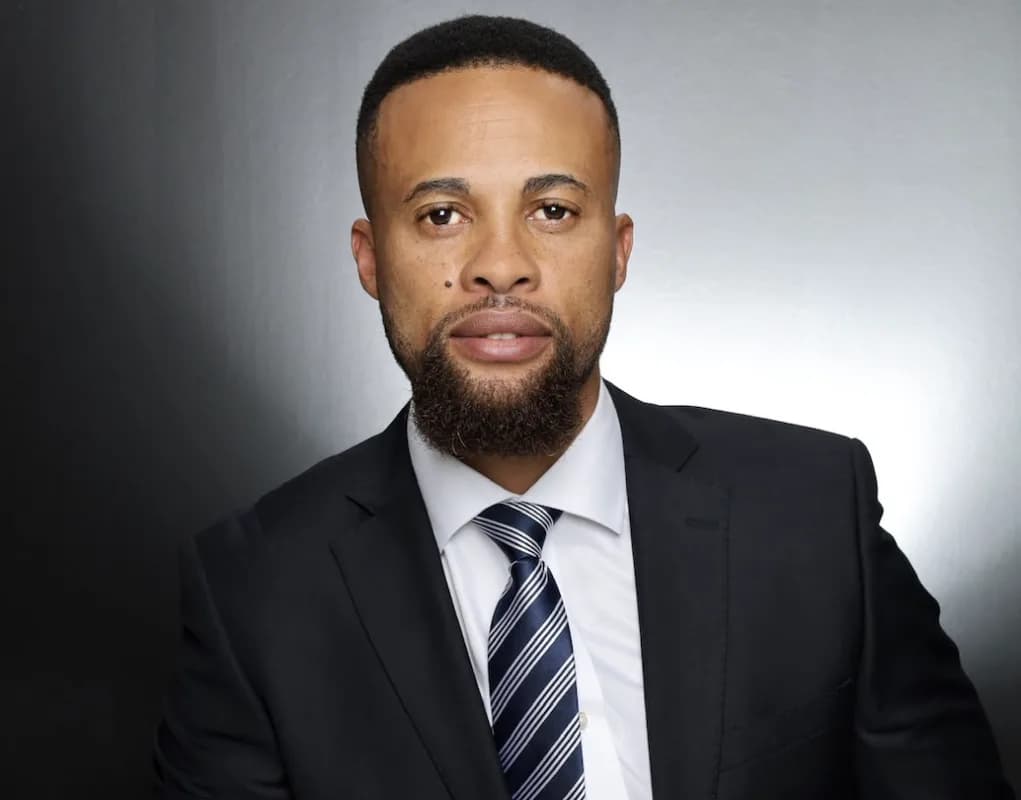
Some ideas begin in the office. Others begin with a sudden realisation. For Bongani Ntokozo Mbonani, the idea behind Black Apple Investments began on the ground, working with communities affected by mining projects and seeing first-hand how difficult it could be to connect local people and businesses with the opportunities created around them. One of
Founder Fridays : Akani Connect
Some ideas begin in the office. Others begin with a sudden realisation. For Bongani Ntokozo Mbonani, the idea behind Black Apple Investments began on the ground, working with communities affected by mining projects and seeing first-hand how difficult it could be to connect local people and businesses with the opportunities created around them.
One of the projects that challenged Bongani’s thinking involved the resettlement of 49 families. The work went beyond relocating households. It involved properties, livestock, community structures and the wider social dynamics surrounding the project.
The experience reinforced his interest in community development while exposing a recurring problem: large mining projects could bring significant opportunities into rural areas, but the connection between those opportunities and the communities around them was not always clear.
“There’s no proper linkage between the opportunities that are there and how communities can benefit,” Bongani says. That gap became central to Black Apple’s work.
From engagement to data
Over the years, Black Apple worked with mining companies, infrastructure projects and municipalities, developing an approach that combined stakeholder engagement with research, verification and coordination. One recurring issue was the assumption that certain skills were simply unavailable in rural communities. A mining company might have a commitment to hire locally, but without reliable information about the skills available in a particular area, it could be difficult to determine whether that commitment was being met.
Black Apple began addressing this through data-driven skills-gap analysis. Rather than relying on assumptions, the company could establish what was actually available in a community and provide that information to projects before recruitment decisions were made. Its approach also created a process for specialised skills. The search would begin within the municipality, then move to the district, province and eventually nationally if the required expertise could not be found locally.
For Bongani, that process creates transparency while recognising that some specialised skills may genuinely not exist in a particular area. At the same time, he believes there should be no reason to bypass local workers where the required skills are available.
The development of Akani
Black Apple’s move into technology came from problems the company was already dealing with on mining and infrastructure projects. The team had developed a verification application to help identify legitimate local suppliers and recruits, but the work on the ground showed that verification alone was not enough.
In 2019, the company received a recognition award from Exxaro for the application. For Bongani and his team, the recognition provided an opportunity to take the idea further and look at how verification could be connected to the wider processes around recruitment, procurement, compliance and community participation.
That led to the development of Akani Connect, which moved beyond simply verifying people and businesses towards a broader compliance and participation platform.
The need for this became clear through the problems Black Apple was seeing on projects. Contractors could bring workers into communities instead of recruiting locally, while residents could feel excluded from opportunities created in their own areas. In some cases, the resulting frustration contributed to project stoppages, creating costs for companies while increasing tensions with communities.
For Bongani, the issue was not necessarily that companies did not want to create local opportunities. The bigger problem was that there was no effective way to track whether commitments were being met and whether the people and businesses benefiting were actually from the communities the projects were intended to support. Akani was developed to bring those processes together, giving projects a way to verify participants, track local recruitment and procurement, and monitor progress against their commitments.
For workers, verification is only the starting point. Users can upload certificates and maintain information about their skills, while SMEs can upload and manage compliance documentation. The platform also includes AI matching, allowing verified users to be connected with potential opportunities relevant to their profiles.
Beyond finding a job
Bongani sees Akani as more than a recruitment platform. The longer-term ambition is to help people prepare for opportunities before they become available.
If a project is expected to begin in several months and requires a particular qualification, the platform could potentially identify that requirement and connect an individual with relevant training or education opportunities.
“It’s not just to make sure that you find a job,” Bongani says. “It’s also where you can further develop your capabilities.”
That approach extends to suppliers as well. A business that wins one project could remain visible within the system and potentially be matched with future opportunities.
The objective is to create an ecosystem where people and businesses can understand what opportunities are coming and what they need to do to become eligible for them.
Staying with the community
Bongani describes himself as an impact-driven entrepreneur, and one phrase has become a personal mantra: “One with the community.” For him, that means understanding a community from the inside rather than simply arriving to consult people about a project.
When Black Apple conducts research or skills-gap analysis, it uses people from the communities themselves, including unemployed graduates who can assist with data collection. Bongani says this can provide a better understanding of local dynamics and make it easier for people to speak openly.
His experience has also taught him that communities want to participate in the projects taking place around them.
“People want to be part,” he says. “People want to be able to say, hey, I worked on this.”
That belief is behind much of Bongani’s work. For him, local participation is not simply about whether someone gets a job or a business wins a contract. It is also about giving people a connection to the projects being developed in their communities.
Building at a larger scale
Black Apple has now verified more than 50,000 work seekers, according to Bongani, and is expanding into areas including Rustenburg. The experience has strengthened his belief that the challenges around verification, participation and access to opportunities extend beyond individual communities.
He wants Akani Connect to eventually help infrastructure projects identify skills and capabilities before projects begin, rather than trying to establish what is available after development is already underway.
The platform’s AI capabilities could also help users identify future opportunities and the skills they need to develop to qualify for them.
For Bongani, that is where technology becomes useful: not as an end in itself, but as a way to address problems he has encountered repeatedly while working with communities and major projects.
Lessons for entrepreneurs
Building a business around mining and infrastructure has brought its own challenges, including barriers to entry and situations where expectations do not always match the capabilities available in a particular area. Bongani says relationships, credibility and persistence helped Black Apple navigate those challenges. He also believes entrepreneurs should understand the environment in which they operate and build strategic partnerships rather than trying to solve every problem alone.
His advice to young entrepreneurs starts with the idea, but extends well beyond it.
“If you can think it, you can dream it, you can achieve it,” he says.
For Bongani, entrepreneurship can be a lonely road that requires persistence and self-belief. He also cautions against comparing one journey with another.
“Comparison for me is the thief of joy.”
His approach is to remain focused on the impact he wants to create, develop his capabilities and work with people who share the same objectives.
That philosophy has taken Black Apple from community engagement and stakeholder management into technology, with Akani Connect now positioned as an attempt to make local participation, verification and access to opportunity more transparent and measurable.
Read More About other Founders Here