The Rise of Low-Code and No-Code Platforms
A mere decade or so ago, launching a new e-commerce venture tailored for high transaction volumes and stringent security requirements was a formidable task. Building a scalable website with bespoke functionalities, seamless integrations with enterprise systems, and a unique aesthetic demanded substantial financial investments, often running into millions of rand. Fast forward to today, and
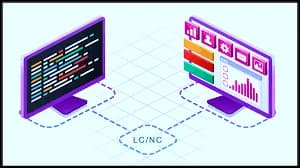
The-Rise-of-Low-Code-and-No-Code-Platforms
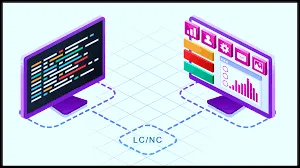
A mere decade or so ago, launching a new e-commerce venture tailored for high transaction volumes and stringent security requirements was a formidable task. Building a scalable website with bespoke functionalities, seamless integrations with enterprise systems, and a unique aesthetic demanded substantial financial investments, often running into millions of rand.
Fast forward to today, and the landscape has dramatically shifted. Enter the likes of Ollie Health, a prime example of how the barriers to entry have disintegrated. Founded in 2020, Ollie Health is an online mental health platform catering to global enterprise teams, facilitating video consultations, offering a customized calendar and booking system, and ensuring secure payments. Remarkably, this platform was crafted end-to-end by two founders with minimal technical background. According to Marc Gregory, CEO and co-founder of Ollie Health, their success stemmed from leveraging existing market solutions and weaving together tools and components to realize their vision.
Welcome to the era of the citizen developer.
With an extensive array of cloud platform-as-a-service solutions, low-code and no-code development platforms, and software-as-a-service offerings, business users wield unprecedented power to create software functionality autonomously, without relying on traditional IT departments. Simultaneously, software developers harness these tools to expedite the development and deployment of new features and applications.
While the adoption of low-code and no-code software isn’t without its caveats, particularly for larger enterprises, the trend promises to revolutionize the pace of software development in the coming years. Forrester predicts explosive growth in the combined low-code and digital process automation (DPA) market, soaring from $13.2 billion in 2023 to a staggering $50 billion by 2028.
Despite being in the nascent stages of adoption, low-code development is gaining momentum. A survey conducted by KPMG, encompassing 2,000 corporate decision-makers worldwide, revealed that 81% of companies view low-code development as strategically significant. However, only 31% have thus far integrated low code into their software development strategies.
The impetus behind the surge in low-code and no-code adoption stems from organizations’ imperative to accelerate digital transformation initiatives. Amidst a scarcity of top-tier software development talent, coupled with the pivotal role of software features and applications in driving organizational competitiveness, the pressure to swiftly develop and deploy new software has never been more pronounced.

Low-Code vs. No-Code: Navigating the Landscape
Before delving further, it’s essential to delineate between low-code and no-code platforms. Both empower developers to utilize visual tools like drag-and-drop interfaces for code generation and software building. No-code tools, while accessible to nearly anyone, come with limitations as they preclude custom code integration.
Conversely, low-code development permits developers to incorporate custom code alongside the platform’s generated code. Moreover, modern low-code interfaces allow developers to create and modify code within the platform, showcasing the evolution of available tools in the market.
Looking ahead, we anticipate low-code and no-code approaches to democratize app creation and foster technology-driven innovation for individuals lacking technical expertise. Generative artificial intelligence (AI) is poised to further expand these possibilities, albeit textual prompts of Gen AI tools cannot replace the visual tools offered by low-code and no-code platforms.
Unlocking Potential Across Businesses
For small and medium businesses (SMBs) like Ollie Health, the promise of no-code and low-code platforms is particularly enticing. These entities can access a plethora of sophisticated online services and software solutions, augmented by the ability to build and customize software without the need for extensive dev teams.
In larger enterprises, the landscape is nuanced. Development teams gravitate towards low-code solutions to expedite software feature deployment, reduce costs, and streamline data integration. However, in environments characterized by complexity and sophisticated requirements, the full potential of low-code and no-code solutions may yet be realized.
Balancing Speed with Governance
Enterprise clients approach low-code and no-code adoption cautiously, mindful of governance, security, and technical risks associated with empowering non-technical users to build software. Upholding quality control, mitigating security risks, and avoiding technical debt are paramount considerations. Establishing explicit technical standards, security protocols, and governance frameworks is imperative for guiding non-technical users in software development endeavors.
At its core, medium and large organizations must strike a balance between speed, agility, and strategic articulation of business requirements. While low-code and no-code tools can augment teams’ capabilities, seasoned programmers remain indispensable for unlocking the full value of software development initiatives.
In essence, there lies an opportunity for organizations to harness the collective power of non-technical users and expert programmers to navigate the complex digital landscape and drive innovation. Liberating developers to focus on intricate tasks while empowering business users with user-friendly development tools is one of the most immediate benefits companies can realize.
Each organization must assess how and where it can leverage low-code and no-code platforms to enhance workflow efficiency. By doing so, enterprises can strike a balance between accelerated, democratized, and productive development and the requisite rigor, discipline, and security demanded by enterprise-grade software development and deployment.