Africa’s Mining Future is Powered by Skill Upgrades, Drones, and Robotics
Technological advancements in African mining have entered a new era where machines no longer serve only as tools of production but as intelligent partners in mineral extraction. Robotics and drone technology are changing the traditional workforce, and some of this technology is already in full operation. Siemens projects that 35% of mining jobs will be
Africa’s Mining Future is Powered by Skill Upgrades, Drones, and Robotics
Technological advancements in African mining have entered a new era where machines no longer serve only as tools of production but as intelligent partners in mineral extraction. Robotics and drone technology are changing the traditional workforce, and some of this technology is already in full operation. Siemens projects that 35% of mining jobs will be automated by 2035, and nearly half of all mining tasks will require minimal human interaction by 2040. Mining tech enthusiasts emphasize that this change is not just about replacing people with machines but about building safer, more efficient, and more sustainable mines across Africa.
Eyes in the Sky
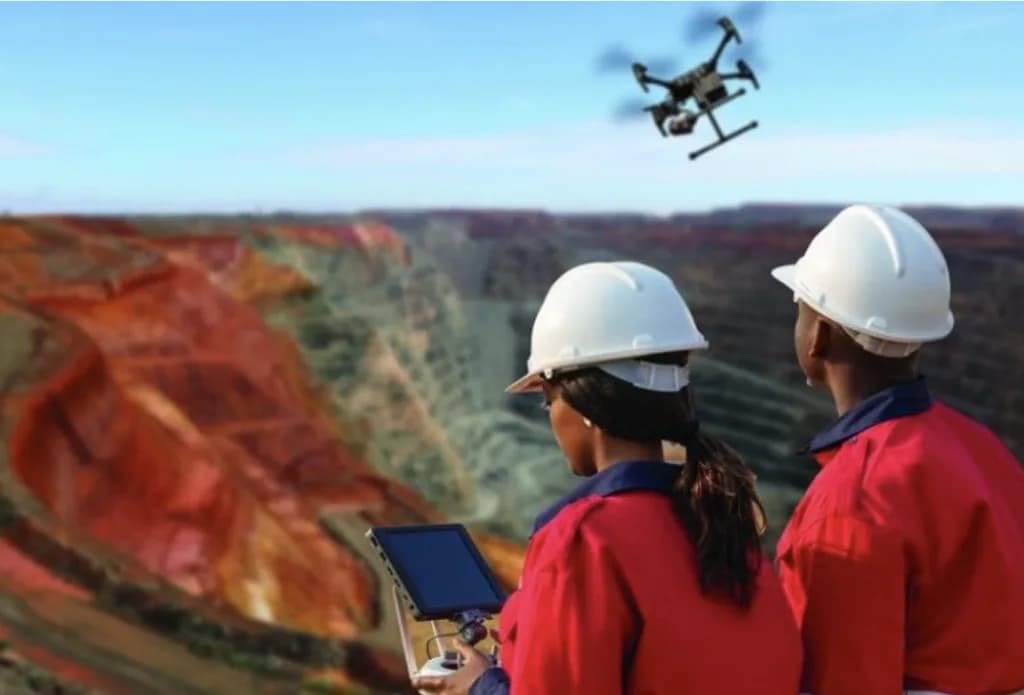
Drones now serve as the “eyes in the sky” for African mining. Equipped with thermal cameras, 3D mapping tools, and multispectral imaging, they can survey vast sites in hours. Humans would need days, if not weeks, for the same task. In South Africa’s platinum belt, drones monitor pit walls and tailing dams. They detect early signs of instability long before failures occur. This proactive use reduces risks, improves safety, and cuts costs compared to manual inspections.
Hands on the Ground
While drones rule the skies, robotics dominate the ground. Autonomous drilling rigs and robotic ore samplers handle the “dirty and dangerous” work that once burdened miners. These machines function in confined tunnels, extreme heat, and even toxic gas zones. Robotic arms with advanced sensors also perform high-precision maintenance which extends equipment lifespans and reduces downtime.
The Impact on Jobs and Efficiency
Fears of job losses often dominate discussions, but the reality is more balanced. Repetitive and hazardous tasks will definitely disappear, and new skill sets will rise. Robotics programming, drone operations, and data analysis are already in demand. McKinsey & Company (2022) reported that automation could lift productivity by up to 30%. At the same time, it could create opportunities for higher-skilled employment. Traditional roles may shrink, yet digital mining careers will grow. For miners, the challenge is adaptation. Upskilling will decide who thrives in this tech-driven “survival of the fittest” era a concept Herbert Spencer and Charles Darwin both explored.
Africa’s Competitive Edge
For Africa, where many mines operate in remote or unstable regions, automation delivers a powerful competitive edge. It reduces human exposure to danger, lowers operational costs, and enhances precision in resource extraction. To fully benefit, African countries must also invest in training and reskilling their workforce. In my opinion the African Mining workforce already holds an advantage, because they understand key process parameters, but staying competitive will require constant adaptation and upskilling.
Certain groups of Minorities may struggle, especially where self-funding for training becomes necessary. That is why governments and mining companies must design deliberate policies to sponsor skills development.
Integration will not happen overnight, but employees who embrace change will stay ahead of global competition. The future of African mining may look less like rugged industrial sites and more like hubs of digital innovation in a sci-fi movie where drones and robots act as android eyes, ears, and hands that keep operations safe, efficient, and globally competitive.