South African Aerospace Launch Facility Takes-off
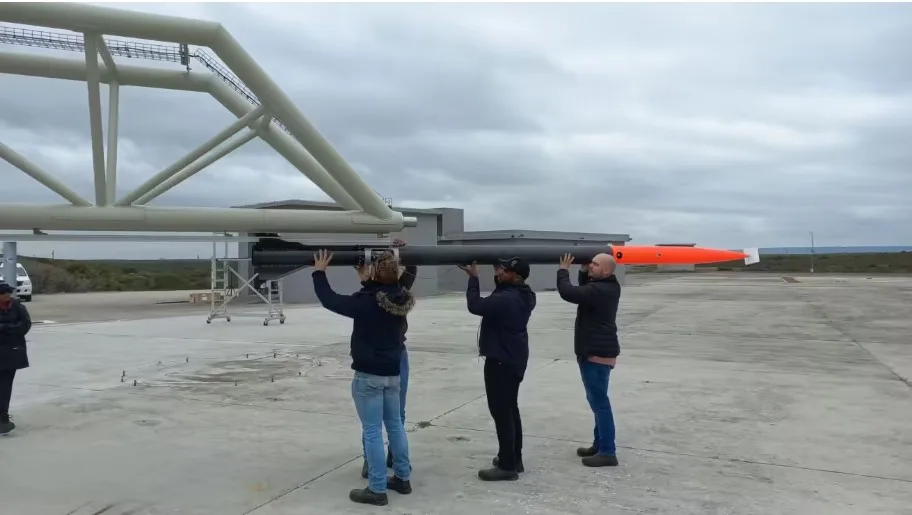
The University of Kwazulu Natal (UKZN) reached a new milestone in the development of the South African space industry, with the Aerospace Systems Research Institute (ASRI) engineers Commissioning a new, state-of-the-art, suborbital sounding rocket launch facility at the Denel Overberg Test Range (OTR) in the Western Cape. ASRI is located within the University of KwaZulu-Natal’s
South African Aerospace Launch Facility Takes-off
The University of Kwazulu Natal (UKZN) reached a new milestone in the development of the South African space industry, with the Aerospace Systems Research Institute (ASRI) engineers Commissioning a new, state-of-the-art, suborbital sounding rocket launch facility at the Denel Overberg Test Range (OTR) in the Western Cape.
ASRI is located within the University of KwaZulu-Natal’s School of Engineering, and was formed in 2009 as a research group by Prof Jean Pitot and Prof Michael Brooks. The Institute is focused on the design, manufacture and testing of rocket propulsion systems.
The development of the launch facility has being funded via by the Department of Science and Innovation (DSI) and the new facility is the first of its kind in the country.
Launch Facility Commission a Success
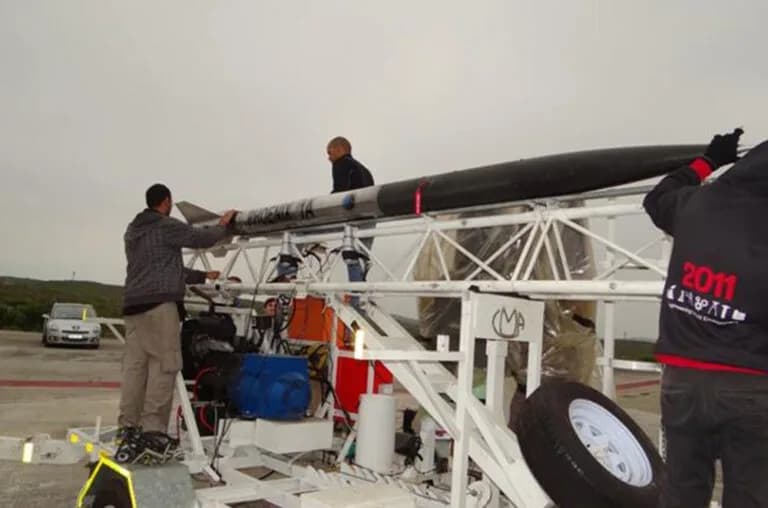
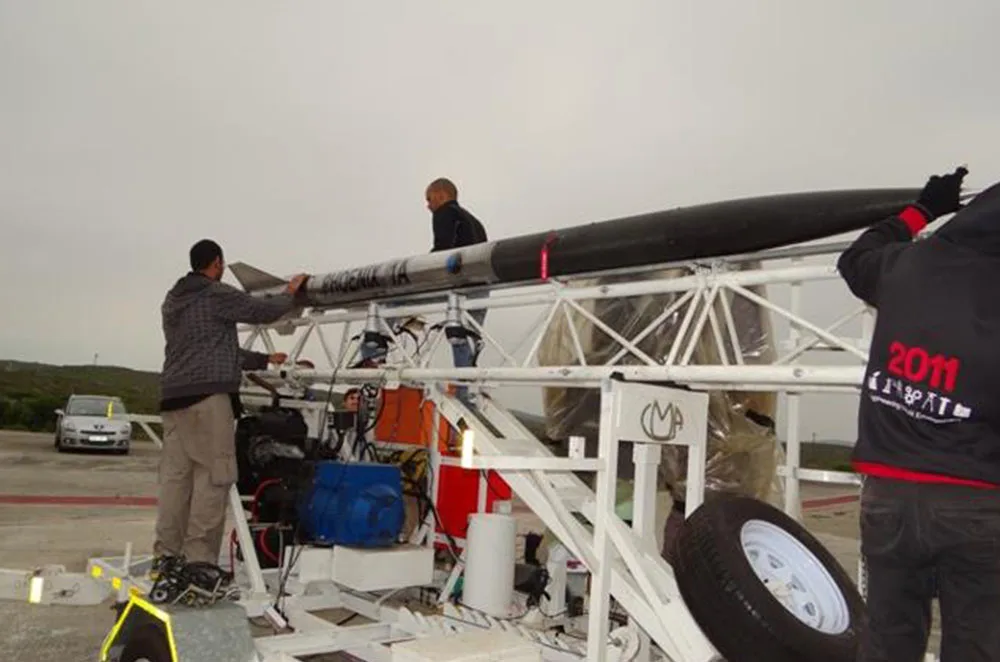
The new Launch facility incorporates a launch gantry capable of accommodating suborbital rockets such as the Phoenix hybrid rocket, which was tested during the facility’s cold-flow propellant trial. This trial evaluated ASRI’s launch control software, ensuring smooth communication between the control room and the rocket during future launches.
Beyond Phoenix, the gantry is versatile enough to handle larger solid-propellant space rockets, such as those used in international programs such as NASA’s Sounding Rocket Program and the European Space Agency (ESA) initiatives.
Suborbital rockets, are able to reach heights beyond 80 km into orbit, are a crucial tool used to conducting scientific research in atmospheric regions that are beyond the reach of weather balloons and at a height that excludes the use of satellites. These rockets provide extensive weather, radiation, and other data on atmospheric and space phenomena, such as the Earth’s magnetic field and atmospheric radiation.
Launch Capabilities Essential for Further Space Development
Sounding rockets is an essential development step towards creating a complete orbital satellite launch capability.
These unguided rockets require pin point precision for accurate firing as the rockets are unguided and the gantry-based aiming facility needs to ensure accurate launch trajectories for successful missions.
The newly commissioned gantry, is equipped with state-of-the-art aiming and control systems, which allows a full 360-degree horizontal rotation and up to 90-degree vertical positioning.
This enables the rocket launch to be accurately set with additional influencing factors such as wind, atmospheric pressure, temperature and air density, calculated prior to launch.
With the successful commissioning of the launch facility, UKZN becomes the first university in South Africa to own and operate a permanent suborbital rocket launch site, further positioning South Africa as a growing leader in aerospace research and education in Africa.