Founder Fridays: Oplene Group
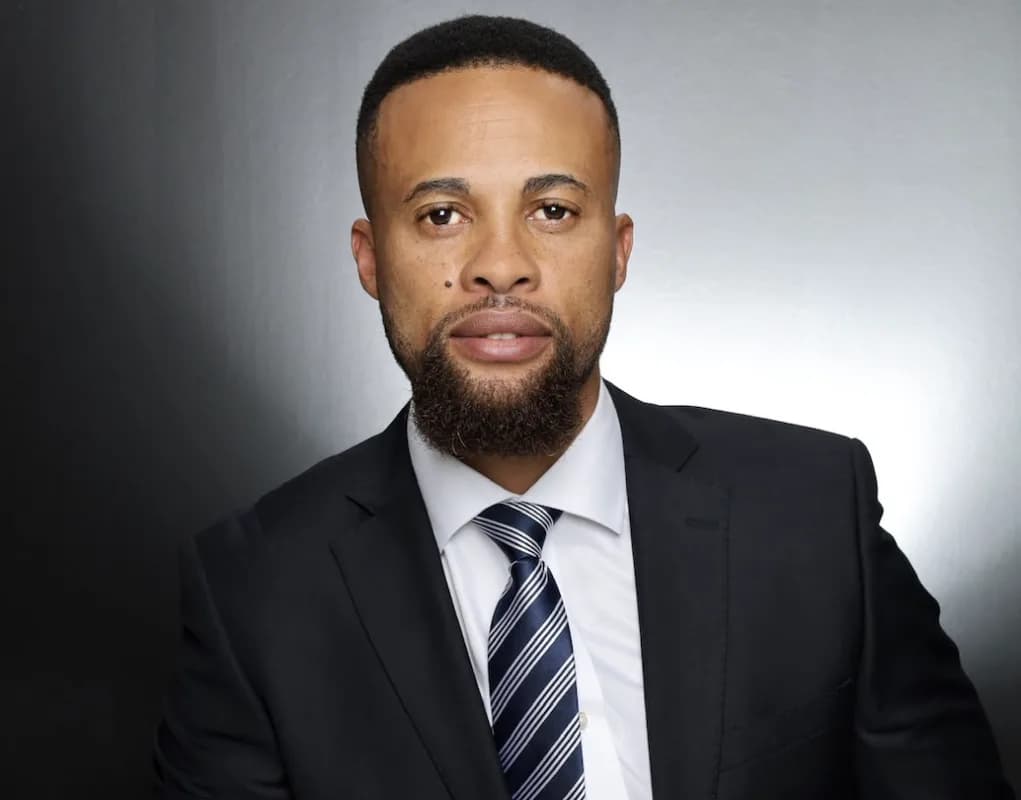
South Africa continues to battle unequal access to assistive digital solutions for learners and citizens living with disabilities. When asked about the real gap in accessibility, Tieho Tsiane, founder of Oplene Group, answered in a way that cut through industry noise: “Internet access doesn’t equal independence. The missing link has always been clarity.” Tieho explained

Founder Fridays: Oplene Group
South Africa continues to battle unequal access to assistive digital solutions for learners and citizens living with disabilities. When asked about the real gap in accessibility, Tieho Tsiane, founder of Oplene Group, answered in a way that cut through industry noise: “Internet access doesn’t equal independence. The missing link has always been clarity.” Tieho explained that while smartphones and mobile data are widely available, interaction and navigation for visually impaired users remains fragmented, rigid, or built on assumptions of uniform language, movement, or ability. For him, accessibility has to function as a system, not a patch. That belief drives the product philosophy at Oplene Group Pty (Ltd), a technology company designing hardware and software that helps people with visual impairments, chronic disease, and neurological conditions interact with modern devices on their own terms.
A Human Problem, a Hardware Start
Oplene’s flagship device began with a personal story, not a business plan. Tieho spoke about a friend living with a neurological eye condition that caused his eyes to close automatically while in use. To navigate apps, he had to physically hold his eyelid open. Over the years, this led to intense headaches and further physical damage. That moment sparked the central question Tieho still anchors product development on Who is solving what for whom? As someone trained in Human Resource Management, Tieho did not approach the issue as an engineer. He approached it as a problem designer. He later learned AI, machine learning, and computer vision through self-study across online platforms, free courses, and video learning. This allowed him to translate a human limitation into a repeatable, low-friction technical solution that could work in unpredictable real-world environments.
Physical Controls for a Digital World
The KA-DAH (Garage) Device is Oplene’s primary assistive tool. It pairs with smartphones via Bluetooth and allows users to navigate apps using four physical directional buttons, plus enter and exitcontrols, removing the need for screen tapping or random gestures. Incoming calls and text messages each trigger unique vibration patterns. Pressing enter answers a call. Pressing exit declines or ends it. For text messages, pressing enter reads the message out loud. Beyond messages and calls, the same controls let users move between apps and navigate within them, combining hardware predictability with audio confirmation. Tieho also shared insight on the TouchWell Glove, a wearable tool using AI-enabled detection that supports inclusive digital interaction and offers early-stage health monitoring, aligning physical disability support and wellness tracking into the same product ecosystem. For Tieho, the power of these tools is not complexity, but the removal of complexity one press replacing ten guesses.
Testing the Experience
Oplene has manufactured 200 pilot devices through partnerships with the Department of Social Development (Free State) and the Council for the Blind (Free State). When asked if this was product rollout, Tieho framed it clearly: “This was field research, not final distribution.” The 200-device pilot was designed to test usability and collect user-driven improvement feedback. According to Tieho, the results show about 70% alignment to the intended independence outcome and 30% product development needs.
The most pressing challenge was not the hardware interface it was language and pronunciation logic. Many AI smartphone assistants require rigid English phrasing for commands. Tieho pointed out the mismatch local pronunciation and cadence are not uniform across South African languages or communities. A command that sounds natural to a user may register as “incorrect” to software trained culturally elsewhere. Oplene is now building a module that can learn pronunciation across multiplelanguages and translate outputs into a user’s chosen language, moving from spelling assumptions to speech intelligence.
Scale With Care, Train With People
Tieho sees scale as something that must hold users without breaking founders. After market launch (planned for June/July 2026), Oplene intends to add a secure cashless payment feature with voice-authentication biometrics so users can transact without third-party reliance. Expansion plans start in South Africa, then widen into African institutional partnerships where organisations can procure devices on behalf of visually impaired communities while improving infrastructure standards and informing policy conversations. Tieho emphasised that unlike many assistive tech companies, Oplene pairs hardware distribution with caregiver and parent training, plus remote technical support, ensuring users are equipped before the device reaches points of failure. His advice to future founders was built from experience: learn emerging AI tools early, combine formal foundations with self-driven training, pilot test in communities, track outcomes, collaborate instead of carrying everything alone, and recruit systems, not chaos.
A Founder Line Worth Keeping
Tieho closed the conversation with a sentence that carries the spirit of Oplene’s vision:
“Technology must learn how people speak not expect people to speak like technology thinks.”
Read about more Founders HERE