Singularity Summit 2024 Day 1: Benjamin Rosman Talks About The Rise of Robots
The an annual event that brings together global thought leaders to explore cutting-edge advancements and future trends shaping our world, The SingularityU South Africa Summit, officially took off yesterday the 21st of October 2024, and one of the highlights that were shared with Business Tech Africa include Benjamin Rosman's talk about the rise of robots.
Singularity Summit 2024 Day 1: Benjamin Rosman Talks About The Rise of Robots
The an annual event that brings together global thought leaders to explore cutting-edge advancements and future trends shaping our world, The SingularityU South Africa Summit, officially took off yesterday the 21st of October 2024, and one of the highlights that were shared with Business Tech Africa include Benjamin Rosman’s talk about the rise of robots.
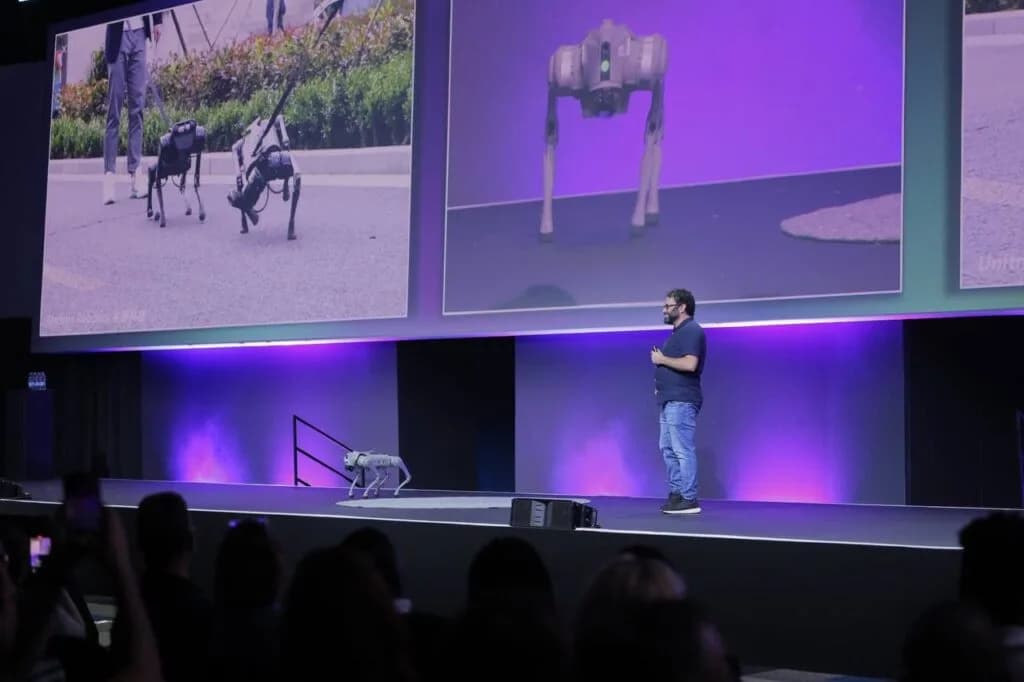
“Within the next decade, most, if not all, of you are going to have a robot in your home and you’re going to think that this is perfectly normal. You might see it as an appliance, a computer, a tool, or maybe as a friend,” said Prof. Benjamin Rosman, who is a Professor of Machine Learning and Robotics at the University of the Witwatersrand, as he addressed the audience at the SingularityU South Africa Summit 2024, taking place at the Sandton Convention Centre, in collaboration with Old Mutual.
He made reference to the Roomba, the first robot vacuum cleaner of its kind from iRobot. This was the first commercial deployment of robots into our homes around 2002. Today, there are more than 20 companies that manufacture these kinds of ‘autonomous’ vacuums globally.
With time, the technology has been advancing, the hardware and software of such robots has been upgraded significantly, and they’re becoming more capable, while their cost has decreased. And so, a new generation of robots is being created.
Prof. Rosman was joined on stage by the Go2 quadruped robot from Unitree, which the summit organisers have named Murphy. “It’s predicted, that by 2030 there will be 1.3 million such dog robots produced annually,” he revealed.
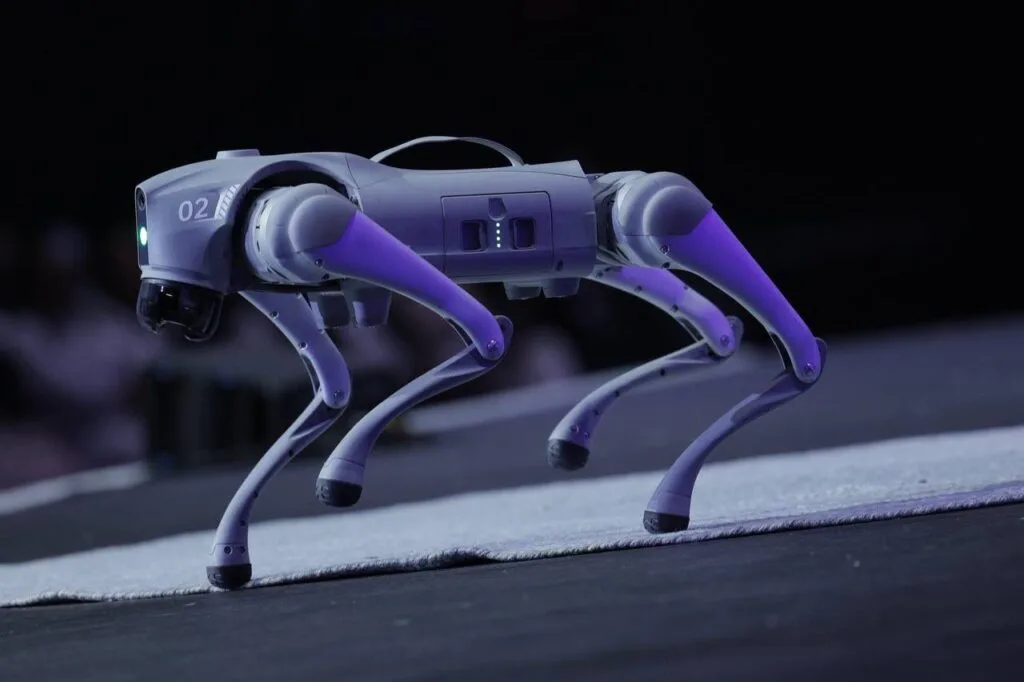
The four-legged robot uses sensors like cameras and LIDAR (Light Detection and Ranging) to build a 3D map of its surroundings, allowing it to understand its environment and avoid obstacles safely. This advanced perception is coupled with improved interactive capabilities, allowing for more natural and engaging interactions between humans and robots.
With a battery life of 2-4 hours and a top speed of approximately 5 metres/second, this robot is built for endurance and agility. It can perform a variety of dynamic movements, from jumping and stretching to shaking hands and even pouncing, as Prof. Rosman demonstrated on stage in front of summit delegates. In this way, Murphy can navigate human environments, climb over obstacles, and walk on different types of terrain. Such robots are being used around the world to monitor and inspect oil rigs and factories, as an example.
The robot’s onboard computing power maintains its balance and stability while performing these dynamic movements, without needing to rely on external computing hardware. This level of mobility, flexibility, and self-contained computing power represents an advancement in robotics hardware that enables robots to better adapt to and interact with human spaces and various tasks.
“We’re finally at the point where digital and physical realities are merging and doing so in a really meaningful way,” said Prof. Rosman in closing.
Main Image: Supplied