South African Learners Win NASA Space Design Competition
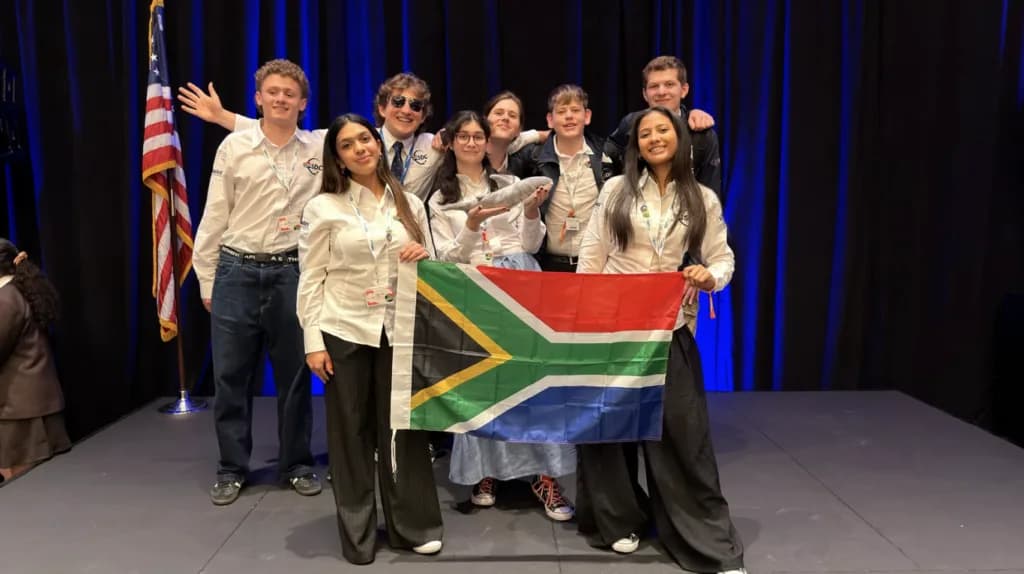
Seven South African high school learners won the International Space Settlement Design Competition as members of the winning Rockdonnell team, with one learner also receiving individual recognition at the global finals held in Florida. The international finals of the world's longest-running space engineering competition were held at NASA's Kennedy Space Center and the Walt Disney
South African Learners Win NASA Space Design Competition
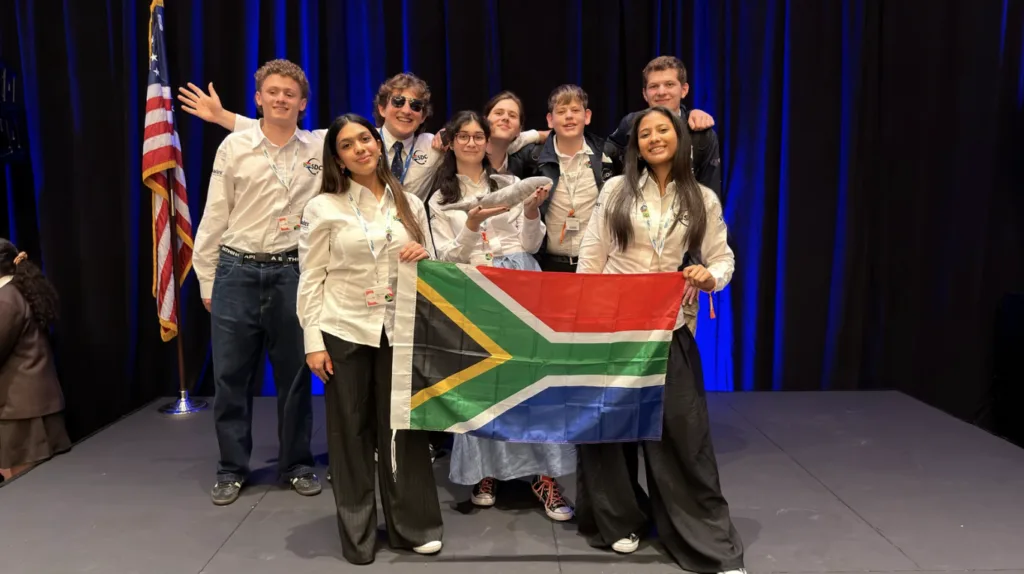
Seven South African high school learners won the International Space Settlement Design Competition as members of the winning Rockdonnell team, with one learner also receiving individual recognition at the global finals held in Florida. The international finals of the world’s longest-running space engineering competition were held at NASA’s Kennedy Space Center and the Walt Disney World Resort in Florida from 30 July to 2 August.
Team ZA was the only African team in the competition. It was also South Africa’s first time entering, with no African team having competed previously. The seven learners were selected from 109 learners representing nine schools at the inaugural South Africa Space Design Competition national finals held at the University of Cape Town in March.
At the international finals, national teams were merged into one of four large fictional multinational aerospace companies, each comprising about 60 learners. Each company had roughly 48 hours to develop a complete settlement design in response to an industry-style Request for Proposal before presenting it to a client.
Team ZA was placed in Rockdonnell, alongside teams from the United Kingdom, Australia, Brazil, China and two regions of the United States.
Rockdonnell became the first company in the competition’s history to include a team from every inhabited continent. On 2 August, Rockdonnell was named the winner.
Designing a Vessel for the Inner Solar System
This year’s brief was set in 2086 and required the companies to design a crewed vessel capable of carrying 3,000 residents and cargo continuously between settlements across the inner Solar System.
Rockdonnell’s proposal, named Hermes, used a rotating structure to create three separate levels of artificial gravity. The design also featured nuclear thermal and ion propulsion, as well as a magnetic shield intended to protect residents from solar radiation. The South African learners took on prominent roles within the winning company.
Qaylah Omar was one of Rockdonnell’s selected presenters, while Benjamin Honigwachs, Joseph Allderman and Ethan Schoombee answered questions from the judges during the evaluation.
Allderman also received the Anita Gale Creative Genius Prize, one of only four individual awards presented during the competition.
Schoombee, who is in matric, joined Team ZA after other learners withdrew. He plans to return next year as a volunteer. The other members of Team ZA were Alaya Kaplen, Dean Weich and Zayaan Abdurahman.
A Real-World Engineering Challenge
The competition is structured as a professional proposal simulation, giving learners the opportunity to work through a complex engineering brief under tight deadlines.
John Graves, a senior aerospace operations leader at NASA’s Kennedy Space Center, represented the client. Judges were available throughout the competition for teams to ask questions about the requirements, reflecting the way professional contractors engage with clients when developing proposals.
Graves contributed to the evaluation alongside a judging panel drawn from across the aerospace industry, which included former NASA astronaut Nicole Stott.
For Jagger Cooper-Doubell, chair and executive director of the South Africa Space Design Competition, the performance of Team ZA demonstrated the level of talent already present among South African learners.
“The talent was never missing in South Africa. The opportunity was,” Cooper-Doubell said.
He said the seven learners had already demonstrated exceptional ability before joining the programme, but the competition gave them an environment in which they could test themselves against learners from around the world.
The seven Team ZA members then went to Florida and won the international competition on their first attempt. Cooper-Doubell also challenged companies that say they struggle to find skilled people to look more closely at the capabilities of young South Africans.
“Every company in this country that says it cannot find skilled people should look very carefully at what these seven just did,” he said.
A Different View of What Is Possible
For Omar, the experience also changed how she viewed her own potential.
The 16-year-old, who attends Cannons Creek Independent School, spoke to an audience of about 300 people during the competition.
“I never thought that I would represent South Africa, let alone Africa, internationally,” she said.
The experience, she added, showed her that opportunities exist that young people may never have considered and can change how they see themselves and what they are capable of achieving.