Rail Investments in Africa: The Iron Backbone of Trade and Economic Revival
On a continent where logistics costs are devouring up to 18% of GDP, double the global average, Africa's rail networks are staging a long-overdue and a most welcome comeback. Released today by Terrapinn ahead of Africa Rail 2026, the Africa Rail Market Report paints a vivid picture of this resurgence, projecting a $50 billion market
Rail constraints costing South African miners billions of rands in lost exports
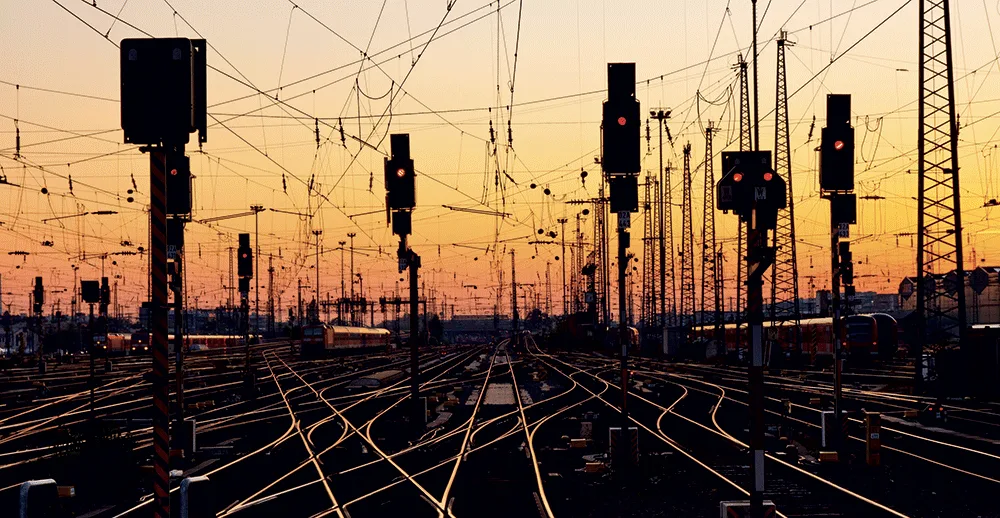
On a continent where logistics costs are devouring up to 18% of GDP, double the global average, Africa’s rail networks are staging a long-overdue and a most welcome comeback. Released today by Terrapinn ahead of Africa Rail 2026, the Africa Rail Market Report paints a vivid picture of this resurgence, projecting a $50 billion market by 2030 fuelled by a 6-8% CAGR.
Once the envy of colonial empires, African rail has languished for decades, but renewed investments are beginning to position it as the linchpin for trade, exports, and inclusive growth. For business leaders, this isn’t just infrastructure, it’s the unlock code for a $3 trillion continental economy under the African Continental Free Trade Area (AfCFTA).
The Shadow of Decline: A Half-Century of Missed Opportunities
Africa’s rail story is one of squandered potential. At the hight of colonial independence in the mid-20th century, rail networks spanning 70,000 km ferried minerals, crops, and passengers efficiently, underpinning early industrialisation growth. Yet, post-colonial mismanagement, underinvestment, and geopolitical fragmentation triggered a precipitous fall. By the 1990s, track mileage had shrunk a disturbing 20%, with derailments, theft, and corrosion rendering lines inoperable. South Africa’s Transnet, for instance, saw freight volumes plummet 30% since 2010 due to signaling failures and vandalism.
This decay exacted a brutal toll on economic vitality. Transport costs ballooned to 15-20% of export values compared to 8% in Asia, eroding manufacturing competitiveness. In landlocked Zambia, trucking copper to ports costs $0.10 per ton per km, five times that of rail rates, inflating landed prices and deterring FDI.
The ripple effects resulted in stifled growth. Africa’s manufacturing share of GDP stagnated at 10% compared to a 25% share in East Asia, while intra-continental trade languished at 18% (global average: 60%).
High logistics costs additionally choked investments. A World Bank study estimates $100 billion in annual losses from inefficiencies (equal to the current annual, total infrastructure investment in Africa), killing job creation and widening inequality. For exporters, it meant lost market share. As a solid example, Kenyan tea, arrives in Europe 10-15% pricier than Asian rivals, undermining billions in potential revenue and killing off potential market expansion or additional investment in tea farming in the country.
Catalysts for Renewal: Reform, Capital, and Continental Ambition
The tide is thankfully turning, propelled by pragmatic reforms and visionary investments. Structural liberalization—epitomized by South Africa’s 2023 Private Sector Participation Framework will look to open state monopolies to much needed private operators, retaining public ownership while injecting expertise. Requests for Information (RFIs) for PRASA and Transnet, open until December 2025, signal transparent concessions, drawing $1.1 billion in capital investment approvals and projected to add 84,000 jobs already.
Capital flows are growing with $50 billion earmarked for South Africa through 2027, Morocco’s $11.6 billion national program (including $2 billion for Casablanca metro ahead of the 2030 FIFA World Cup), and a continental annual need of $65-105 billion.
Multilaterals like the African Development Bank (providing $3.5 billion for Liberty Corridor development) and World Bank ($1 billion for Transnet) de-risk projects, while private models with build-operate-transfer concessions and performance-based maintenance are unlocking recurring revenue.
At the heart of this change is AfCFTA, ratified by 47 nations since 2018, promising a 33% intra-African trade boost by slashing tariffs on 90% of goods. Rail will be its enabler. Without efficient corridors, the pact’s $450 billion GDP uplift by 2035 remains theoretical. Global disruptions—US-China tensions, Red Sea reroutings, and near-shoring, further accelerate this. Supply chains are re-shoring to Africa for critical minerals (cobalt, lithium), with rail slashing delivery lead times. East Africa’s 5.7% GDP growth in 2025, per the report, underscores how projects like Angola’s Lobito Corridor (1,300 km, unlocking $10 billion in annual copper/cobalt exports by 2027) are supercharging trade.
Thriving Hubs: Where Rails Are Revving Exports and Intra-Trade
Spotlight falls on frontrunners. South Africa’s dual-track revival—PRASA’s modernization targeting 600 million passenger trips by 2030 and Transnet’s $7.3 billion freight upgrade adding 20 million tonnes capacity—exemplifies recovery. With 35 of 40 corridors operational and smart ticketing rolled out, it’s boosting port-hinterland links, vital for $100 billion in annual exports. Durban and Ngqura port enhancements (RFPs issued April-May 2025) will handle 20% more freight, directly fueling manufacturing in automotive and agro-processing.
Morocco leads in high-speed rail (HSR), its 430 km Kenitra-Marrakech line ($9.6 billion program) positioning it as a Mediterranean gateway. Egypt’s $23 billion Siemens-backed 1,100 km HSR network—linking Cairo to Luxor and Abu Simbel—will turbocharge tourism ($15 billion annually) and economic corridors, reducing Cairo-Aswan travel from 9 hours to 3.
Cross-border stars shine brightest for trade. The $90 billion Afrail Express pan-African corridor (multi-nation by 2027) and Trans-Kalahari Railway (1,500 km Botswana-Namibia, 14 million tonnes capacity from January 2025) dissolve landlocked barriers, enabling seamless mineral flows. These align with AfCFTA’s Phase II protocols on logistics, potentially doubling intra-trade to $300 billion by 2030. Amid global flux, e.g., EU’s Carbon Border Adjustment Mechanism hiking road emissions costs, rail’s green edge (80% lower CO2 than trucks) enhances competitiveness, drawing FDI from battery giants like CATL eyeing Zambian routes.
Sustaining Momentum: Priorities for Investment and Effort
To lock in gains, resources must zero in on four pillars according to the report.
- First, technology integration: Deploy fiber optics along tracks for signaling and ancillary telecom revenue, alongside cloud-based smart ticketing for multi-modal journeys. This could yield 20% efficiency gains, per Gibela’s Blue Train rollout.
- Second, regional harmonisation: Standardise gauges and regulations to cut cross-border delays (currently 48 hours average). Prioritise freight corridors like Lobito, channeling $20 billion annually into minerals amid EV demand.
- Third, private capital mobilisation: Scale PPPs with sovereign guarantees, targeting $15 billion in rolling stock leases. Address execution hurdles—tariff uncertainty and infrastructure decay—via capacity-building, as seen in South Africa’s localisation mandates (ramping domestic content to 60%)
- Finally, HSR expansion: Beyond Morocco/Egypt, fast-track South Africa’s 300 km/h Pretoria-Polokwane line (construction July 2025), reducing road dependency and unlocking $5 billion in tourism/manufacturing.
The Pan-African Payoff: A Network for Prosperity
A robust rail web promises exponential benefits for Africa. Economically, it could shave 5-7% off logistics costs, boosting GDP by 2% annually and creating an additional 50 million jobs continent-wide. For trade, seamless corridors under AfCFTA would elevate intra-Africa flows, insulating against global shocks, with a more developed and diversified procurement from DRC cobalt to Moroccan phosphates. Manufacturing could see much needed impetus forming on the continent. Lower costs may revive industries such as textiles in Ethiopia, and help maintain momentum in auto manufacturing in South Africa, building clusters that hold potential to attract $100 billion in FDI.
Socially, urban HSR eases congestion (Cairo’s network cuts emissions 30%), while passenger integration (77 million audited journeys in SA) enhances equity, connecting rural producers to markets.
As global supply chains fragment, the development of Africa’s rail offers a sustainable resilience, a “velocity revolution,” as per the report. The iron tracks ahead? Not just steel, but potentially becoming the rails of economic renewal, propelling a continent with potential into a globally competitive one.