Nvidia Surpasses Tech Giants, Becomes World's Most Valuable Company
Nvidia Corp's remarkable ascent has pushed its market capitalization beyond that of its mega-cap tech peers, earning it the title of the world's most valuable company as the artificial intelligence (AI) revolution continues. On Tuesday, Nvidia's shares surged by up to 4%, reaching approximately $3.3 trillion, surpassing Microsoft Corp and Apple Inc. Throughout the month,
Nvidia-Surpasses-Tech-Giants-Becomes-Worlds-Most-Valuable-Company-
Nvidia Corp’s remarkable ascent has pushed its market capitalization beyond that of its mega-cap tech peers, earning it the title of the world’s most valuable company as the artificial intelligence (AI) revolution continues.
On Tuesday, Nvidia’s shares surged by up to 4%, reaching approximately $3.3 trillion, surpassing Microsoft Corp and Apple Inc. Throughout the month, these top stocks have vied for the leading position, with Nvidia emerging ahead of its big-tech rivals.
Earlier in the month, Nvidia surpassed Apple by market value for the first time since 2002, with both companies fluctuating in their rankings over recent days. Last week, Apple briefly overtook Microsoft to claim the top spot.
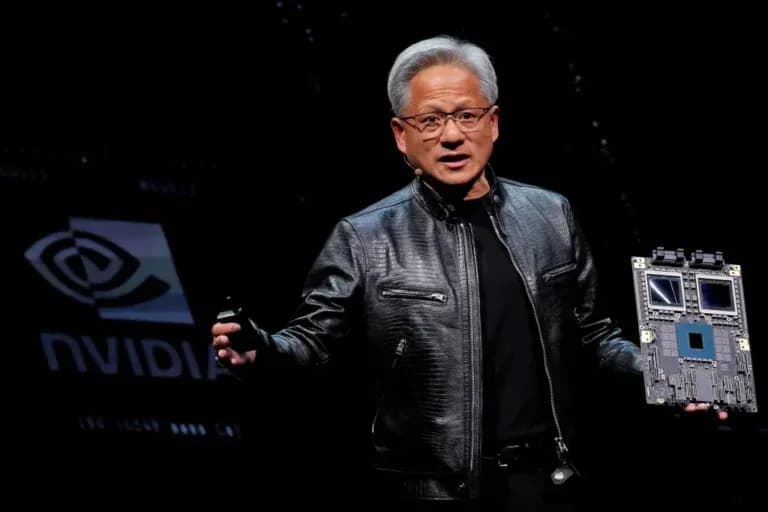
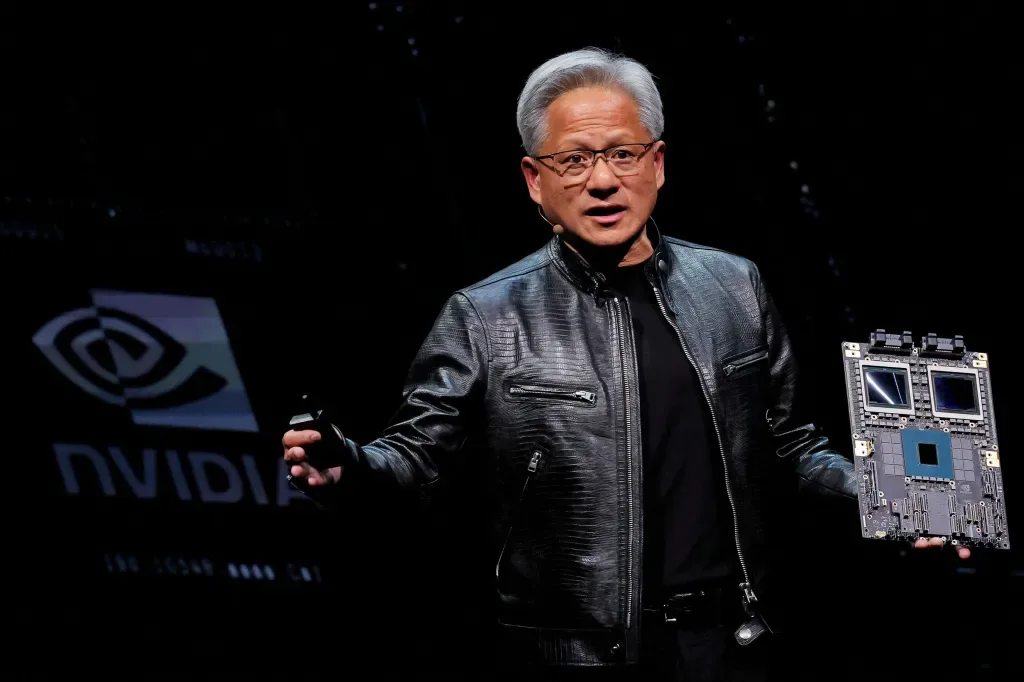
This ranking underscores the dominance of AI as a primary focus for many investors. Nvidia is widely recognized as the most significant and earliest beneficiary of AI technology, dominating the market with its in-demand chips that power data centres handling complex computing tasks required by AI applications.
The soaring demand for its H100 accelerators has driven Nvidia’s sales up by over 125% last year. Microsoft is also seen as an early AI winner due to its investment and partnership with OpenAI, the creator of ChatGPT. This week, Apple shares rallied after the company unveiled its plan for integrating AI technology, finally satisfying investors’ expectations.
“We believe over the next year the race to a $4 trillion market cap in tech will be front and centre between Nvidia, Apple, and Microsoft,” wrote Daniel Ives, an analyst at Wedbush Securities, in a note.
Nvidia’s skyrocketing stock price has significantly increased the wealth of its co-founder and Chief Executive Officer, Jensen Huang. His net worth has risen by more than $70 billion since the start of the year to $115 billion, placing him 12th on the Bloomberg Billionaires Index, marking the largest gain among his billionaire peers.
Investors, along with Huang, argue that Nvidia is more than just a chip maker. “They’re not just selling chips, they’re selling systems,” said Michael Lippert, vice president and portfolio manager at Baron Capital, in an interview, highlighting the company’s proprietary software and development ecosystem.
Nvidia’s rapid rise to the top has been record-breaking, as it is one of the few firms to demonstrate significant revenue growth from AI. As of the last close, shares have risen more than 160% in 2024, adding more than $2 trillion to its market capitalization.
“Nvidia’s GPU chips are essentially the new gold or oil in the tech sector, as more enterprises and consumers quickly head down this path with the Fourth Industrial Revolution well underway,” Ives stated.
Main Image: New York Post