Nigerian Drone Startup Terra Industries Expands Manufacturing to Ghana
Nigerian startup Terra Industries is expanding beyond its home market with plans to open its first overseas manufacturing facility in Ghana, aiming to scale faster in a market with clearer incentives while local policy development continues at home. The 34,000-square-foot drone production plant in Accra, known as Pax-2, is set to become Africa’s largest drone
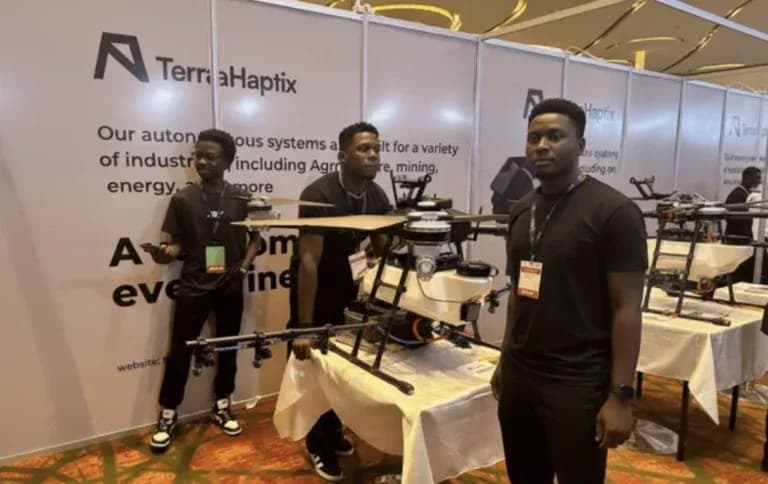
Nigerian Drone Startup Terra Industries Expands Manufacturing to Ghana
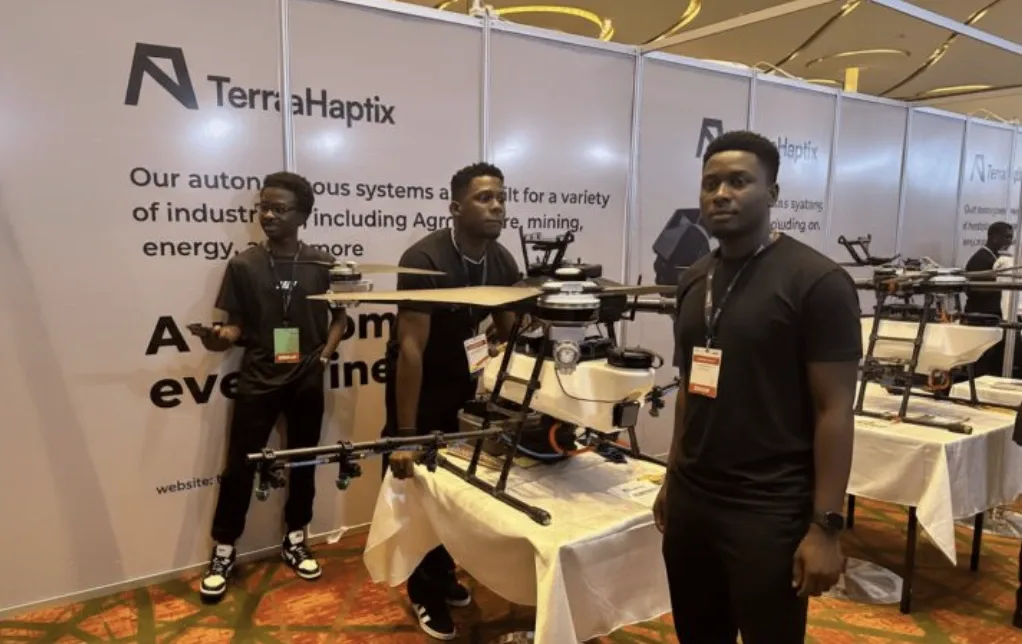
Nigerian startup Terra Industries is expanding beyond its home market with plans to open its first overseas manufacturing facility in Ghana, aiming to scale faster in a market with clearer incentives while local policy development continues at home.
The 34,000-square-foot drone production plant in Accra, known as Pax-2, is set to become Africa’s largest drone manufacturing facility when it launches in June 2026, more than doubling the capacity of the company’s existing base in Abuja.
Founded in 2024 by Nathan Nwachukwu and Maxwell Maduka, the company has raised $34 million from investors including Joe Lonsdale’s 8VC and Lux Capital. It has already secured contracts covering roughly $11 billion worth of critical infrastructure protection across eight African countries, including hydropower plants, lithium mines and oil facilities.
Why Ghana Over Nigeria
Terra is building its business around autonomous surveillance systems and wants to expand manufacturing capacity. Its decision to move into Ghana raises questions about why that growth is not happening in Nigeria.
Ghana’s free zones programme offers a 10-year corporate tax holiday, followed by a reduced 15% rate, along with duty exemptions on imported machinery and raw materials. In comparison, Nigeria’s Defence Industries Corporation of Nigeria Act of 2023, meant to support local defence manufacturing, has not yet translated into concrete support for Terra beyond a memorandum of understanding signed earlier this year.
High-Growth Bet With Broader Implications
With more than 80% of its components already sourced locally, CEO Nwachukwu has pointed to Ghana’s support for defence exports as a key reason for the expansion. Still, the move comes with risk. Terra has generated over $2.5 million in revenue to date, but its Ghana facility is expected to produce 50,000 units annually by 2028. That will require growth well beyond the $50 million in contracts already secured, especially as most of its current clients are based in Nigeria.
For Ghana, the investment connects with its agriculture programmes, where drones are increasingly used to check crop conditions and monitor infrastructure on the ground. More widely, it highlights how government rules and incentives are starting to influence where African tech companies build and expand, especially in industries like defence and manufacturing that require large upfront investment.