New Legal AI Launched in South Africa Today
Today (19 June 2025) saw the official launch of a new Legal AI tool, Lexis+ AI in the South African market that is the product of several years of development by the company, with South Africa being the sixth country that Lexis Nexis has rolled it out to. The legal context for the product is
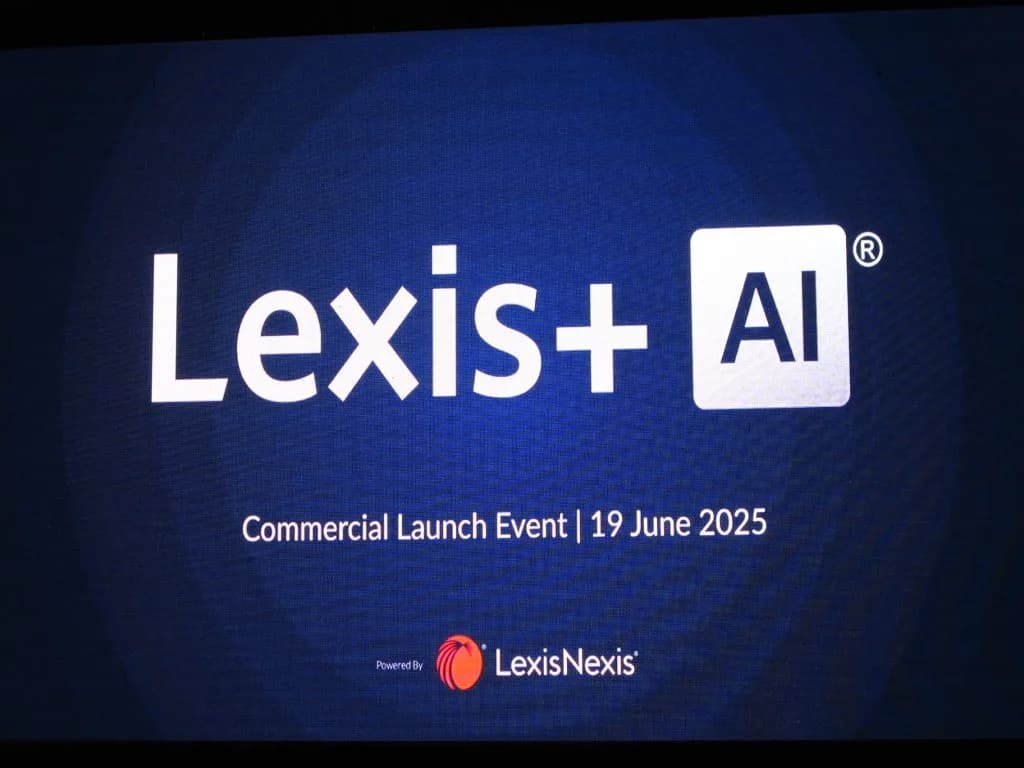
Lexis+ Ai Launched in South Africa
Today (19 June 2025) saw the official launch of a new Legal AI tool, Lexis+ AI in the South African market that is the product of several years of development by the company, with South Africa being the sixth country that Lexis Nexis has rolled it out to.
The legal context for the product is that despite massive AI developments happening across the globe, in a legal context the standing and veracity of the content produced by the AI has to be accurate and up-to-date.
With Lexis being a regional company, but part of a global group, they have been able to mix learnings from the wider global group, together with sound local legal content and context to produce what appears to be a ground-breaking tool for the legal industry.
Speaking at the launch, Ian Andrews Chief Executive Officer of LexisNexis South Africa stated: “We often speak about LexisNexis’s vision to advance the rule of law, and here in South Africa, that vision includes unlocking the full potential of the African content by advancing the rule of law. Lexis+ AI plays a critical role in helping us bring that vision to life. This initiative goes beyond just the technology; it reflects our broader commitment as an organisation. It’s truly inspiring to see that vision taking shape and becoming a reality.”
Powerful and Dangerous
AI has the capacity to be an incredibly powerful tool and they’re changing the way whole industries are operating, and the legal industry is no exception. AI is currently up-ending the entire business model of the industry and looks set to change how things such as legal fees are calculated and charged for in future.
Much of the current basic legal work such as case study search, document summaries and drafting of documents are likely to be done by AI in the future. Azhar Aziz-Ismail, sees this as an opportunity for legal professionals to expand access to justice by taking on more cases at lower rates should they wish.
However AI can also be quite destructive if used incorrectly or without the correct context provided.
Lexis+ AI is the culmination of the marriage of the power of AI technology with the authoritative trusted content that they have developed over decades, to provide a trusted AI solution to an industry dependent on complete accuracy.
“Our customers are at the center of everything we do, and that’s more than just a cliché to us,” says Andrews. “AI is reshaping the world, and it’s critical that legal professionals stay ahead. At LexisNexis, we’re excited to help make that possible. Lexis+ AI is here to support, not replace, legal professionals. It’s not a case of human vs. machine, but as human plus machine: working together and synergizing to make the practice of law more effective, efficient, and impactful.” comments Andrews.
Technology Adoption in Legal Industry Gaining Momentum
New technologies are rapidly being adopted, with AI only one. Things such as blockchain tech in document affirmation is changing the landscape. There is however lots of risk associated with the tech adoption and the industry will need to do more than simply start using new tech tools.
Questions around policies, and particularly the use of client data withing AI technologies, as well as the safety and security of this data and systems is an absolute must for any firm.
Companies and their clients will need to understand risks associated with AI and other tech adoption and alongside this, legal practices adopting AI will need to still make sure that sources quoted in legal cases or documents are confirmed and verified.
The team from Lexis Nexis provided sound advice to companies looking to gain advantages in efficiencies from AI:
- Ensure that critical thinking is still applied
- Nuances in cases are not things that AI can provide – it still needs human input
- When using AI tools, provide full context to the questions being asked of the AI
- Learning to use effective AI prompts is a new skill many will need to learn
- Ensure staff are trained and upskilled to understand how to use AI tolls effectively
Legal Industry Game Changer
Ai tools such as the Lexis+ AI are certainly going to be a game changer for smaller legal firms who now would be able to have a resource that can support them growing their business with little additional costs in staffing.
Several clients in other countries have seen massive improvements in efficiencies and so there are solid use cases to support the notion of AI improving both efficiencies and profitability.
Another possibility is that legal fees could see a reduction is cost with less background research and document drafting work required to be done, leading ultimately to fewer hours being spent on legal work.
The potential here is that this would result in more cases being managed by the same size firm and with this ultimately making legal services more affordable to more individuals and smaller companies.
In conclusion Andrews states “We’re making it easier for individuals to understand the law, to access the law, and to use the law day-to-day. This not only improves the economies we serve but also enhances the lives of the communities we support. Lexis+ AI and Protégé in Lexis+ AI mark the next step in the LexisNexis evolution, building on a legacy that spans from print materials to the many technological advancements that have followed.”