Neuralink Advances Brain-Machine Interface Technology
Neuralink has recently implanted its second patient chip to allow paralyzed patients to use the digital device by just thinking. Neuralink has been making its way into the field of brain-machine interfaces with its power to develop brain chips that could change how humans interact with technology. It is in the process of testing its
Neuralink Advances Brain-Machine Interface Technology
Neuralink has recently implanted its second patient chip to allow paralyzed patients to use the digital device by just thinking.
Neuralink has been making its way into the field of brain-machine interfaces with its power to develop brain chips that could change how humans interact with technology.
It is in the process of testing its chip, which aims to help people who suffer from spinal cord injuries. The device has allowed its first patient Noland Arbaugh to play video games, browse the internet, post on social media, and move a cursor on his laptop.
Noland Arbaugh received his brain chip in January this year and has since used the device “Telepathy” to play video games, online chess, and other activities he had previously been unable to do.
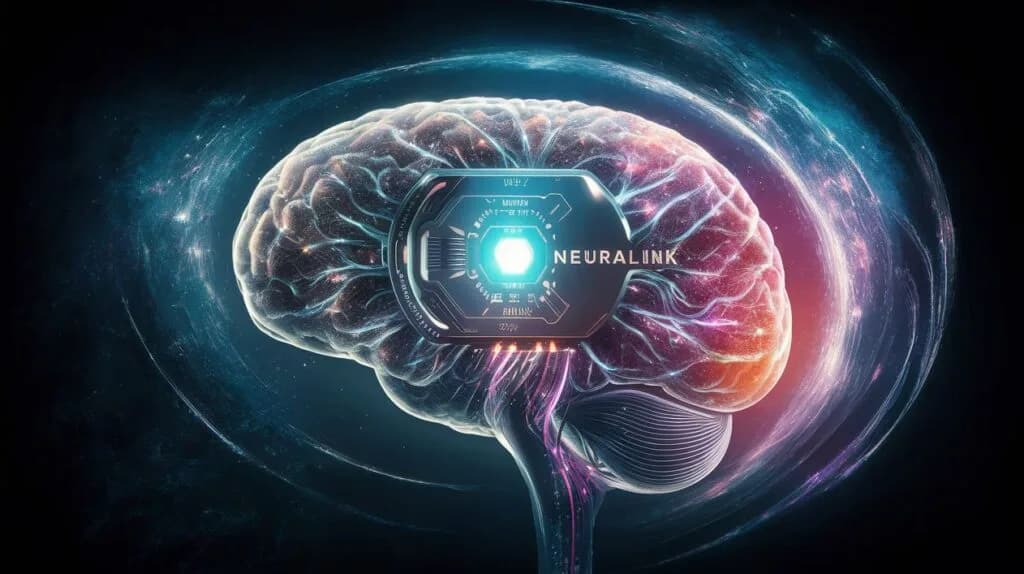
Neuralink’s technology is around an implantable chip known as the “Link,” containing multiple small, flexible electrode threads. The threads are thinner than human hair and need precise surgery to be done by a specialized robotic system. The chip records and sends brain waves to a different device like a computer through wireless technology.
As Neuralink progresses with brain chip integration, ethical issues concerning privacy and accessibility are raised. Regulating technological innovation and considering societal impacts requires careful consideration of ethical frameworks moving forward.
The company stated that it intends to perform another eight trials again this year as part of its clinical trials.
Neuralink Corp. is a neurotechnology company that was created by Elon Musk and a team of seven scientists and engineers (Max Hodak, Benjamin Rapoport, Dongjin Seo, Paul Merolla, Philip Sabes, Tim Gardner, Tim Hanson, and Vanessa Tolosa) in 2016.
Main Image: Times Now