Nigeria Pushes for More Cloud Workloads to Be Hosted Locally
About 85% of Nigerian workloads now run on public cloud services, but most of the infrastructure supporting them sits outside the country. Kashifu Inuwa, director general of the National Information Technology Development Agency (NITDA), says Nigeria needs to increase its local cloud capacity. Only 22% of the country's 1,000 most accessed websites are hosted locally.

Nigeria Pushes for More Cloud Workloads to Be Hosted Locally
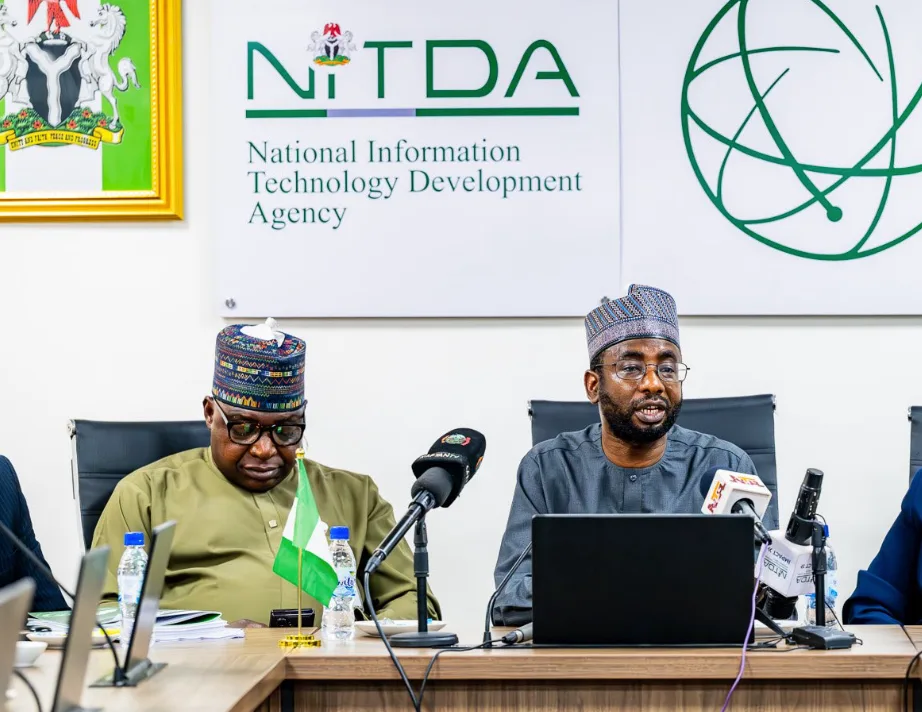
About 85% of Nigerian workloads now run on public cloud services, but most of the infrastructure supporting them sits outside the country. Kashifu Inuwa, director general of the National Information Technology Development Agency (NITDA), says Nigeria needs to increase its local cloud capacity. Only 22% of the country’s 1,000 most accessed websites are hosted locally. The Sub Saharan African average is 34%. The government is now pushing for more cloud infrastructure to be built and operated in Nigeria.
Nigeria’s cloud policy has changed
Nigeria started moving government agencies towards cloud services in 2019 with its Cloud First Policy. The policy encouraged agencies to stop spending heavily on their own server rooms and data centres. Instead, they could use cloud providers to run their systems. The approach increased cloud adoption, but it also meant many organisations turned to international providers. “People just started going to public cloud,” Inuwa said. The government now wants more of that infrastructure to sit in Nigeria. NITDA and Galaxy Backbone Limited signed the regulatory framework for the National Sovereign Cloud Initiative on 5 August 2026. Galaxy Backbone is a government-owned ICT infrastructure and shared services provider. The framework sets requirements for cloud providers covering areas such as data classification, technical standards and service quality.
Why Nigeria wants local cloud infrastructure
The government has a financial reason for pushing the change. NITDA says more than 90% of Nigeria’s digital data and enterprise workloads are hosted on offshore servers. Banks, fintechs and other companies often pay international cloud providers in dollars. That adds another foreign exchange cost for businesses operating in Nigeria. The government estimates that offshore digital services contribute to around $850 million in annual capital outflows. More local infrastructure could allow companies to pay some cloud providers in naira. It could also create more demand for workers in data centres, networking, software and cybersecurity. “Imagine if you are paying in naira, jobs will be created in Nigeria,” Inuwa said. Nigeria’s data centre market is expected to grow as more businesses move their systems online. Mordor Intelligence estimates that the market could reach $782 million by 2031.
The government also wants to reduce the effect of international connectivity failures. Nigeria relies on undersea cables to connect businesses and consumers to the rest of the world. In March 2024, four cables serving West Africa were damaged off Côte d’Ivoire. MainOne, WACS, SAT-3 and ACE all experienced cuts. The damage caused widespread internet problems across the region and affected businesses and essential services. NITDA wants Nigeria to have more local infrastructure and backup capacity so that a failure in one location does not cause wider problems. “For us, sovereignty is not about protectionism,” Inuwa said. The government is not asking international cloud providers to leave Nigeria. It wants them to build more infrastructure locally.
NITDA wants cloud providers to invest
The government has previously allowed some organisations to use public cloud services hosted outside Nigeria through waivers. Inuwa said that approach cannot continue indefinitely. “We can’t continue giving you waivers,” he said. “We need to have a roadmap on when you are going to localise some of this infrastructure in Nigeria.” One challenge is whether Nigerian data centres can meet the technical requirements of major cloud providers. NITDA brought global cloud companies and local data centre operators together at the National Cloud Infrastructure Summit to discuss those requirements. The talks led to a technical working group made up of local providers and global cloud companies. The group helped develop the framework for the National Sovereign Cloud Initiative. The framework covers data classification, technical requirements for cloud providers and digital quality standards.
Cost could slow the move
Local cloud infrastructure will have to compete on price. Hosting workloads in Nigeria has historically been more expensive in some cases than using overseas providers. That makes international cloud platforms attractive to startups and smaller businesses with limited budgets. NITDA and Galaxy Backbone are working on plans to offer startups cheaper cloud services and allow them to pay in naira, Inuwa said. The government expects more local capacity to bring more competition into the market. “Today, because of lack of competition, that’s why the hyperscalers choose their own price,” Inuwa said. The government is also considering incentives for companies investing in local data centres and cloud infrastructure, although it has not yet provided details.
That will be the main test. Startups will want affordable services with enough capacity. Banks and larger companies will need infrastructure that can handle bigger workloads without affecting reliability or security. The demand is also changing. Cloud providers will increasingly need to support applications using artificial intelligence and other data heavy technologies. Ibrahim Adeyanju, managing director and chief executive of Galaxy Backbone, said the initiative could attract more investment into Nigeria’s data centre industry. For now, the government is not trying to replace public cloud services. It wants more of the infrastructure behind those services to operate inside Nigeria. “Our goal is not to take the public cloud away, but to get the hyperscalers localised,” Adeyanju said.