Are African Small-Scale Mining Startups Scalable?
Mining is a capital-intensive industry, but not every opportunity requires developing a large mine. Small-scale mining startups can enter the sector with more focused operations, targeting deposits and opportunities that may not attract major mining companies. For an investor, the interesting question is not whether a small mine costs less to develop. It is whether
Are African Small-Scale Mining Startups Scalable?
Mining is a capital-intensive industry, but not every opportunity requires developing a large mine. Small-scale mining startups can enter the sector with more focused operations, targeting deposits and opportunities that may not attract major mining companies.
For an investor, the interesting question is not whether a small mine costs less to develop. It is whether a relatively small amount of capital can establish production, generate cash flow and create a basis for expansion. That requires looking closely at the deposit, the production model and what happens after the first sale of mineral.
Capital Can Be Matched to Production
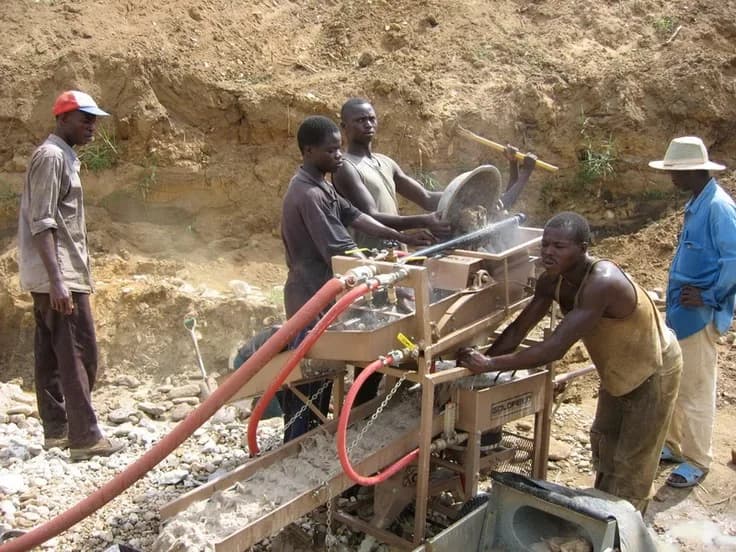
The first investment decision is usually about how much money is needed to get the operation producing. A startup may already have a defined resource and mining rights, leaving the immediate funding requirement around equipment, site preparation, processing and working capital. That changes the way the investment is assessed. The focus moves from funding an entire mine development to funding the next stage of the business.
An operation may need capital for excavation equipment and a processing plant before it can sell its first concentrate or recovered mineral. Once production begins, investors have actual information on volumes, grades, recovery and operating costs. Those figures give them something more concrete to work with when deciding whether the business deserves another round of capital.
Production Shows What the Mine Can Deliver
Getting a small operation into production also gives investors information that exploration alone cannot provide. Exploration data can indicate the size and quality of a resource, but running the operation shows how the material behaves under actual conditions.
Grades can vary between sections of a deposit, while recovery rates may differ from laboratory or test-work results. Equipment can also perform differently from the assumptions used in the initial business plan. Processing costs may change once the operation starts handling commercial volumes.
Once production starts, investors can compare these results with the original projections. A startup that demonstrates consistent production and recovery gives them a clearer picture of how the business is performing before more capital is committed.
Growth Can Follow Production
A small-scale mining business does not necessarily need to build its full operation from the beginning. Once production is established, management can look at whether additional equipment, processing capacity or geological work would generate enough revenue to justify the cost. A company might increase mining capacity by adding equipment or raise throughput by expanding its processing circuit. Further geological work could also identify areas that support an extension of the operation.
This gives investors an opportunity to see how the first phase performs before putting more money into the business. If production and costs are close to the original projections, the case for expansion becomes easier to assess.
Local processing can increase the value captured by a small-scale mining startup when the additional costs are justified. As the operation grows, processing can also create employment and demand for local services. For investors, the important consideration is whether the additional processing improves the economics enough to support the next stage of the business. Equipment, power, labour and processing costs all need to be covered by the additional value generated from the finished product.
Understanding the Real Risks
There will always be a degree of risk in any business, and small-scale mining is no different. Changes in ore grades can affect output, equipment failures can interrupt production and processing problems can reduce recovery. A fall in commodity prices can also put pressure on margins.
The aim is not to eliminate that risk, but to understand where it comes from and whether the business has enough room to manage it when conditions change. Having a mineral deposit does not automatically create a profitable business. The startup needs a reliable market, a price that supports its costs and a clear route to customers.
Management experience also matters because smaller operations have less room to absorb mistakes. Production problems or rising operating costs can quickly affect cash flow when the business has limited financial capacity.
The Investment Case Comes Down to Cash Flow
All of these factors eventually come back to the cash the operation can generate. The strongest small-scale mining opportunity is not necessarily the one with the largest resource. It is the one where the capital required to establish production is reasonable, the operating costs are understood and the business has a clear route to generating cash.
Once production starts, the investment case becomes easier to test. Actual grades, recovery rates, production volumes, selling prices and operating costs begin to replace assumptions.
For an investor, that creates a more useful question than simply asking how much mineral is in the ground: how much capital is required to turn that mineral into saleable production, and how quickly can the resulting operation generate enough cash to fund its next stage?
The opportunity is not simply to fund a smaller mine. It is to identify an operation where a focused investment can establish production, prove the economics and create a credible path to expansion. Well, I guess what remains is for investors to take a chance on one of Africa’s richest and fastest-growing industries.
Read About More like this HERE