Meta Completes Core 2Africa Subsea Cable System ready to connect millions
Meta has finished building the core of the 2Africa subsea cable system, a project that stretches farther than the Earth’s circumference. Announced on November 17, the system now forms the world’s longest open-access subsea network, reaching 33 countries across Africa, the Middle East, South Asia, and Europe. When its Pearls extension goes live in 2026,
Meta Completes Core 2Africa Subsea Cable System ready to connect millions
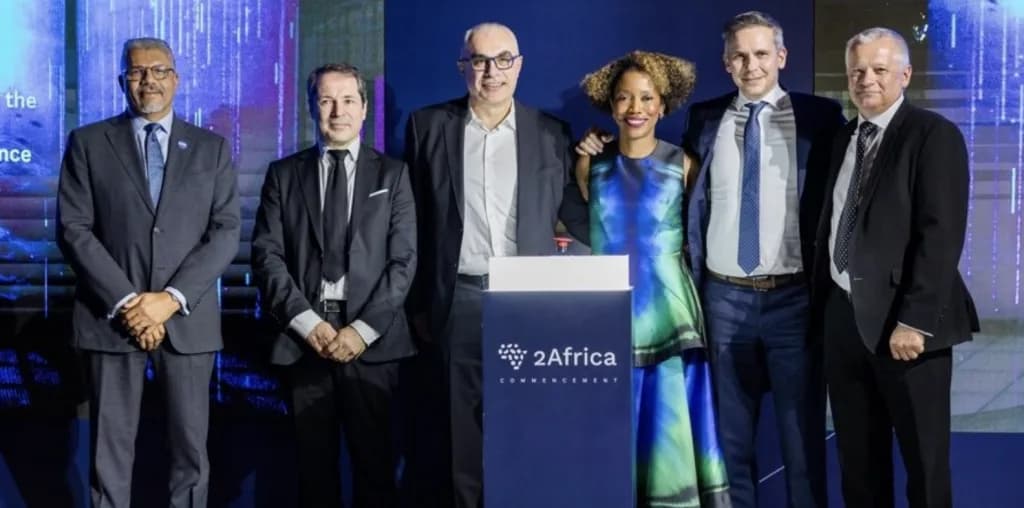
Meta has finished building the core of the 2Africa subsea cable system, a project that stretches farther than the Earth’s circumference. Announced on November 17, the system now forms the world’s longest open-access subsea network, reaching 33 countries across Africa, the Middle East, South Asia, and Europe. When its Pearls extension goes live in 2026, the full route will run 45,000 kilometers and support connectivity for almost three billion people.
2Africa is the first system to link East and West Africa in a single continuous loop, giving the continent stable, high-capacity routes to global digital hubs.
The cable did not appear overnight. Meta led a consortium that included Bayobab (MTN Group), center3 (stc), CMI, Orange, Telecom Egypt, Vodafone Group, and WIOCC. Teams worked across 50 legal and regulatory environments, often in parallel, to keep deployments moving. The effort required constant coordination with governments, regulators, and coastal authorities to handle landing points, permits, and technical approvals.
New contributors such as Bharti Airtel and MainOne (an Equinix company) joined later to help with landing stations and data centre integration along specific stretches.
A Network Built for Multiple Operators
2Africa operates on an open-access model. Instead of giving a single company control, the design lets multiple telecom operators, ISPs, cloud providers, and data centre networks draw capacity as needed. This approach widens market access, strengthens regional competition, and reduces wholesale pricing for cross-border traffic.
The model also supports Africa’s growing AI and cloud workloads, which rely on stable, high-throughput international routes.
Bandwidth From England to South Africa
The West African segment alone runs from England down to South Africa, landing in Senegal, Ghana, Côte d’Ivoire, Nigeria, Gabon, the Republic of Congo, the DRC, and Angola. Each fibre pair can handle 21 terabits per second, and the trunk carries eight pairs bringing the total to 180 Tbps.
At that scale, a city the size of Lagos could have millions of residents streaming, calling, working, and uploading at the same time without the slowdowns that typically hit peak-hour networks.
With so much international capacity available, the cable will allow service providers across Africa to buy bandwidth at far lower wholesale prices. Cheaper upstream capacity usually filters into better retail packages, wider 4G/5G rollout, stronger redundancy, and more stable connections for businesses and households.
Data centres, cloud services, fintech platforms, education technology, and health systems all depend on this kind of backbone to function at scale.
Projected GDP Boost and Job Creation
Meta estimates that 2Africa could add up to US$36.9 billion to Africa’s GDP in its first few years of operation. Previous cable landings across the continent have shown similar impacts: faster internet tends to increase hiring, improve productivity, and shift labour markets toward higher-skilled work.
The company expects the cable to support tech entrepreneurship, digital trade, creative industries, and offshoring sectors that rely on predictable high-capacity connections.
Africa’s subsea infrastructure has faced significant stress. In March 2024, several West African cables suffered damage linked to undersea landslides, leaving multiple countries with slow or partial connectivity for days. Those events exposed how fragile the continent’s routes still are.
2Africa’s completion adds new redundancy and strengthens Africa’s position within a crowded global subsea map. TeleGeography’s 2025 Africa Telecommunications Map lists 77 cable systems now active or under construction around the continent, reflecting a rapid expansion of international routes.