Massive Investment in China Robotics Growth
China’s National Development and Reform Commission has announced plans to set up a state-backed venture capital fund focused on robotics, AI and cutting-edge innovation. The long-term fund is expected to attract around US$138 billion in capital from local governments and the private sector over 20 years. The initiative aims to continue China's technology-driven success story
Massive Investment in China Robotics Growth
China’s National Development and Reform Commission has announced plans to set up a state-backed venture capital fund focused on robotics, AI and cutting-edge innovation. The long-term fund is expected to attract around US$138 billion in capital from local governments and the private sector over 20 years.
The initiative aims to continue China’s technology-driven success story in manufacturing. Within a ten-year time-span, China’s global share of industrial robot installations has risen from around one-fifth to over 50% of the world’s total robot deployment numbers.
“China has succeeded in upgrading its manufacturing industry at an unprecedented pace,” says Takayuki Ito, President of the International Federation of Robotics. “Based on their national robotics strategy released in December 2021, the country has set an example of how to systematically strengthen competitiveness.”
The Robotics success story
Chinese robot manufacturers have been able to significantly expand their domestic market share: Local suppliers’ annual industrial robot installations in China increased from 30% in 2020 to 47% in 2023. These robot companies are benefiting from a growing Chinese consumer market with increasing demand for all kinds of consumer goods.
Various industries are expanding their automation capacity: For example, in 2023 nearly two-thirds of industrial robots in the electronics industry are installed in China alone. Chinese manufacturers supply 54% of the industrial robots for this huge domestic market, and thus about 33% of the global demand in the electronics industry. Chinese robot suppliers for the metal and machinery industry even reached a domestic market share of 85%.
Risk Capital Required to Innovate
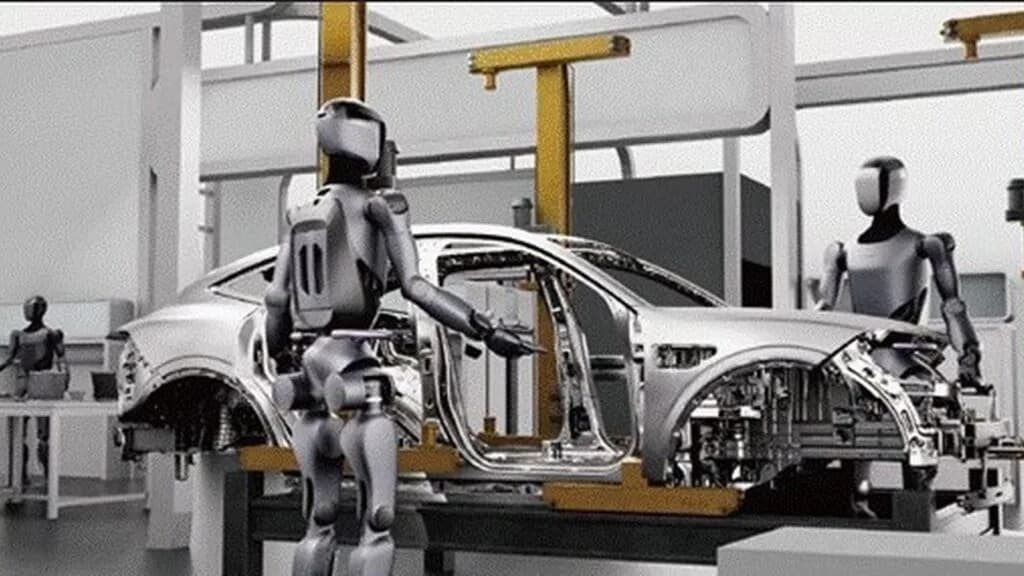
As an important next step, China aims to integrate robotics with other emerging technologies such as artificial intelligence. Also too create improved core components and new application scenarios of smart manufacturing. This progress has been illustrated by China´s recent initiative to position humanoid robots. Here they are a frontier technology and the newly approved state-backed venture capital fund.
“China has demonstrated how to leverage huge economies of scale,” says Dr. Dietmar Ley, Chairman of VDMA Robotics + Automation. “Massive investments are being made in humanoid robots, not only in China, where there is a national strategy for humanoids, but also in the US. These are where significant venture capital is driving innovation. Europe must not lag behind in this critical area. It is essential that European humanoid technology moves beyond the labs and into scalable, competitively priced production. This requires a coordinated effort to ensure that Europe remains at the forefront of humanoid robotics as well.”