Mankind on Mars – Now Likely in Our Life-time
In what was probably a week that is unlikely to happen in anyone else’s life, this past week saw Elon Musk launch two brand new autonomous vehicles, The Robovan and the Robo Taxi, alongside an updated and exceptional Optimus humanoid robot, and yesterday, rounded the week off with the astounding Starship flight and a faultless,
Mankind on Mars – Now Likely in Our Life-time
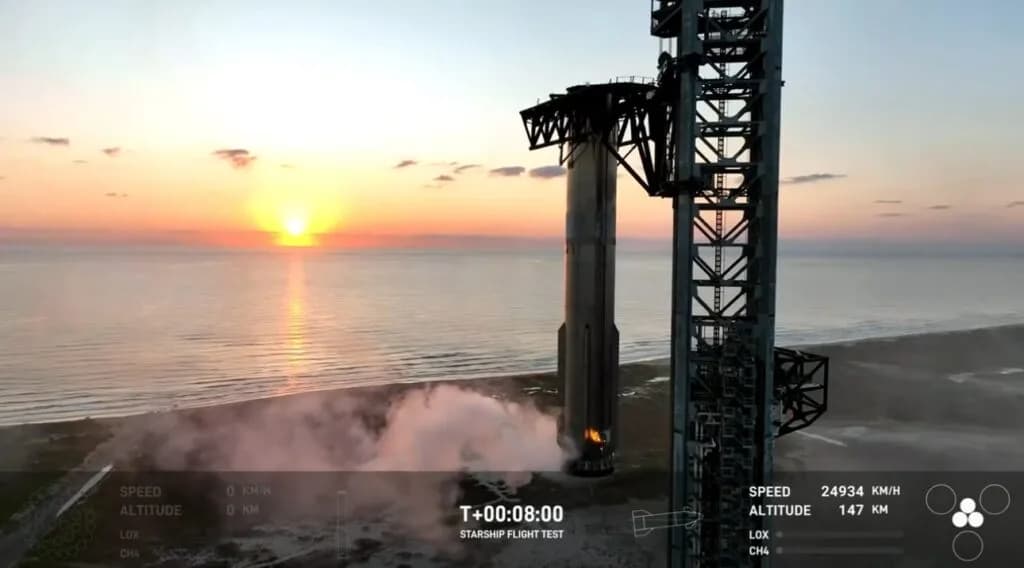
In what was probably a week that is unlikely to happen in anyone else’s life, this past week saw Elon Musk launch two brand new autonomous vehicles, The Robovan and the Robo Taxi, alongside an updated and exceptional Optimus humanoid robot, and yesterday, rounded the week off with the astounding Starship flight and a faultless, first-time booster rocket landing with new tech that is bound to change the course of space exploration.
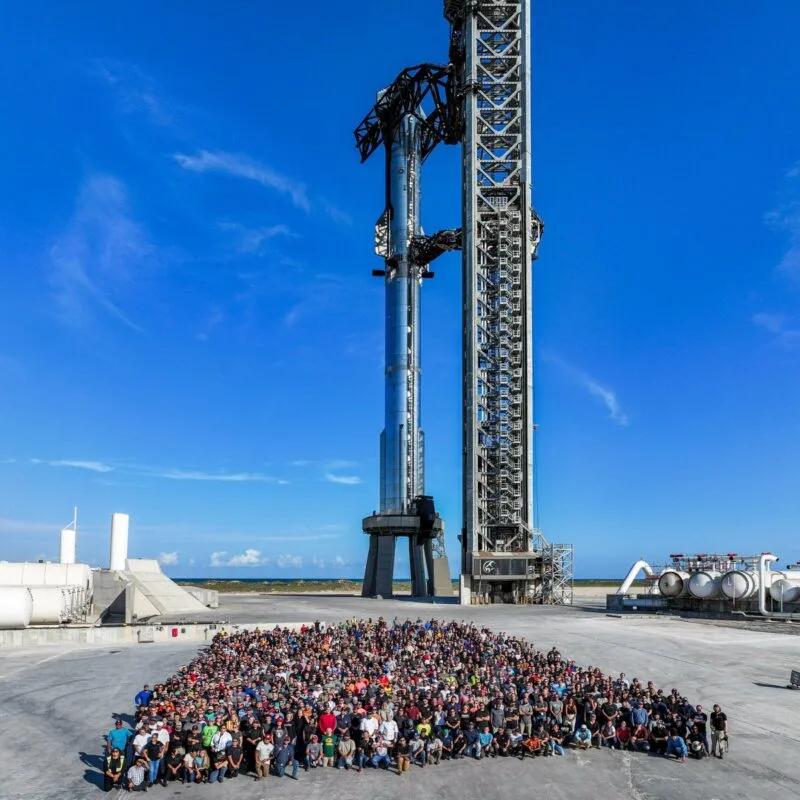
Worldwide, top rocket scientists and space program employees and heads of programs, could not give more credit or recognition to this space changing feat, delivered by an independently funded and directed space development company, without any contribution from any space agency or government.
The most remarkable thing is that Elon Musk himself knew how difficult and almost impossible it was going to be to achieve this. In May 2022, Elon Musk gave an interview where he said the following:
“THE PROBABILITY OF MECHAZILLA CATCHING STARSHIP IS ABOVE ZERO”. He went on to describe the new tower and capture arms of the Mechazilla, saying that It’s a “custom built tower with arms that are designed to catch the largest and heaviest flying object that has ever been made and pluck it out of the air “I mean –that’s the theory anyway”.
Launch and return are fundamental techniques for Starship’s fully and rapidly reusable design and has now been achieved with unbelievable accuracy and almost zero damage to the booster rocket. In a message on X this morning Musk said “Just inspected the Starship booster, which the arms have now placed back in its launch mount. Looks great!” “A few outer engine nozzles are warped from heating & some other minor issues, but these are easily addressed”.
Starship is designed to achieve reflight of its rocket booster ultimately within an hour after lift-off. The booster returns within ~5 minutes, so the remaining time is reloading propellant and placing a ship on top of the booster
The booster rocket for the SpaceX’s Starship, weighs around 250 tons, and while there are plans to reduce the weight over time, this was no small feat to capture such a massive rocket with spot-on accuracy and enable it to be reused, as was accomplished in Florida yesterday.
In Essence, you have an object several hundred tons in weight, plummeting towards earth, at more than half the speed of sound, and at the last few seconds of its decent, it ignites its boosters and rockets to slow decent and correct course in the matter of seconds to achieve a perfect landing. (Watch here).
The rocket had to be able to slow itself down very fast and correct any errors simultaneously. As Elon explained back in 2022 “Whatever the X-Y error is when the engines land, it’s got to take out that X-Y error and then drop the velocity to basically zero, to come in between the arms”.
“The arms will be wide, and as it’s coming in, the arms will close, go flush against the side of the vehicle, and the vehicle will be descending through the arms”.
“Success is one of the possible outcomes, the probability is uncertain, but it is above zero”, he concluded.
Well we know for certain now that the probability of seeing the first people land on Mars in our lifetime is perhaps much less uncertain than it was last week and definitely now way above the zero mark, thanks to the incredible people at SpaceX and one very determined global hero and entrepreneur who simply believes that the only way to secure a future for mankind is to make us an interplanetary species.