Learning Fast from Startup Failures in Africa’s Tough Markets
Across Africa’s volatile startup ecosystem, failure is certainly not the exception. Rather, it is a brutal but essential teacher. History indicates that more than 60% of African startups fold within their first five years, with shutdowns jumping by 50% in 2025 amid funding selectivity, currency swings, inflation, and infrastructure gaps. Yet the founders who ultimately

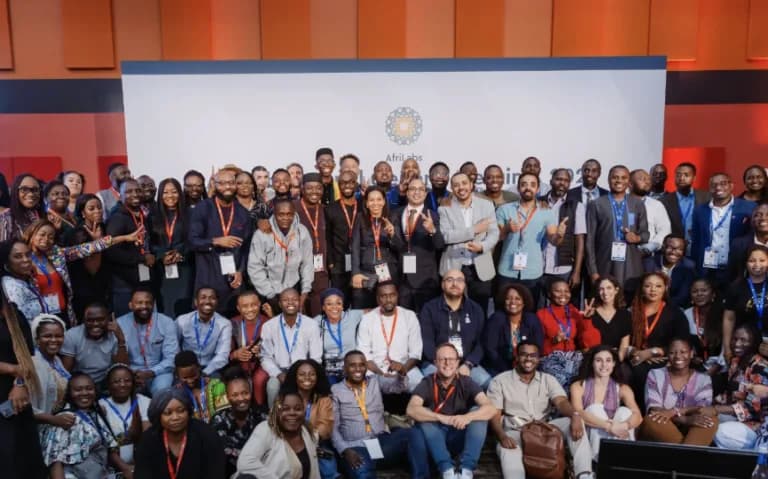
Africa Startup Ecosystem Builders Summit & Awards (ASEB)
Across Africa’s volatile startup ecosystem, failure is certainly not the exception. Rather, it is a brutal but essential teacher. History indicates that more than 60% of African startups fold within their first five years, with shutdowns jumping by 50% in 2025 amid funding selectivity, currency swings, inflation, and infrastructure gaps. Yet the founders who ultimately do win, are more often than not, those who master the art of failing fast and learning faster. They treat missteps as data, learn to pivot decisively, and emerge stronger and with better businesses and products.
The core challenge in African markets is rarely a lack of ambition. Founders often fall in love with elegant solutions to big problems such as financial inclusion, logistics, agriculture, healthcare, and then only to discover that their product’s market fit was illusory. They pour critical and often scarce resources into perfecting technology while ignoring other aspects such as distribution, unit economics, customer willingness to pay, or regulatory friction.
The result? Burned capital, exhausted teams, and missed opportunities. The antidote is disciplined learning: rapid experimentation, customer obsession, and the humility to kill what isn’t working before it kills you.
The Perils of Founder Fixation
Many failures stem from deep immersion in one’s own vision. Entrepreneurs build what they believe the market needs, often based on personal experience or global templates, without relentless validation. In fragmented African markets, marked by poor roads, unreliable power, diverse languages, and price sensitivity, this type of hubris can be startup deadly.
A stark recent example is Chimoney, the Nigerian-founded cross-border payments fintech. The startup developed solid API infrastructure supporting dozens of currencies and joined accelerators like Techstars. Early traction looked promising, with massive growth in transaction value and users in 2023. Yet by May 2026, it shut down operations, refunding client balances in an orderly wind-down.
Founder Uchi Uchibeke was thankfully candid lending his experience of failures for others to learn from. Their remittance product was great and worked technically, but distribution was weak, revenue stayed flat, and compliance costs across jurisdictions skyrocketed. Raising under $1 million in early funding raises proved and insufficient runway for a venture-scale fintech operating multi-country. The team spent too much time building and not enough ensuring people knew about and adopted the solution.
Chimoney’s story highlight’s a painful truth: in Africa, even brilliant infrastructure fails without strong go-to-market execution and capital discipline.
Learning from High-Profile Setbacks
Other cases reinforce the pattern. Kenya’s Sendy, once a high-flying logistics player that raised over $20–24 million, and initially launched as a consumer delivery app similar to Uber for parcels. It pivoted toward B2B logistics for SMEs but ultimately struggled with unit economics and operational complexity in tough markets. The company shut down operations around 2023–2024. Co-founder Meshack Alloys, however, applied those hard lessons to his next venture, TABB—a trade credit network using transaction data to help banks extend credit to SMEs. Failure became fuel for a more focused, data-driven model.
Similarly, MarketForce (RejaReja), the Kenyan B2B e-commerce platform for informal retailers, expanded aggressively across countries but faced low margins, funding winter pressures, and scaling hurdles. It wound down the core platform in 2024 and pivoted to social commerce via Chpter, an AI-powered conversational tool for WhatsApp and Instagram selling. This shift leveraged existing merchant relationships toward higher-potential channels.
Gro Intelligence, an agritech data platform that raised over $100 million, collapsed despite ambitious visions for transforming farming with insights. Revenue failed to match the tech-heavy model amid implementation challenges. These stories highlight common pitfalls: premature scaling, over-reliance on foreign capital templates, and insufficient adaptation to local realities like thin margins and long sales cycles.
Governance and transparency also matter. Some founders who maintained openness during crises preserved credibility for future attempts. In contrast, silent exits erode ecosystem trust. With 68% of failed African founders reportedly not retrying, those who do—armed with lessons—face investor scrutiny but also opportunity.
The Power of the Fast Fail and Pivot
Successful African startups often share one trait: they treat failure as iteration. Paystack, acquired by Stripe for $200 million, started broader but narrowed sharply to developer-friendly payment APIs for digital SMEs. This “zoom-in” pivot, driven by user data, unlocked massive adoption.
Paga founder Tayo Oviosu and Flutterwave co-founder Iyinoluwa Aboyeji (via earlier ventures) had prior failures before building unicorns. These entrepreneurs emphasise validated learning – building minimum viable products (MVPs), measuring real metrics (retention, not vanity users), and talking to customers weekly.
In practice, failing fast means:
- Relentless customer discovery: Run experiments, surveys, and pilots early. In Africa, offline habits and trust barriers demand hybrid testing.
- Key metrics discipline: Track unit economics, customer acquisition cost (CAC), lifetime value (LTV), and churn religiously. Ignore them, and you scale illusions, as seen in some inflated-metrics scandals.
- Cultural openness: Build teams that celebrate small experiments and flag problems early. Avoid “founder knows best” syndrome.
- Distribution as priority: Chimoney’s fate shows product excellence alone is insufficient. Partnerships, agent networks, and localized marketing are make-or-break.
- Capital realism: In 2025’s selective environment (funding rebounded to ~$3.2B but favored profitable models), bootstrap longer or raise only what you can deploy efficiently.
Operational efficiencies amplify learning. Tools for automation, lean teams, and scenario planning help navigate inflation or supply shocks.
Founders who pivot early and changing segments, models, or channels have better chance of preserving their startup’s runway. Late pivots often become desperate death spirals.
Building Resilience in Tough Markets
Africa’s context amplifies the need for agility. Currency devaluation, regulatory shifts (e.g., data laws, fintech licensing), climate disruptions, and talent competition demand adaptability. Frugal innovation —“jugaad” thinking thrives here: Founders need to learn to solve challenges with minimal resources, and iterate on feedback.
Mental resilience is equally vital. Founder burnout is common amid pressure. Peer networks, mentors, and transparent post-mortems are helpful. Investors increasingly back founders with failure experience, provided they show growth in governance, focus, and realism.
Broader ecosystem lessons are emerging. Incubators and programs now stress pre-seed validation and profitability paths. AfCFTA offers cross-border scale but requires navigating diverse rules—another area for fast learning.
Turning Failure into Advantage
The ability to fail and still win defines elite African entrepreneurs. It separates those trapped by ego from those driven by evidence. Chimoney’s shutdown, while disappointing, offers a public case study in distribution and capital realities. Sendy and MarketForce alumni demonstrate that closure can seed stronger second acts.
For current founders: audit assumptions weekly. Kill underperforming features ruthlessly. Prioritize distribution and economics alongside product brilliance. Document your learnings, as your next pivot or next venture is likely to depend on them.
In Africa’s tough markets, the fastest learners don’t just survive, they also form an essential part of the entrepreneurial landscape and help to shape the future. The next Paystack or Flutterwave is likely being forged in the middle of today’s setbacks. Embrace failure as tuition, learn aggressively, and pivot boldly. The continent’s opportunities reward those who adapt faster than the challenges evolve.