Sierra Leone Launches Africa’s First Solar-Powered 5G Network
In a move that blends clean energy with cutting-edge technology, Sierra Leone has launched Africa’s first solar-powered 5G network. The initiative marks a bold step toward digital inclusion and climate-smart infrastructure in a country long known more for its post-conflict recovery and economic struggles than for tech innovation. Despite ongoing democratic challenges and chronic underdevelopment,
Sierra Leone Launches Africa’s First Solar-Powered 5G Network
In a move that blends clean energy with cutting-edge technology, Sierra Leone has launched Africa’s first solar-powered 5G network. The initiative marks a bold step toward digital inclusion and climate-smart infrastructure in a country long known more for its post-conflict recovery and economic struggles than for tech innovation. Despite ongoing democratic challenges and chronic underdevelopment, Sierra Leone has managed to become a beacon of innovation on the continent. This dual achievement clean energy and next-generation internet signals a promising, path toward sustainable development.
Overcoming Democratic Hurdles Through Strategic Partnerships
Sierra Leone’s political environment has faced years of instability, including contested elections, governance shortfalls, and institutional fragility. Yet, the government found a way to push the 5G project forward through strategic public-private partnerships (PPPs) that insulated it from political turbulence.
Rather than relying solely on state funding and capacity, the project brought together international telecom providers, local solar energy companies, and development finance institutions. This helped depoliticize the initiative and frame it as a non-partisan national priority gaining support across political divides and sidestepping stalemate.
A Technocratic Approach in a Politicized Environment
The rollout was spearheaded by the Ministry of Information and Communications, which adopted a technocratic and inclusive approach. By focusing on the nationwide benefits of digital access like improved healthcare, education, and small business support the project avoided being seen as a political tool and instead emerged as a symbol of national progress.
Why Foreign Support Is Still Necessary
While the solar-powered 5G network is a major achievement, it raises an important question: Why can’t Sierra Leone fund and implement such infrastructure independently, given its mineral wealth?
The answer lies in a mix of structural and historical challenges:
- The Resource Curse – Despite rich deposits of diamonds, bauxite, gold, and rutile, Sierra Leone has long struggled with poor governance and corruption in the extractive sector. Rather than fueling national growth, mining revenues often disappear into elite networks or are mismanaged, weakening the public sector’s capacity.
- Lack of Local Value Addition – The country primarily exports raw materials. Without refining and manufacturing industries, Sierra Leone misses out on the higher-value economic activities that could boost tax revenues and reinvestment.
- Volatile Revenue Streams – Mining-dependent economies suffer from boom-and-bust cycles. When commodity prices drop, national income shrinks making long-term investments like 5G rollouts financially risky without external backing.
- Post-Conflict Recovery and Institutional Weakness – Decades of war and epidemics like Ebola devastated public institutions and infrastructure. Although rebuilding is ongoing, the capacity to deliver large-scale projects remains limited.
As a result, foreign partners including Huawei, green energy companies, and multilateral development banks play a key role in stabilizing and funding such ambitious ventures.
A Blueprint for Climate-Smart Digital Development
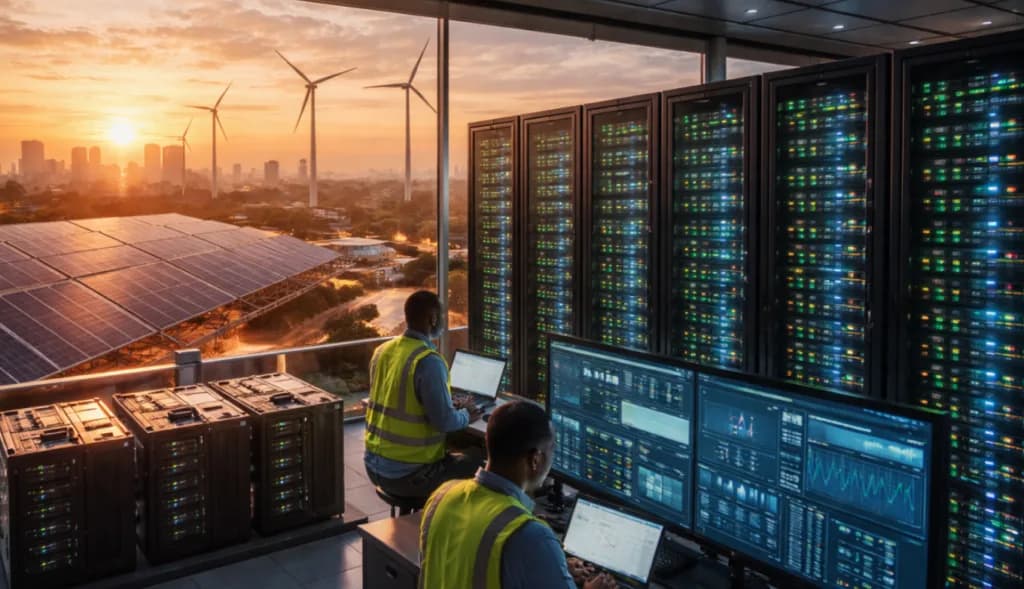
The solar-powered 5G network doesn’t just deliver fast internet it does so with minimal carbon emissions, thanks to solar-powered base stations. This is particularly crucial in a country where grid electricity is unreliable, and diesel-powered infrastructure is both expensive and environmentally harmful. Furthermore, the project supports inclusive digital development, with potential benefits in agriculture (smart farming), health (telemedicine), and education (remote learning), especially in underserved rural areas.Read more here
Building Toward Self-Sustainability
Sierra Leone’s mineral wealth should be the backbone of its self-reliance. But until governance, economic diversification, and institutional capacity improve, foreign sponsorship remains a necessary bridge. The challenge now is turning short-term support into long-term independence using projects like the 5G rollout as a launchpad for sustainable development powered by Sierra Leone’s own resources.