Transforming Education Through AI innovation Ethics and Impact
Imagine a lecture hall in South Africa, where two students showcase vastly different approaches to learning. One student presents a locally grounded case study on climate change in Limpopo. Another student submits a polished paper, but they've stitched it together from AI outputs filled with examples from Silicon Valley and New York. Both students are
Transforming Education Through AI innovation Ethics and Impact
Imagine a lecture hall in South Africa, where two students showcase vastly different approaches to learning. One student presents a locally grounded case study on climate change in Limpopo. Another student submits a polished paper, but they’ve stitched it together from AI outputs filled with examples from Silicon Valley and New York. Both students are smart, but only one is speaking to Africa’s realities.
This tension defines the education landscape today. AI is no longer a distant tool it’s being used in classrooms. The question is, will AI make African education more innovative and inclusive? Or will it reinforce old divides by importing foreign solutions that don’t fit?
The Promise and the Pitfalls
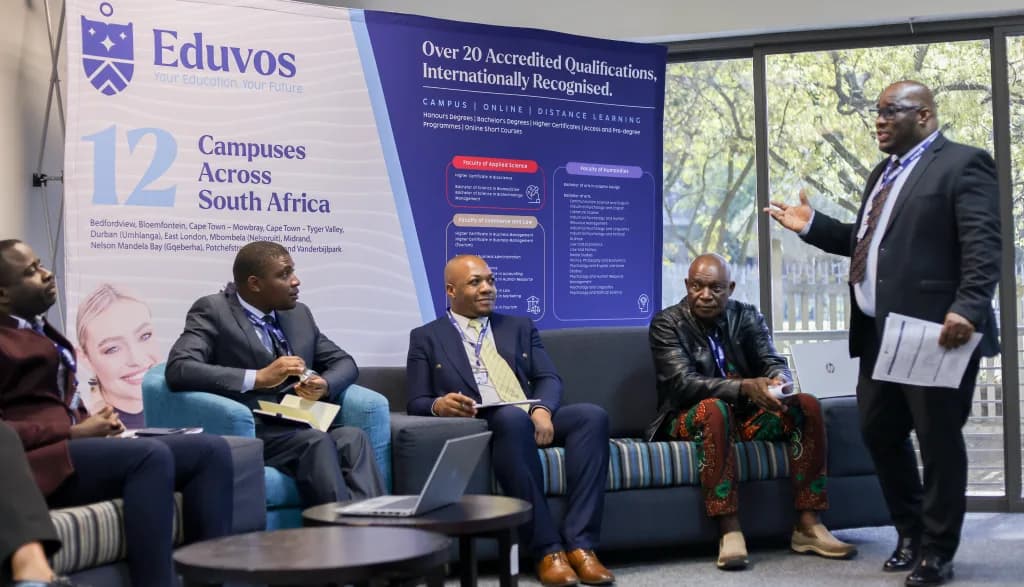
Prof. Bukohwo Michael Esiefarienrhe of North-West University advocates for using AI to spark creativity, strengthen decision-making, and nurture critical thinking. However, he warns that relying too heavily on AI has risks. Graduates may be able to prompt a chatbot but struggle to solve problems in their own communities. He also further highlighted that Universities must implement governance mechanisms that enforce integrity, prevent plagiarism, and maintain data accuracy. Faculty or designated AI oversight councils should monitor AI outputs and guide students to use these tools responsibly.
Dr Miné de Klerk and Dr Nyx McLean from Eduvos describe this challenge as “digital colonialism by design.” Most AI systems are trained on Western knowledge. This is why a South African law student often receives American case law when asking ChatGPT a question. If left unchecked, AI could reinforce the idea that valuable knowledge flows only from North to South.
More Than Hype or Fear
Institutions across Africa tend to swing between two extremes banning AI out of fear or embracing it without question. Both approaches miss the point. Critical engagement with AI is essential. One needs to ask not just what AI produces, but why and whose voices are missing.
African universities are experimenting with a technocritical approach. They’re redesigning assignments to test AI outputs against African realities. Law students verify AI answers against South African case law. Humanities students contrast AI interpretations with local satire and art. This approach reflects Prof. Esiefarienrhe’s argument for balance in education. Curricula should be designed to meet diverse needs, moving away from a “one-size-fits-all” model. AI can help achieve this, but human elements like empathy, ethics, and judgment cannot be automated.
Why Africa Must Shape AI
The future of AI in African education depends on today’s choices. Thoughtful adaptation allows Africa to co-create AI that reflects its languages, cultures, and aspirations. African students can then become active shapers of their own futures. Innovation, ethics, and impact must work hand in hand in AI development.