Google Integrates AI-Powered Responses into Search Engine in Major Overhaul
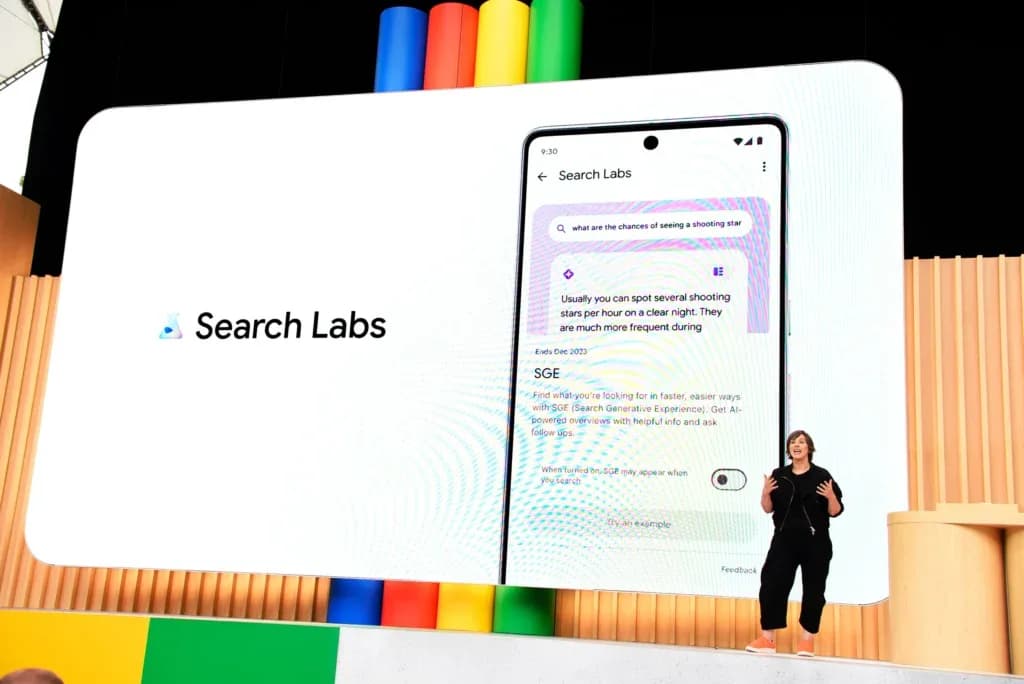
Alphabet’s Google announced on Tuesday a significant update to its search engine, incorporating responses generated by artificial intelligence (AI). This marks one of the most substantial changes to Google’s iconic search interface since its inception. For nearly two years, Google has been competing with OpenAI and other companies to introduce generative AI that can provide
Google-Integrates-AI-Powered-Responses-into-Search-Engine-in-Major-Overhaul
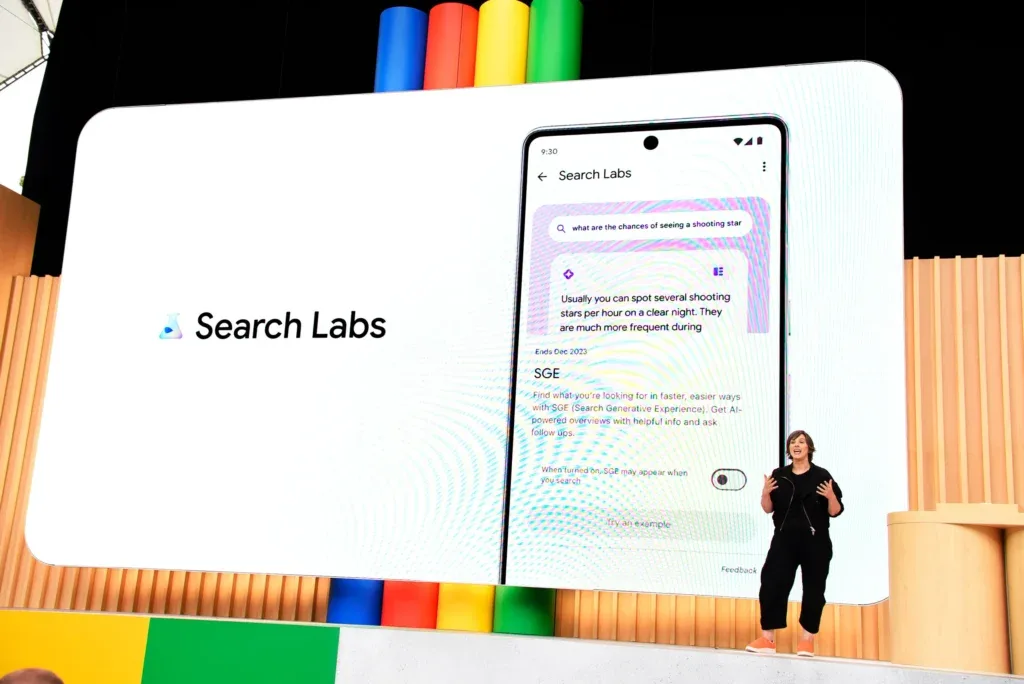
Alphabet’s Google announced on Tuesday a significant update to its search engine, incorporating responses generated by artificial intelligence (AI). This marks one of the most substantial changes to Google’s iconic search interface since its inception.
For nearly two years, Google has been competing with OpenAI and other companies to introduce generative AI that can provide conversational and complex answers to the public. On Tuesday, Google made a bold move to maintain its dominance as the world’s leading search engine.
The act of “Googling,” synonymous with searching the internet for the past two decades, is now enhanced with AI technology from Alphabet’s powerful AI model, Gemini. This was announced at the company’s annual developer conference in Mountain View, California.
“Google search is generative AI at the scale of human curiosity,” said CEO Sundar Pichai during the event, unveiling the new features that will initially roll out to U.S. users this week, with a global release to follow soon.
The most notable change is the introduction of “AI overviews,” which provide narrative responses to certain searches, reducing the need for users to click through multiple links. An AI-powered panel will appear under the search bar, presenting summarized information from Google’s search results.
Additionally, Google will introduce an AI-organized page that groups results by theme or offers specific plans for tasks like meal planning or finding restaurants for celebrations. However, AI overviews will not be provided for sensitive queries, such as medical information or self-harm.
Since surpassing Yahoo! in the late 1990s, Google has remained the global favorite search engine, thanks to its superior algorithm. However, the landscape of online search is evolving, with competitors like OpenAI and Anthropic introducing widely adopted AI chatbots, threatening Google’s position.
OpenAI, backed by Microsoft, recently introduced a faster and cheaper AI model called GPT-4o, which powers its popular ChatGPT. This model allows for quick responses to spoken and visual inputs.
Google’s new AI-powered search aims to streamline the search process, reducing the effort required for users to find information. “Search is a very powerful tool. But there’s lots of times where you have to do a lot of hard work in searching,” said Liz Reid, Google’s vice president for search.
Despite the advancements, Google must balance its innovations with the economics of its core search business, which generated over $175 billion in advertising revenue last year. Delivering AI-generated responses requires more computing power, potentially impacting profit margins.
To reassure advertisers and publishers, Reid emphasized that ads will continue to appear in designated slots, and tests have shown that AI searches often lead users to other websites, not away from them. However, some publishers, like Raptive, estimate that up to 25% of search traffic to their sites could disappear with the new AI features.
Google also showcased future AI developments, including Project Astra, a prototype of an AI assistant that can process video and respond in real time. Additionally, Google introduced updates to its AI models, such as Gemini 1.5 Flash, the fastest AI model available through its API, and improvements to Gemini Nano and Gemma 2 models.
The company highlighted its new generative media tools, including Veo, a video generation model, and updates to its text-to-image AI model, Imagen 3. Google also announced advancements in AI-generated music with Lyria and Music AI Sandbox.
To handle the increasing data demands, Google revealed the sixth version of its TPU (Tensor Processing Unit) for data centres, offering faster processing and more memory.
Addressing concerns over AI-generated content and copyright, Google will roll out SynthID, a system for watermarking AI-generated media, ensuring traceability of AI-created content.
With these innovations, Google aims to maintain its competitive edge and demonstrate its ability to translate AI advancements into profitable products and services at scale, despite the changing dynamics of online search.