From Smart Pins to AI Assistants: How Wearables Could Outpace Mobiles in Tech Evolution
Increasingly, Ai is not only impacting areas of business such as software coding and research, but are rapidly being integrated into everyday technology that is likely to result in Ai having a more integrated role in our everyday living. The big question is; Will new Tech developments such as new wearable devices change our devices
From Smart Pins to AI Assistants: How Wearables Could Outpace Mobiles in Tech Evolution
Increasingly, Ai is not only impacting areas of business such as software coding and research, but are rapidly being integrated into everyday technology that is likely to result in Ai having a more integrated role in our everyday living.
The big question is; Will new Tech developments such as new wearable devices change our devices choices and the way we interact with each other and the internet?
Wearables, such as smartwatches and AR glasses, are able to offer a more integrated and possibly a more convenient way for people to access information and perform tasks without the need to carry a separate mobile device. For example, checking notifications or health metrics directly from a wearable can be quicker and more seamless than pulling out a phone.
Additionally, as AI-powered assistants like Siri, Google Assistant, and new augmented reality tech are becoming more sophisticated. These have the potential to provide a clearer and more defined anticipation of user needs and to automate tasks or provide contextual information in real-time. As these processes become more refined, over time, they may well replace the need for many standalone mobile devices and applications by integrating functionalities directly into everyday interactions.
There is however a lot of consensus that for now we are likely to see a more complementary role of Ai and wearables rather than outright replacement of mobile tech devices.
While wearables offer convenience for quick interactions, they may not provide the same level of user experience for certain applications as mobile devices do. Tasks that require larger displays, precise input methods (like typing), or complex graphical interfaces are still better suited to traditional mobile devices. Perhaps as voice interfaces become more sophisticated this will change.
Privacy and Security Concerns: Wearables, especially those with AI capabilities, raise significant concerns about privacy and security and mobile devices currently offer more robust security features and control mechanisms compared to many wearables, which are likely to restrict widespread adoption.
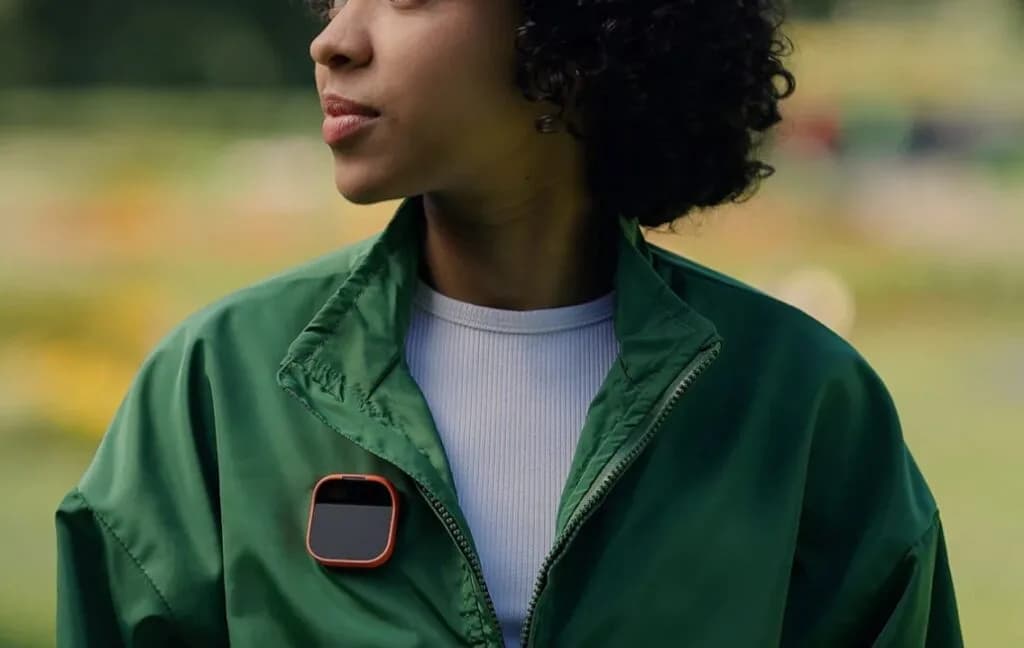
While new Tech such as Humane’s newly launched Ai Pin are bound to attract early tech adopters, issues such as security and the widespread use of mobile devices would suggest it would take significant advancements in wearables and AI to persuade consumers and developers to abandon mobile devices entirely in favour of wearables.
Below: The new Ai driven Pin Wearable device developed by Humane.