Founder Friday: Gaavor
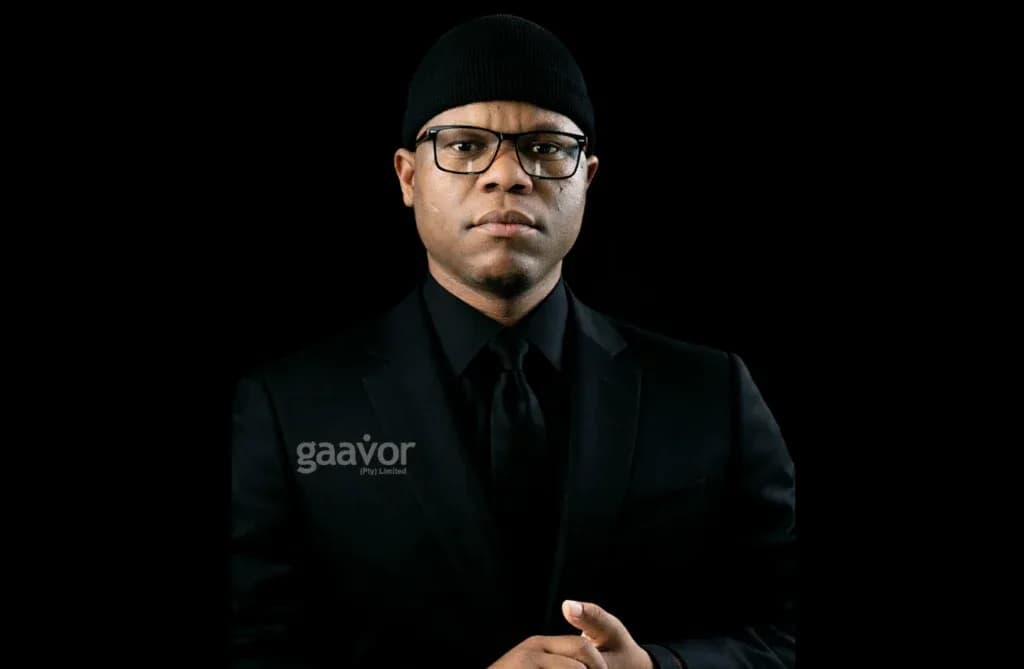
For many technology founders, the journey into the tech world begins with coding, engineering, or computer science. For Solly Makofane, however, the path was less conventional. His story moves from fine art and visual design into software development and entrepreneurship, ultimately leading to the founding of Gaavor, a company focused on building practical digital solutions
Founder Friday: Gaavor
For many technology founders, the journey into the tech world begins with coding, engineering, or computer science. For Solly Makofane, however, the path was less conventional. His story moves from fine art and visual design into software development and entrepreneurship, ultimately leading to the founding of Gaavor, a company focused on building practical digital solutions that address real operational challenges inside businesses.
Building Gaavor: A Mission to Simplify Operations
Solly founded Gaavor in 2022 with a clear mission: to simplify how organisations manage operational systems such as safety monitoring, compliance, and financial visibility. The philosophy behind the company is captured in its guiding idea “detect, simplify, fight”, a belief that technology should simplify complex operational problems rather than add unnecessary complexity.
The inspiration behind Gaavor came from a pattern Solly repeatedly observed while working with companies in different industries. Many businesses rely on software systems that were not designed with their specific needs in mind. In many cases, these tools were developed outside the continent and priced for large corporations, leaving smaller businesses paying for expensive platforms that only solve a fraction of their operational problems.
“Almost 80 to 90 percent of the software many companies buy only solves part of the problem,” Solly explains. “Businesses end up paying for entire systems when they only need specific features.”
Solving Real Operational Problems
This mismatch between software capability and real operational needs became the foundation for Gaavor’s approach. Instead of selling broad, generic platforms, the company focuses on building targeted digital solutions that address specific challenges inside organisations. These include safety and risk observation systems, as well as invoicing and billing platforms that improve financial visibility and accountability.
One of Gaavor’s early ideas emerged during a visit to a company where Solly noticed small safety issues that could easily escalate into serious incidents if left unresolved. That observation sparked the idea for a safety and risk observation platform designed to help organisations identify and address problems before they turn into costly incidents or injuries.
The path to building these solutions was not always smooth. Solly admits that one of the earliest mistakes was developing software without fully involving the people who would actually use it. Early versions were built on assumptions rather than direct operational feedback, which limited their initial adoption.
Solly recalls a turning point during the early stages of developing Gaavor’s safety observation system. After months of building and pitching the solution without success, one potential client finally expressed interest and agreed to pilot the platform, even offering to pay a small fee of around R40 to test it. While the amount itself was modest, the moment carried far greater meaning. For Solly, it signaled that someone finally saw value in the idea. It reinforced an important lesson for early-stage founders: the first validation of a solution often matters more than the size of the payment attached to it.
That experience reshaped how Gaavor develops its products today.
“Before we build anything, we sit down with the end users,” Solly says. “The people who will actually use the system are the ones who guide how the solution should work.”
This collaborative approach ensures that the platforms are built around real workflows rather than forcing companies to change how they operate. The aim is to create solutions that remain useful as organisations evolve.
Designing Technology with the End User in Mind
Solly’s earlier background in fine art and graphic design continues to influence how he approaches software development. While the connection between art and technology may not seem obvious, visual thinking plays a major role in how digital systems are designed.
Fine art, he explains, is about translating ideas into visual form. The same principle applies to technology. A platform may contain powerful functionality, but if users cannot easily navigate it, the system ultimately fails.
“Technology must make sense to the end user,” Solly says. “If someone opens a system and cannot easily understand where to click or how to use it, that solution becomes useless.”
Building for the Long Term
Today, Gaavor continues to expand its ecosystem of digital products, building solutions across multiple sectors rather than focusing on a single industry. The company is currently developing platforms for operational safety, financial management, and other business functions.
Solly often describes Gaavor as an emerging African technology ecosystem, one that aims to produce practical digital tools that help organisations operate more efficiently.
Despite the ambition behind the company, Solly remains realistic about the challenges of entrepreneurship in technology. The industry is often portrayed as a fast track to success, but building sustainable solutions requires persistence and patience.
“There is a perception that once you learn a programming language, success will come quickly,” he says. “But in reality, you are still dealing with people, and that part is never simple.”
Before launching Gaavor, Solly spent years freelancing and building smaller projects. That experience helped him understand what organisations actually need rather than focusing only on technical capability.
Advice for the Next Generation
Solly believes the most important quality for young people entering technology or entrepreneurship is the willingness to keep learning.
“In order for you to learn, you must always remain open and ready to learn in any environment,” he says. “The best mentor is created by the best mentee. The people doing the real work do not always have time to formally teach others, so young people must actively observe, ask questions, and learn from what they see.”
For Solly, entrepreneurship is ultimately about understanding people, recognising the problems businesses face every day, and designing solutions that make their work simpler. In a technology landscape filled with complex tools and expensive systems, that philosophy continues to guide Gaavor’s growth.
Read about More Founders HERE