China Leads Robotics Development Globally
Across China, currently the world's largest development market for industrial robots, the increasingly sophisticated technology being designed and developed in their robotic-tech, is altering the face of traditional industries such as Industrial manufacturing, automotive, agriculture, education as well as health and home services. As China charges ahead of the world in humanoid robot development, its focus design
China Leads Robotics Development Globally
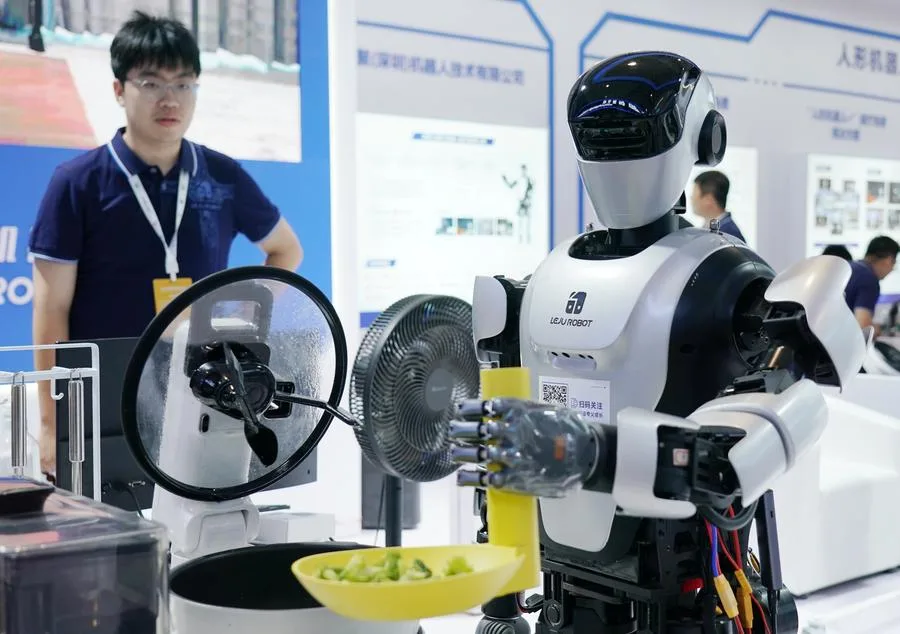
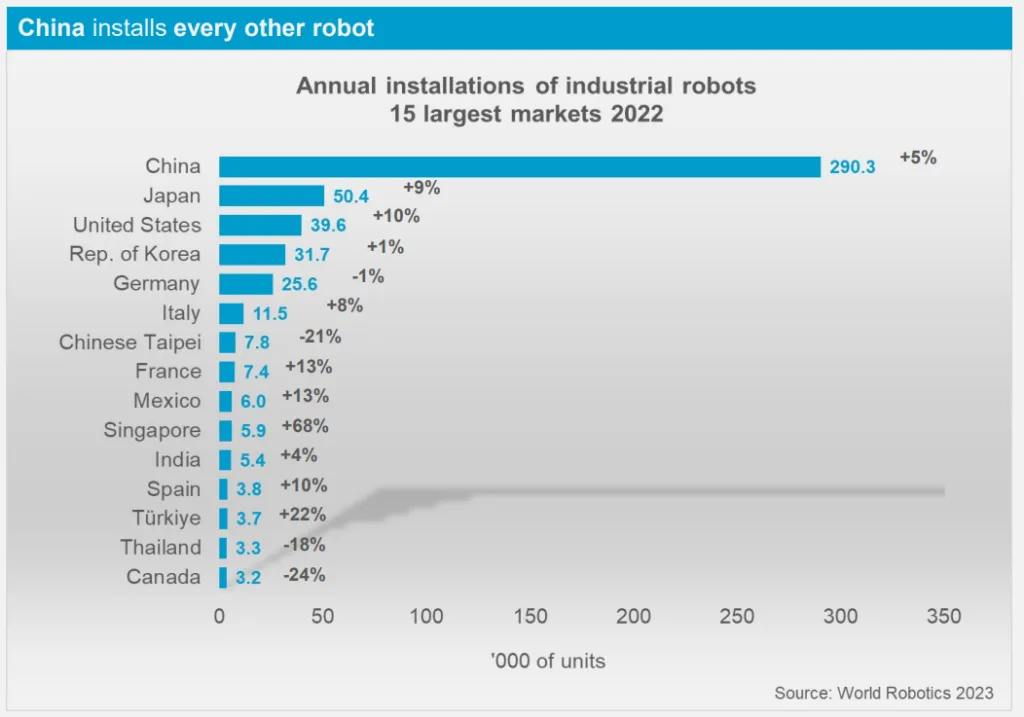
Across China, currently the world’s largest development market for industrial robots, the increasingly sophisticated technology being designed and developed in their robotic-tech, is altering the face of traditional industries such as Industrial manufacturing, automotive, agriculture, education as well as health and home services.
As China charges ahead of the world in humanoid robot development, its focus design and on improving supply chains are increasingly providing competitive advantages through the adoption of full supply chain ownership or collaboration which is allowing for the production of cheaper and more innovative parts as highlighted at the World robot conference in Beijing last week.
As an example, Wisson Technology, a robotics company based in Shenzhen that has developed innovative ranges of flexible robotic manipulators, uses 3D-printed plastic structures with pneumatic artificial muscles that power its robots, that replaces motors and reducers that are more commonly found in robotic manipulator designs. The subsequent impact on prices is remarkable, bringing it down by 90% cheaper that of comparative traditional robotic arms, according to Cao Wei, an investor in Wisson Technology.
Yi Gang, founder of Shanghai-based Ti5 Robot, who manufacture the Ti5Robot, is a company specialising in integrated joints, the owner however highlighted some of the problems he has experienced in the robotics supply chain.
“The whole supply chain still needs to address issues with product reliability,” said Yi, adding that due to high incidents of defect rates his company can only make products in volumes of up to 1,000. Their “Harmonic Gear, a robotic part that plays a key role in motion-control, was a key issue at this point, he said.
At the closing of the conference on Sunday, Premier Li Qiang said that it was crucial to implement President Xi’s guidelines on the importance of the robot industry.
“The robot industry has broad prospects and huge market potential,” Li said, as quoted by China’s official Xinhua news agency.
Describing robots as an “important yardstick for technical innovation and high-end manufacturing strength,” Li called for efforts to maintain supply chain stability and progress on the international stage.
“It is necessary … to promote the expansion and popularization of robots in various fields such as industry, agriculture and service industry,” he said.