Canva Introduces AI 2.0, Offline Access, and New Education Platform
Canva has announced its most significant evolution since its launch in 2013. The update was revealed at Canva Create in Los Angeles and introduces Canva Offline, Canva AI 2.0, and Learn Grid, a new education hub. For South Africa, the standout feature is Canva Offline. With more than half of Canva designs created on mobile
Canva Introduces AI 2.0, Offline Access, and New Education Platform
Canva has announced its most significant evolution since its launch in 2013. The update was revealed at Canva Create in Los Angeles and introduces Canva Offline, Canva AI 2.0, and Learn Grid, a new education hub.
For South Africa, the standout feature is Canva Offline. With more than half of Canva designs created on mobile locally, combined with prepaid data usage and frequent load shedding, offline access significantly improves usability for millions of users.
Canva AI 2.0
Canva AI 2.0 introduces a redesigned architecture that transforms how users create content. It shifts Canva further from a design tool into a full creative system for individuals, businesses, and educators.
Key capabilities include:
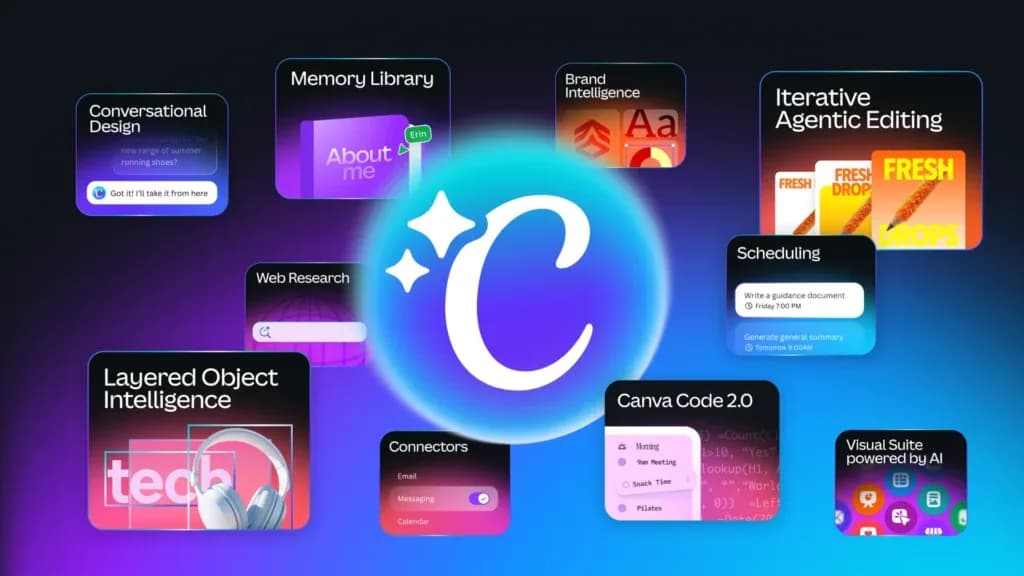
- Conversational Design: Users can describe an idea in natural language, and Canva generates a fully editable design with layout, structure, and branding already applied.
- Agentic Orchestration: A single prompt can trigger multiple Canva tools to complete full projects across different formats.
- Object-Based Intelligence: Users can edit specific elements without restarting the entire design.
- Living Memory: The system adapts over time, learning user preferences and maintaining brand consistency.
Canva AI will launch as a research preview from 16 April, initially reaching one million users through the homepage.
Intelligent Workflows Inside Canva AI 2.0
The update also introduces workflow automation designed to streamline everyday tasks. Connectors integrate tools such as Slack, Gmail, Google Drive, and Zoom, allowing users to generate summaries, pitches, or newsletters without switching between applications. Scheduling enables recurring tasks like weekly content creation or pre-meeting briefings, helping users automate routine work. Web Research gathers and structures information directly into editable designs, making it easier to turn insights into usable content. Brand Intelligence ensures consistency by automatically applying brand styles and updating existing designs instantly. Canva Code 2.0 converts written ideas into interactive experiences and now supports HTML imports, making it easier to bring external content into the platform.
Canva Offline Creating Without Connectivity
Canva Offline allows users to continue designing without an internet connection. Designs can be saved in advance and automatically sync once users reconnect.
The feature works across mobile and desktop and supports multiple formats including documents and social media posts. Users can activate offline mode directly from the homepage.
This update is particularly relevant in South Africa, where connectivity challenges and data costs often limit digital creativity.
A New Education Platform
Canva Education, already used by over 320,000 South African learners and teachers monthly, now includes Learn Grid. The platform centralises teaching resources and AI-powered lesson creation tools.
For educators, it enables fast creation of differentiated lesson versions tailored to different learning levels. Students benefit from interactive formats such as quizzes, games, and visual exercises. Parents can also use it to support learning at home through guided activities.
In South Africa, Learn Grid has broader impact. It helps address unequal access to teaching resources across schools, particularly in under-resourced communities.
Strengthening Canva’s Presence in South Africa
Canva continues to expand its footprint across South Africa and the wider African region. Since its local expansion, the company has focused on strengthening partnerships, developing local features, and improving accessibility for users across the continent. Recent initiatives include a partnership with The Digital School, which is extending Canva for Education across 15 African countries. The programme currently supports over 160,000 learners, with an ambition to reach one million students by 2026. Canva has also integrated Capitec Pay to improve local payment accessibility and expanded language support to more than 19 African languages.
Read more about canva HERE