Breaking – Successful deployment of AST BlueBird via Falcon 9
AST Space Mobile launched their new Blue-Bird Mobile Connectivity Satellite Network today that will be able to connect directly with mobile devices via a low band frequency. They are currently being deployed by SpaceX Falcon 9 with the first deployment of 5 new AST Blue-Bird satellites happening this morning. Just before 11H00 (CAT) this morning
Breaking – Successful deployment of AST BlueBird via Falcon 9
AST Space Mobile launched their new Blue-Bird Mobile Connectivity Satellite Network today that will be able to connect directly with mobile devices via a low band frequency.
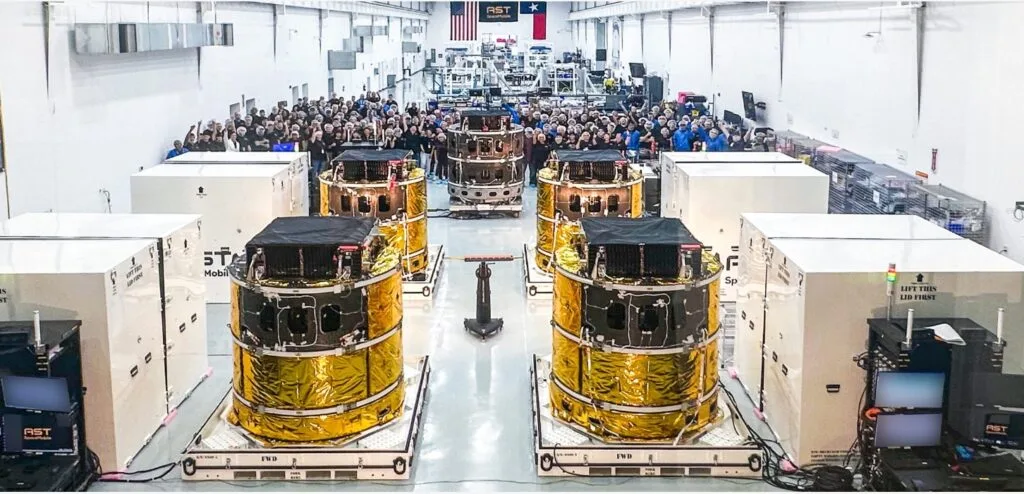
They are currently being deployed by SpaceX Falcon 9 with the first deployment of 5 new AST Blue-Bird satellites happening this morning.
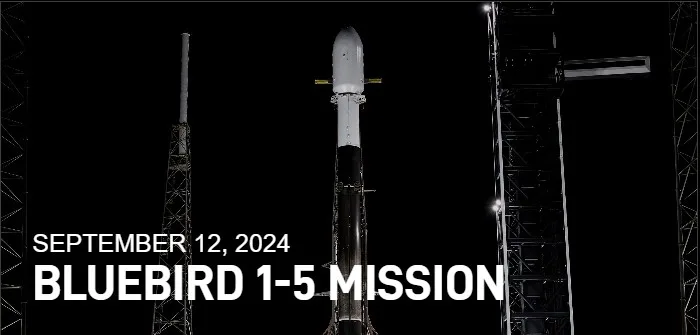
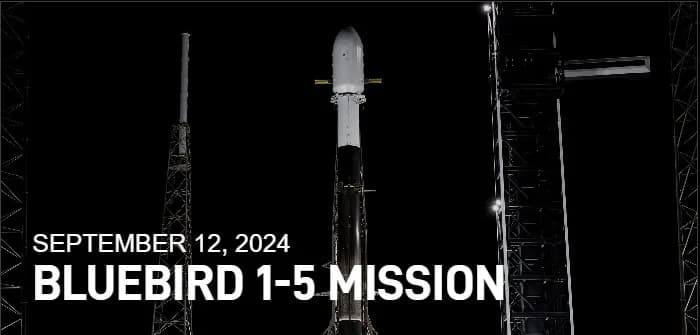
Just before 11H00 (CAT) this morning (12 September) the Falcon 9 had a successful launch from Space Launch Complex 40 (SLC-40) at Cape Canaveral Space Force Station in Florida in what was its 382nd successful launch
The new-gen tech allows terrestrial networks to link with the Blue-Bird Satellites, providing the downlink and will provide what is expected to be a completely uninterrupted connection. AST SpaceMobile’s first launch of five commercial satellites is a space mission called BlueBird 1-5.
These first five satellites are built on the success of the AST in-orbit BlueWalker 3 satellite and will provide U.S. nationwide non-continuous service with over 5,600 cells in premium low-band spectrum, with a planned 10-fold increase in processing bandwidth.
Each Blue-Bird satellite has a communications array measuring 693 square feet (64,4m2) that will establish connectivity directly with cell phones via 3GPP-standard frequencies, and in partnership with leading cellular service providers around the world.
The Blue-Bird 1-5 satellites are built at AST SpaceMobile in their 185,000 square feet (17187m2) assembly plant in Midland, Texas, will be the largest commercial low Earth orbit communications arrays globally.
The key to unlocking ubiquitous coverage, according to AST, lies in utilizing a premium 850 MHz low-band spectrum, which offers superior signal penetration in the low band cellular range.
AT&T and Verizon together will share with AST SpaceMobile a portion of their respective bands of 850 MHz low-band spectrum to enable nationwide satellite coverage and have plans to expand this globally in collaboration with the likes of Vodaphone.
View the video of the launch mission here: https://x.com/i/broadcasts/1kvJpblNogOKE