How Far Has Autonomous Haulage Come in African Mining?
Autonomous haulage arrived in Africa wrapped in bold promises, futuristic imagery and a wave of industry hype. It was sold as the breakthrough that would rewrite mining productivity, eliminate human-error risks and catapult operations into a fully digital era. But hype is one thing real transformation is another. So, has autonomous haulage actually delivered, and
How Far Has Autonomous Haulage Come in African Mining?
Autonomous haulage arrived in Africa wrapped in bold promises, futuristic imagery and a wave of industry hype. It was sold as the breakthrough that would rewrite mining productivity, eliminate human-error risks and catapult operations into a fully digital era. But hype is one thing real transformation is another. So, has autonomous haulage actually delivered, and how far has it truly come on the continent?
The short answer, progress exists, but it’s far from the glossy narrative originally marketed. Early deployments in South Africa, Botswana and Namibia proved the tech can work in African conditions. Autonomous trucks run tighter cycles, avoid fatigue driven mistakes and bring a level of operational discipline that no human operator can consistently match. Mines with pilot systems report more predictable output and safer pit floors tangible wins that move beyond buzzwords.
A Rollout That Never Matched the Hype
But the rollout hasn’t been smooth or universal. Autonomy didn’t sweep across the continent the way early evangelists predicted. Instead, it has crept forward cautious, incremental and often slowed by infrastructure realities. Many African mines simply weren’t digitally equipped for autonomy. Patchy connectivity limited high-precision GPS coverage and expensive system requirements kept adoption locked at the top end of the market. The hype promised a revolution; the reality delivered a slow, grinding evolution.
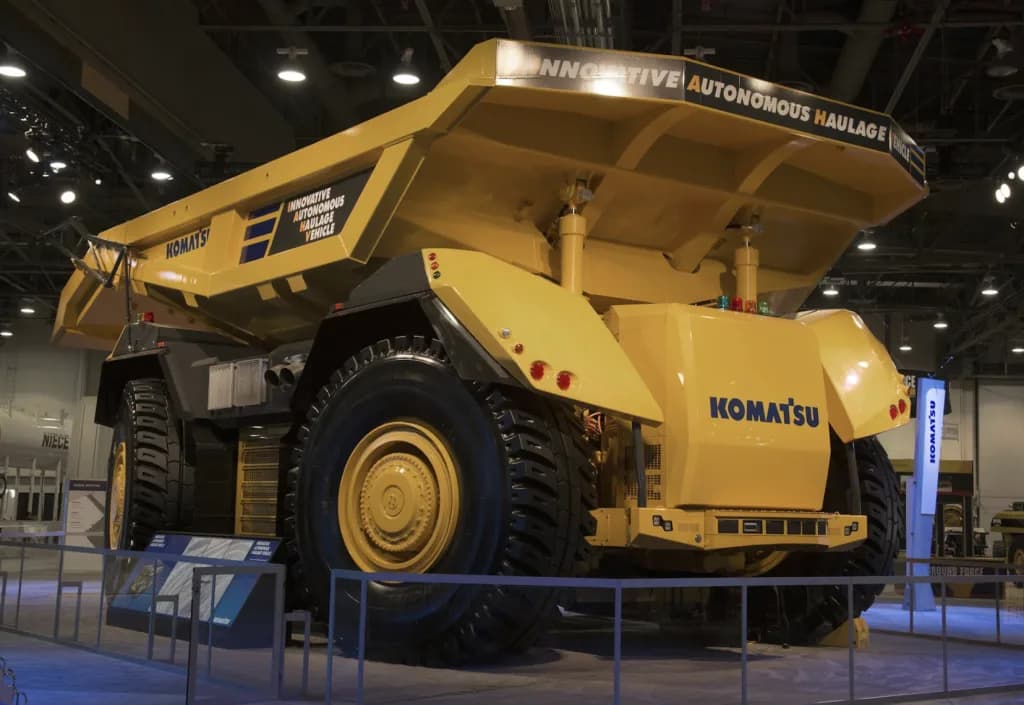
Growth remains slow, held back by infrastructure gaps, high upfront costs and uneven digital maturity across mine sites. Many African operations still lack the robust networks, fleet management platforms and precision GPS needed for full-scale autonomy. In response, OEMs such as Komatsu, Caterpillar and Hitachi have shifted to a modular autonomy model operator-assist technologies that upgrade existing trucks step by step, rather than requiring an immediate leap to fully autonomous fleets. This “start small” strategy aligns with Africa’s cautious investment culture, lowers the barrier to entry and lets mines scale only when the gains become clear and undeniable.
Workforce Readiness for Autonomous Systems
The workforce challenge adds another layer. Autonomous systems require an entirely different skill set remote control room operators, data analysts and system technicians. In response, mining companies across Africa are establishing digital training centres, retraining existing operators and gradually restructuring the talent base needed to support autonomy. The pace is improving, but meaningful transformation will take time.
Despite the slow uptake, the momentum is real and growing steadily. More mid-tier miners are exploring AHS pilots. Consulting firms are pushing autonomy readiness studies. OEM footprints are expanding. And universally, safety performance is becoming a non-negotiable driver, making autonomy harder to ignore.
So, How Far Has Africa Really Come?
Not as far as the hype once promised but much farther than skeptics expected. It hasn’t transformed the industry overnight, but it has quietly embedded itself as a strategic tool influencing the next chapter of mining productivity.
Autonomy in Africa isn’t a failed promise. It’s a slow-burn modification gathering strength. And once the digital infrastructure catches up, the continent may finally see the acceleration that the early hype once predicted.
Read more about Mining Technology Trends HERE