Automation is the future of printing
Automation tends to excite people because it is seen as the answer to many problems or the source of many others. The local printing industry tends to be wary of automation but if it is approached with a clear plan, it can be a rising tide that lifts all boats Business Tech Africa Spoke to
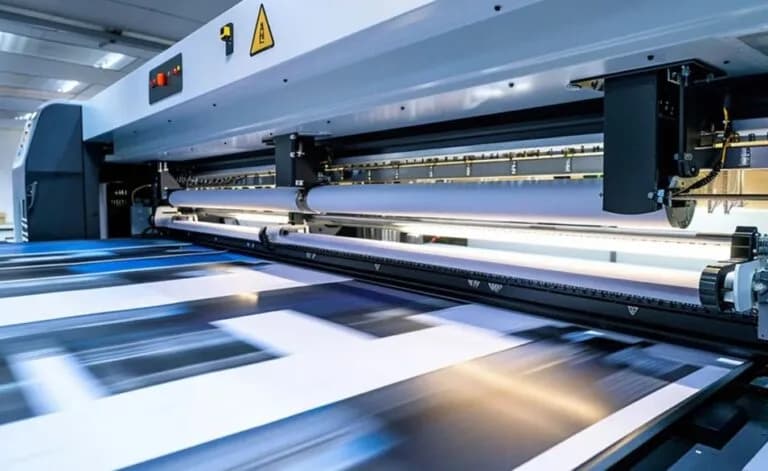
Automation is the future of printing
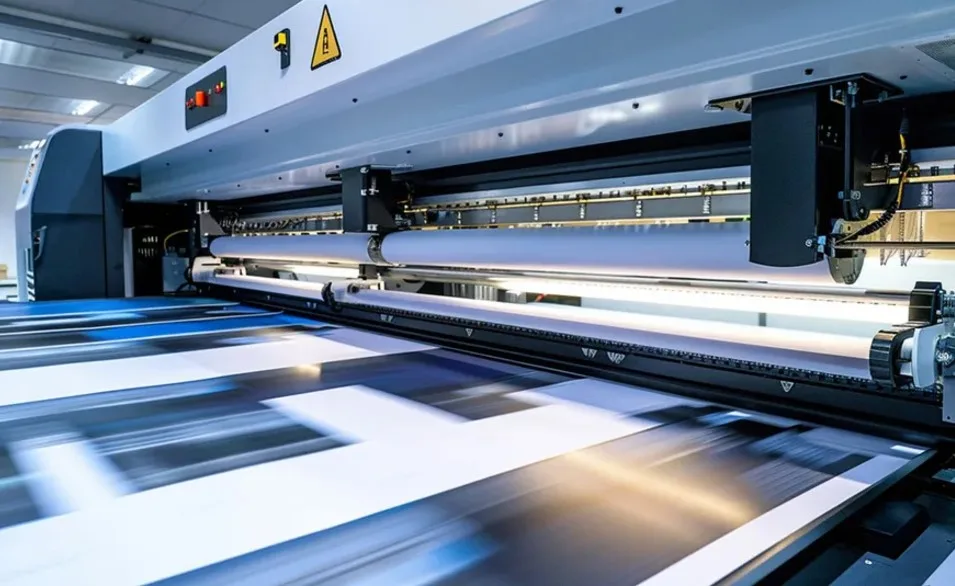
Automation tends to excite people because it is seen as the answer to many problems or the source of many others. The local printing industry tends to be wary of automation but if it is approached with a clear plan, it can be a rising tide that lifts all boats
Business Tech Africa Spoke to Bronwyn Macfadyen about the future of print automation and how this should be implemented.
Bronwyn Macfadyen wanted to be a graphic designer but a lack of funds for further studies saw her become a printshop apprentice after completing matric in the mid-1990s. This launched a career in printing that is still going strong.
Today Bronwyn is part of the training team for Altron Document Solutions where one of her main responsibilities is to train operators on new machines and help print-shops set-up efficient print automation set-ups.
Having personally witnessed the print industry go through massive fundamental changes over the past 30 years, Macfayden regards automation as a vehicle to free operators time up for more quality producing tasks that only humans can do, and not to replace them
Quality Output Still Key Focus in Automation Approach
Devoting an entire day of a skilled employee’s time to getting one job out sounds like poor business practice. Not so, counters Macfayden. “When the rest of your operation runs full tilt and churns out perfect jobs, you can afford to give that kind of time to one customer. It comes down to the difference between run-of-the-mill jobs and high-end, bespoke projects”.
Bronwyn contends that you want to automate the former so that you have the time to spend greater time on perfecting the bigger more complex print jobs. Having to redo these can cost a print business more than the job is worth and so deserves the time inputs.
The Automation Sweet Spot
Fundamental to the success of any print job is the quality and accuracy of the artwork that comes into the print shop. Macfayden notes that artwork management includes many repetitive tasks and “that’s what we want to automate. I always look at the pre-press department first, even before considering automating admin tasks, because artwork preparation is where the biggest and most costly errors happen.”
Macfayden’s advice is to automate 80-90% of routine jobs – business cards, leaflets and the like – in the pre-press department and free up operators to ensure the 10% high-value jobs are perfectly prepared before they hit the presses. “That is the automation sweet spot,” she reiterates.
One of the great benefits of automation, says Macfayden, is that it has opened the field of design and print for untrained people: you issue the instruction, and the software takes care of the technicalities. This strength, however, is also the reason why standardisation is not suited for specialist projects, such as photography.
Value Creation not Job Reduction Focus
Macfayden thinks that the automation focus wrongly zooms into what will be lost instead of the substantial gains. Owners look at automation as a cost cutter and workers see it as a destroyer of their jobs. It should be seen as neither because it can create value for all concerned.
“Automation is expensive and in South Africa, there are areas not worth automating because the cost of the investment far outstrips wages,” Macfayden explains. “By the time the investment has paid for itself, technology would have moved on again, so you’re always playing catchup in terms of money and production.” The solution is to automate smart. Pre-press operators can complete more routine jobs in a day, which keeps the presses running. And, as we’ve said before, when the specialist jobs come in, the skilled operators can set aside the time to attend to them.
Global Trend
This trend is not a South African phenomenon. The global print industry is investing in apprenticeships that combine an in-depth understanding of the basic techniques of printing with the new age of automation and artificial intelligence. Locally, the SA Print Federation is working closely with some of the larger print companies to present a series of courses that cover the various processes of printing, from estimating and design, to post-press finishing in both digital and litho printing.
With automation taking care of the mundane, South Africa’s print industry can prepare itself for the future.