AI is driving a new wave of investment in Africa's data centres
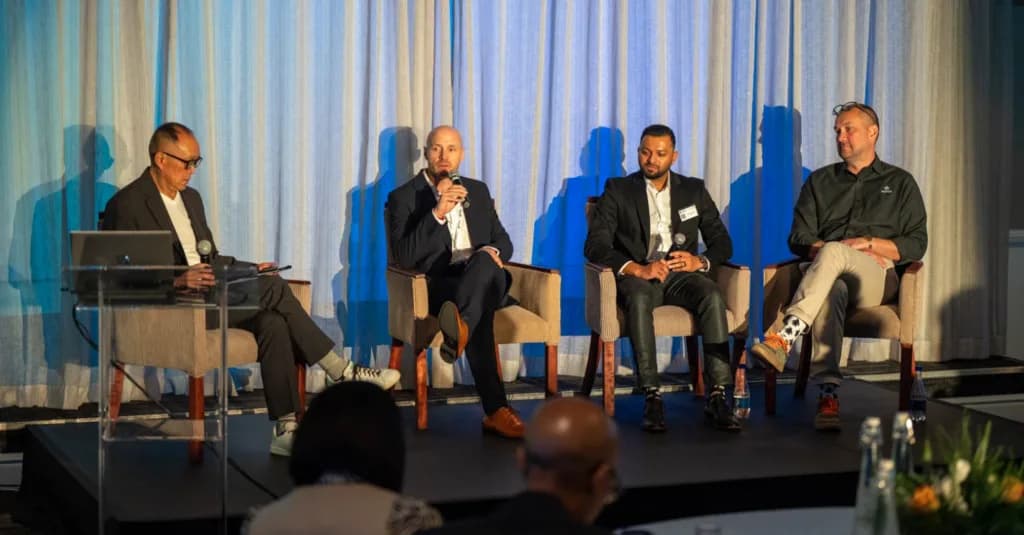
Artificial intelligence is placing new demands on Africa's data centres. Operators originally built many facilities for cloud services and enterprise applications. They are now upgrading them to support AI workloads that require more computing power, more electricity and more advanced cooling. Executives from Vertiv and Open Access Data Centres (OADC) discussed these challenges at a
AI is driving a new wave of investment in Africa's data centres
Artificial intelligence is placing new demands on Africa’s data centres. Operators originally built many facilities for cloud services and enterprise applications. They are now upgrading them to support AI workloads that require more computing power, more electricity and more advanced cooling. Executives from Vertiv and Open Access Data Centres (OADC) discussed these challenges at a recent industry event. They also explained how AI is influencing investment in data centre infrastructure. The growing use of graphics processing units (GPUs) is driving much of the change. Unlike traditional processors, GPUs perform thousands of calculations at the same time. That allows operators to run AI models more efficiently and fit far more computing power into a single rack. That extra computing capacity also increases power consumption and heat output. Vertiv Africa Managing Director Wojtek Piorko said operators expect rack densities to rise as AI deployments become more common. They previously averaged between 30kW and 40kW. “The question is no longer just about finding space for more servers,” Piorko said. “Operators also have to think about where the power will come from and how those facilities will be cooled.”
Power remains a major hurdle
Electricity remains one of the biggest constraints for data centre operators across Africa. Piorko said AI facilities require hundreds of megawatts of additional power. That raises questions about generation capacity and whether national grids can support future demand. Several African countries have increased electricity generation over the past decade. However, many still struggle to distribute that power reliably. South Africa’s electricity challenges highlight the pressure facing operators planning larger AI facilities.
Africa still has capacity to build
Data centre investment has accelerated across the continent. Even so, Africa still accounts for a small share of global capacity. According to Piorko, Africa has less than half a gigawatt of active white-space capacity for a population of more than one billion people. Dubai alone has a similar amount of capacity. Building more facilities will only solve part of the problem. The industry also needs reliable electricity, stronger fibre networks, supportive regulation and skilled workers. For OADC, location is just as important as computing capacity. Engineering Director Marc Matthews said the company has positioned its facilities near subsea cable landing stations and major fibre routes. Reliable connectivity allows data to move quickly between users and cloud platforms. Matthews also pointed to the growing importance of edge computing. Edge data centres process information closer to users instead of sending requests to facilities in other regions. That approach reduces delays. It also improves the performance of AI applications that rely on fast response times.
Building for higher demand
As computing requirements increase, operators are also reviewing how they build and expand their facilities. OADC is exploring gas-powered generation at some of its Nigerian sites. In South Africa, the company uses solar power to offset part of its electricity demand. Matthews said operators can also improve efficiency by making small adjustments to cooling systems. He added that modern cooling systems recycle water through closed-loop designs. That reduces water consumption compared with older technologies. Both companies have also adopted modular construction methods. Operators can install infrastructure in phases and expand it as demand grows. They do not have to complete an entire facility before bringing it online. OADC designed its Lagos facility for 24MW. The company started with an initial 6MW deployment and plans to add capacity as demand increases. AI is placing greater demands on the infrastructure that supports digital services. Data centre operators must secure reliable electricity, improve cooling systems and strengthen connectivity. They also need facilities that can expand as customer demand grows.