Apple Ventures into Personal Robotics
Apple, renowned for its innovation in the tech world, is delving into the realm of personal robotics, seeking to carve out a niche in a field ripe with potential. Sources familiar with the matter reveal that Apple's teams are currently exploring avenues in personal robotics, positioning it as one of the company's dynamic "next big
Apple-Ventures-into-Personal-Robotics
Apple, renowned for its innovation in the tech world, is delving into the realm of personal robotics, seeking to carve out a niche in a field ripe with potential. Sources familiar with the matter reveal that Apple’s teams are currently exploring avenues in personal robotics, positioning it as one of the company’s dynamic “next big things.”
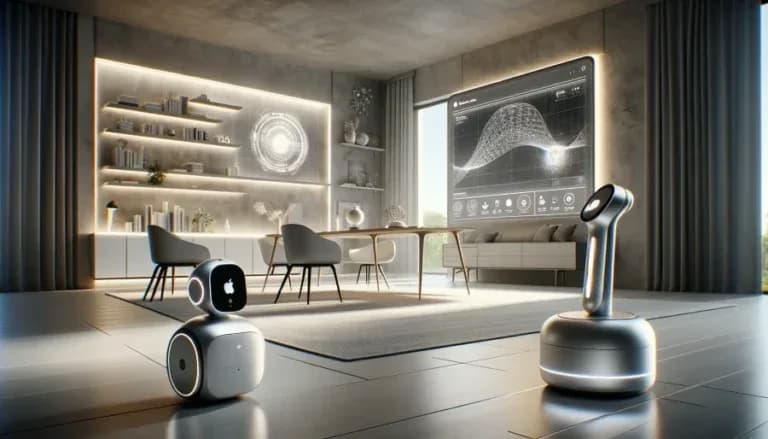
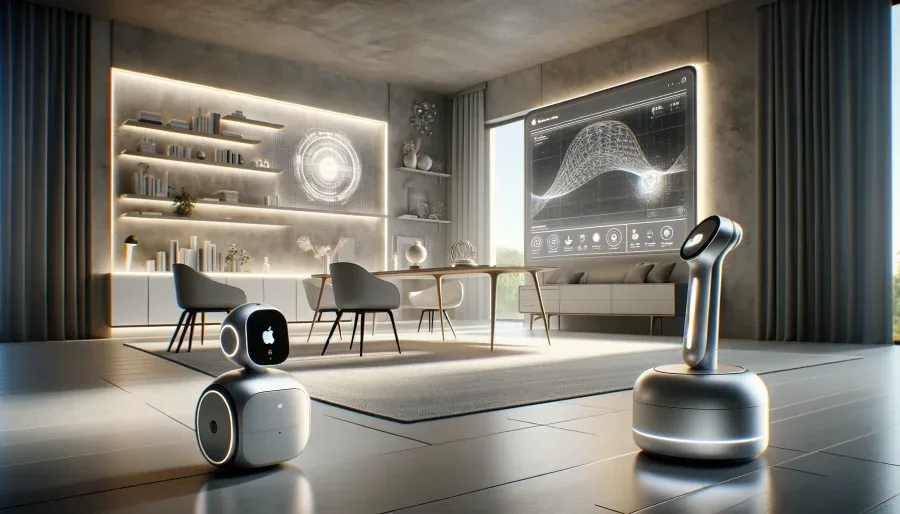
Insiders reveal that Apple engineers are actively researching a mobile robot designed to accompany users within their homes. Additionally, the tech giant has been developing an advanced tabletop home device incorporating robotics technology to facilitate movement of displays. However, these developments are still in their nascent stages, with uncertainty surrounding their eventual release to consumers.
The impetus behind Apple’s foray into personal robotics stems from a growing need to diversify revenue streams amid evolving market dynamics. Following the discontinuation of its electric vehicle project earlier this year, coupled with the protracted timeline for its mixed-reality goggles to generate substantial revenue, Apple is under increasing pressure to identify new growth avenues.
Venturing into robotics presents Apple with an opportunity to establish a stronger foothold within consumers’ homes and leverage advancements in artificial intelligence. Yet, the path forward remains unclear, with questions lingering over the company’s approach to product development. While progress on the robotic smart display appears more advanced, it has oscillated on and off Apple’s product roadmap over the years, highlighting internal deliberations over its viability.
Apple’s robotics endeavours are spearheaded by its hardware engineering division and AI and machine-learning group, overseen by John Giannandrea. Executives Matt Costello and Brian Lynch, focused on home products, have been instrumental in guiding hardware development. Nevertheless, Apple has yet to greenlight either project, with ongoing efforts categorized as early-stage research.
Prior to redirecting its focus away from automotive pursuits, Apple earmarked three key areas for future growth: automotive, home technology, and mixed reality. With the automotive endeavour side-lined, and the recent release of the Vision Pro headset marking its entry into mixed reality, Apple is pivoting towards exploring opportunities in the smart home market and beyond.
The tabletop robotics project initially garnered enthusiasm among senior Apple executives, envisioning a device capable of mirroring the movements of users during video calls. However, apprehensions regarding consumer demand and technical hurdles, such as motor stability on a small stand, have tempered enthusiasm internally.
Undeterred by challenges, Apple continues to explore possibilities within the robotics domain, evident from its secretive facility in Cupertino, California, dedicated to testing future home-centric initiatives. In addition to robotics, Apple is exploring alternative concepts for the home market, including a new home hub device featuring an iPad-like display.
While the success of Apple’s robotics ventures remains uncertain, the company’s relentless pursuit of innovation underscores its commitment to shaping the future of technology. As Apple navigates the complex landscape of personal robotics, its efforts hold the potential to redefine consumer experiences and propel the company into new frontiers of technological advancement.