Prime Finally Lands in South Africa
Amazon has launched Prime in South Africa. The service costs R59 a month or R399 a year. Subscribers get free delivery, Prime Video and gaming-related benefits. The launch itself is not surprising. The timing is. Amazon entered South Africa's retail market in 2024 with the launch of amazon.co.za. Prime was notably absent. Instead, the company
Prime Finally Lands in South Africa
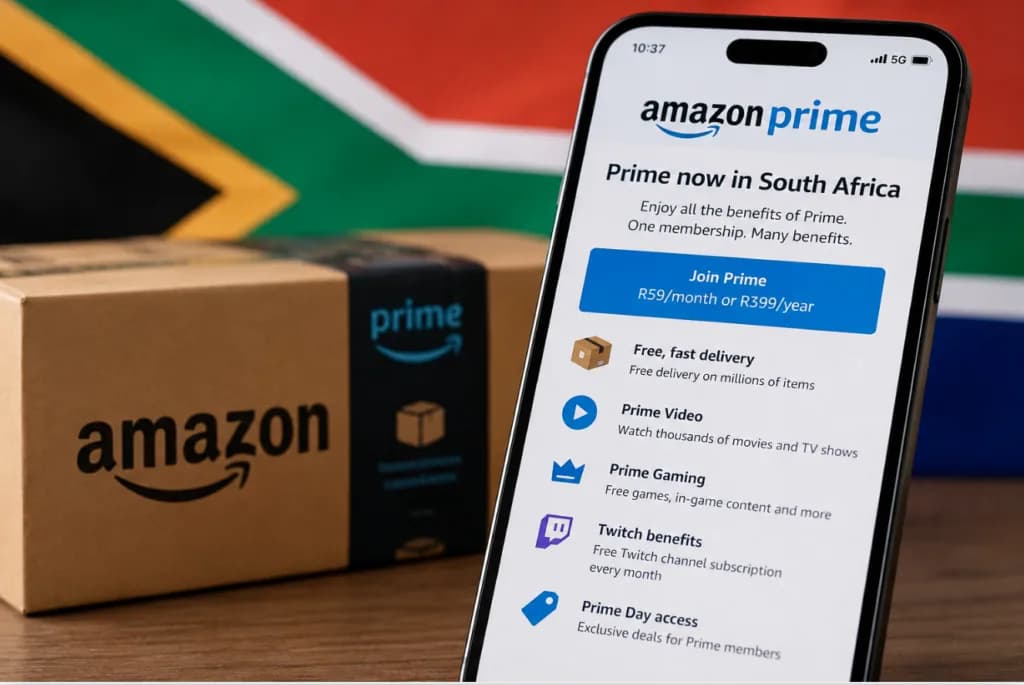
Amazon has launched Prime in South Africa. The service costs R59 a month or R399 a year. Subscribers get free delivery, Prime Video and gaming-related benefits. The launch itself is not surprising. The timing is. Amazon entered South Africa’s retail market in 2024 with the launch of amazon.co.za. Prime was notably absent. Instead, the company spent two years building its local retail operation. It added sellers, expanded product categories and improved fulfilment before introducing its flagship membership programme. That rollout differs from the perception that Amazon enters markets at full speed. In South Africa, the company has taken a more cautious approach. Amazon is no stranger to the local market. Through Amazon Web Services (AWS), it has invested heavily in cloud infrastructure and engineering talent. Its retail expansion may have been gradual, but it was not entering unknown territory.
The pricing is difficult to ignore
The most notable aspect of the Prime launch is the price. South Africans have been able to subscribe to Prime Video for R79 a month. Prime now costs R59 a month. The subscription includes Prime Video, delivery benefits, gaming perks and access to Prime Day promotions. Customers now get more services for less than the previous cost of Prime Video alone. The pricing lowers the barrier to entry. It may appeal to consumers who were interested in Prime but reluctant to pay for multiple subscriptions.
Amazon is entering a market that looks very different from a few years ago. Takealot remains the country’s largest general e-commerce platform. It has already launched its own subscription service, TakealotMore. Shoprite’s Sixty60 continues to lead the on-demand grocery delivery market and has built a strong national footprint. Other retailers are also investing in digital channels. Woolworths, Pick n Pay and Massmart continue to expand their online offerings. International platforms such as Temu and Shein are competing aggressively on price.
Amazon is not entering an open field. It is joining a market where consumer expectations around convenience, delivery and pricing have already shifted.
An opportunity many retailers have yet to pursue
One notable feature of South Africa’s online retail market is the limited use of subscription programmes outside Amazon and Takealot. Clicks and Dis-Chem have extensive store networks and established loyalty programmes. Yet neither has built a subscription service that plays a major role in its e-commerce strategy. Both retailers offer delivery services. However, neither has pursued on-demand delivery as aggressively as Shoprite. Whether that changes remains to be seen.
A growing market
South Africa’s e-commerce sector continues to expand. Online shopping accounts for a growing share of retail spending. As more consumers shop online, retailers are likely to focus on retaining customers rather than simply attracting new ones. That is where services such as Prime become important. For Amazon, this launch is about more than attracting attention. It is about building customer loyalty over time. The company has spent two years laying the groundwork. Prime is now part of that strategy.