Solar Energy – Buy or Rent, That Is the Question?
There is a big move across Africa to start using sustainable energy and to move away from fossil fuels, driven mainly by global pressure from the likes of the World Bank and the United Nations. And Africa can certainly benefit from a cleaner environment and maintaining the beauty of our natural wildlife heritage, that exists
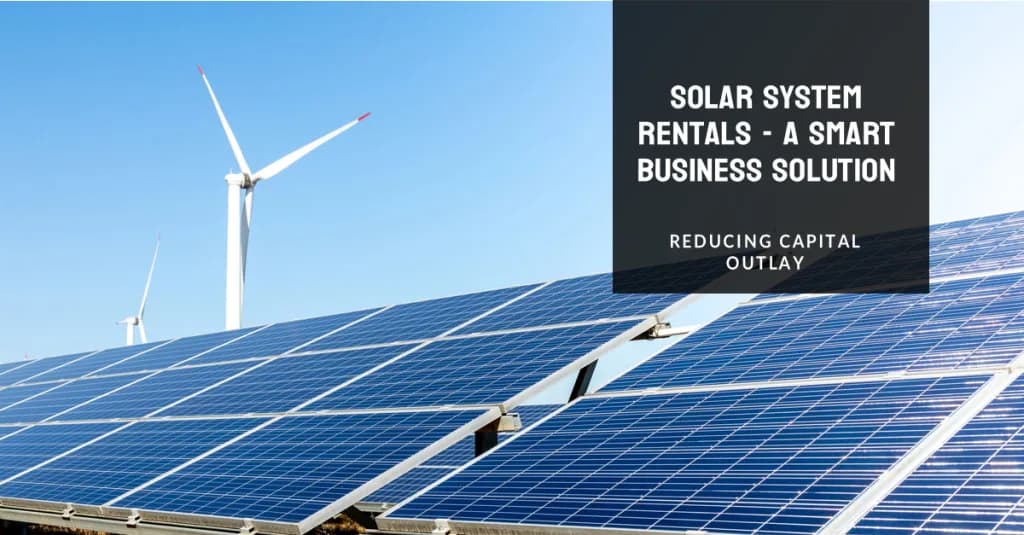
Solar Energy – Buy or Rent, That Is the Question?
There is a big move across Africa to start using sustainable energy and to move away from fossil fuels, driven mainly by global pressure from the likes of the World Bank and the United Nations.
And Africa can certainly benefit from a cleaner environment and maintaining the beauty of our natural wildlife heritage, that exists nowhere else in the world. The move to better sustainability however, can also come with increased costs for businesses that ultimately reduces their profitability and with that their competitiveness.
In South Africa, and other African countries, power interruptions have become an additional business risk and a large concern for businesses. This is particularly true for production units, and has forced many companies to stretch capital expenditure to provide their own reliable energy.
For many manufacturing and industrial companies, green energy installations are often accompanied by a hefty price tag, with large-scale solar or wind projects remaining unaffordable for many who would prefer to use these renewable energy sources, if they were more affordable.
Advantages of Renting Solar Solutions:
- Reliable and uninterrupted power supply reducing risks in non-delivery for clients
- No Capital outlay leaving capital to be invested in the business
- Energy cost per unit is more than likely to be less than the current electricity rates being paid thus providing instant savings on your energy costs.
- Many system providers also require no deposit
- Full Maintenance and support costs and upgrades are included in the rental
- Power optimisation with ongoing system monitoring and adjustments
- Rentals are usually fully tax deductible (dependant on the tax laws of the country) – whatever you spend on rentals in a financial year the full amount can be offset against your taxable income as an expense.
- Any VAT or sales tax applicable would be paid over the entire period. It is not payable upfront as in an instalment sale agreement.
- Rentals are not considered by banks as loan exposure and therefore is not included as a liability on your balance sheet
- There is with most system providers, no balloon payment at the end of the rental term.
- The option to own if offered by most system providers may be transferred to you at the end of the rental term or in some cases they offer full ownership transfer during the rental period.
Top Solar Rental Companies
One of the leading Solar Rental companies in Southern Africa is the SolarSaver group. Their solar rental offering has proven extremely popular and they currently run the largest fleet of self-financed C&I solar installations in Southern Africa.
Lance Green of SolarSaver says, “Growing energy demand, a lack of grid reliability and spiralling costs make energy efficiency and a consistent power supply a real priority as a critical component of overall business profitability,” concludes Green. “With all our available sunshine, Southern African businesses can easily be on par with the greenest, most energy-efficient buildings around the world.”