Vodacom Group Achieves Significant Growth Amidst Global Economic Challenges
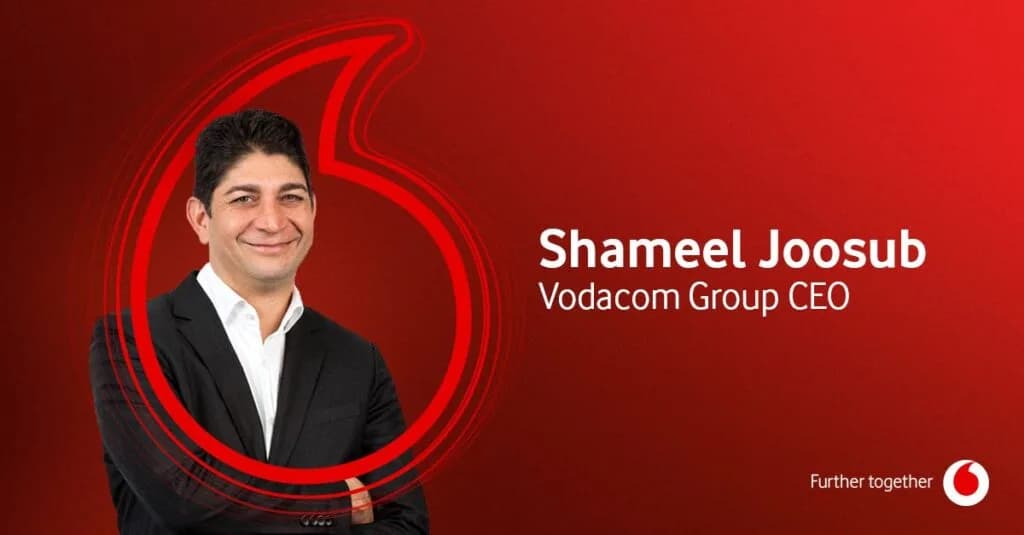
Shameel Joosub, CEO of Vodacom Group, highlighted the substantial impact of their acquisition in Egypt, which significantly contributed to a 29.1% increase in Group service revenue. This growth was bolstered by a robust performance in Vodacom’s largest market, South Africa. Despite global economic pressures, the company achieved a 6.4% increase in net profit, showcasing the
Vodacom-Group-Achieves-Significant-Growth-Amidst-Global-Economic-Challenges
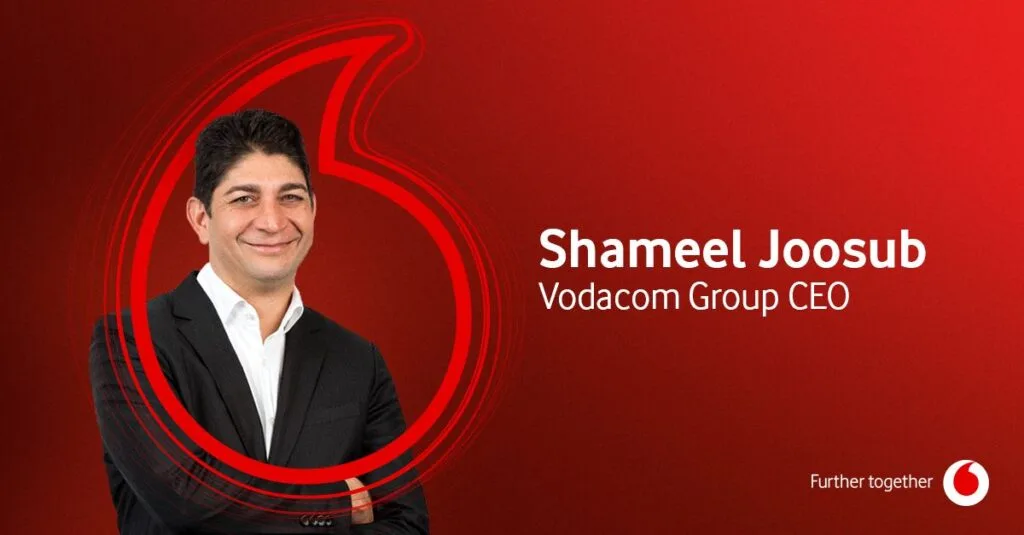
Shameel Joosub, CEO of Vodacom Group, highlighted the substantial impact of their acquisition in Egypt, which significantly contributed to a 29.1% increase in Group service revenue. This growth was bolstered by a robust performance in Vodacom’s largest market, South Africa. Despite global economic pressures, the company achieved a 6.4% increase in net profit, showcasing the effectiveness of their strategic execution and adaptability to changing operating environments.
In a landmark year marking Vodacom’s 30th anniversary, the company also surpassed the milestone of 200 million customers. This achievement is a testament to the extensive reach of Vodacom, with a customer base evenly distributed across segments in South Africa, Egypt, International business, and Safaricom. This extensive footprint covers over half a billion people across the continent. New services, including digital and financial services, fixed and IoT, now account for 20% of Group service revenue, driven primarily by the growth in financial services. Financial services have become a pivotal enabler of Vodacom’s mission to connect for a better future, evidenced by an 11.8% increase in financial service customers to 78.9 million and an impressive US$381.2 billion in annual transaction value.
Despite these achievements, Vodacom faced challenges. Start-up losses in Ethiopia, higher finance and energy costs, inflationary pressures, and weaker exchange rates, including the devaluation of the Egyptian pound, led to a 10.8% decline in headline earnings to 846 cents per share (cps). In line with Vodacom’s policy of paying at least 75% of headline earnings, the Board declared a dividend of 590 cps for the year. However, Joosub expressed confidence that the diversification of the Group’s footprint and product mix would yield strong returns in the medium term.
Vodacom remains committed to enhancing customer experience through sustained investments in technology and network infrastructure, dedicating 13% to 14.5% of overall revenue to capital expenditure. These investments will bolster network resilience, expand 5G coverage, and advance the rural coverage programme to bridge the digital divide, especially amidst power challenges in key markets.
In South Africa, service revenue grew by 2.6%, driven by new services, the consumer contract segment, and prepaid mobile data. However, this was partially offset by pressures in Vodacom Business as corporate customers adjusted spending post-pandemic. New services in South Africa grew by 11.2%, contributing R10.2 billion or 16.6% of service revenue. Financial services revenue increased by 7.9% to R3.2 billion, primarily driven by insurance and payments, with Airtime Advance playing a crucial role in digital inclusion. The VodaPay super-app saw substantial growth, ending the period with 10.4 million downloads and 5.8 million registered users, reflecting increases of 83.0% and 79.4%, respectively.
Vodacom invested R11.1 billion to enhance network resilience, leverage new spectrum assets, and upgrade IT platforms to maintain a competitive edge as South Africa’s most reliable network. The proposed purchase of a joint venture stake in Maziv, a South African fibre company, aims to provide affordable connectivity and narrow the digital divide. The transaction is under review by the Competition Tribunal, with hearings scheduled to begin on May 20, 2024.
In Egypt, Vodacom now serves 48.3 million customers, a 6.2% increase, contributing a quarter of Group revenue. This growth was driven by strong customer engagement, mobile and fixed price adjustments, and significant growth in the financial services platform, Vodafone Cash. Data customer growth of 10.9% resulted in a 41.8% increase in data traffic, while financial services revenue surged by 107.4% in local currency. The government’s steps to support economic growth through foreign direct investment and foreign exchange liquidity were welcomed by Vodacom, with repatriated dividends from Egypt to South Africa in March 2024.
The International business in DRC, Lesotho, Mozambique, and Tanzania reported a 13.1% increase in service revenue, supported by foreign exchange gains, a 21.4% increase in M-Pesa revenue, and a 30.5% rise in data revenue. Tanzania showed strong double-digit growth, and DRC improved in the second half, while Mozambique saw a decline in service revenue by 12.5%. However, regulatory reforms in Mozambique are expected to improve future prospects. M-Pesa revenue across these markets grew by 21.4%, contributing 26.5% of International business service revenue, with strong performance in Tanzania and significant growth in lending and savings products.
Safaricom in Kenya delivered a robust performance with a 13.4% increase in service revenue, driven by double-digit growth in mobile data and M-Pesa revenue. M-Pesa transaction volumes grew by 34.8%, highlighting the scale of the business. Despite start-up costs in Ethiopia, Safaricom’s roll-out remains on track.
Vodacom’s purpose-led initiatives, including m-mama, Code like a Girl, and Je Suis Cap, have made significant impacts across their markets, supported by partners like USAID and the Vodafone Foundation. These initiatives, along with Tech for Good solutions, are key enablers of inclusion in healthcare, education, and agriculture.
Looking ahead, Vodacom is focused on delivering the final year of Vision 2025 targets while developing the next strategic phase to support their TechCo transition. This strategy involves accelerating mobile and fixed connectivity, scaling handset financing, and rolling out innovative digital and financial services across all markets. Vodacom aims to expand partnerships across Africa to drive growth, increase rural and fibre connectivity, and expand Tech for Good solutions.
Despite an uncertain global economic outlook, recent macro reforms in Egypt and Kenya provide a positive outlook. Vodacom’s diverse product portfolio positions them to capture structural growth opportunities and deliver on their purpose. Achieving this will require a steadfast focus on strategy, business objectives, and customer service.