US Must Revamp Africa Policy, Emphasizing Critical Minerals, Says USIP Report
A recent report from the United States Institute of Peace (USIP) based in Washington has underscored the imperative for the United States to revaluate its Africa policy, with a particular focus on critical minerals. The report highlights the necessity of enhancing diplomatic and commercial engagement in African mining hubs to mitigate vulnerabilities stemming from export
US Must Revamp Africa Policy, Emphasizing Critical Minerals, Says USIP Report
A recent report from the United States Institute of Peace (USIP) based in Washington has underscored the imperative for the United States to revaluate its Africa policy, with a particular focus on critical minerals. The report highlights the necessity of enhancing diplomatic and commercial engagement in African mining hubs to mitigate vulnerabilities stemming from export controls and market manipulation by geopolitical rivals.
Amid a backdrop of intensifying global competition, the report emphasizes the urgency for the US to recalibrate its approach to Africa, especially in light of China’s burgeoning influence on the continent. Chinese investment in Africa, particularly in the extractive sector, has surged, posing challenges to US interests.
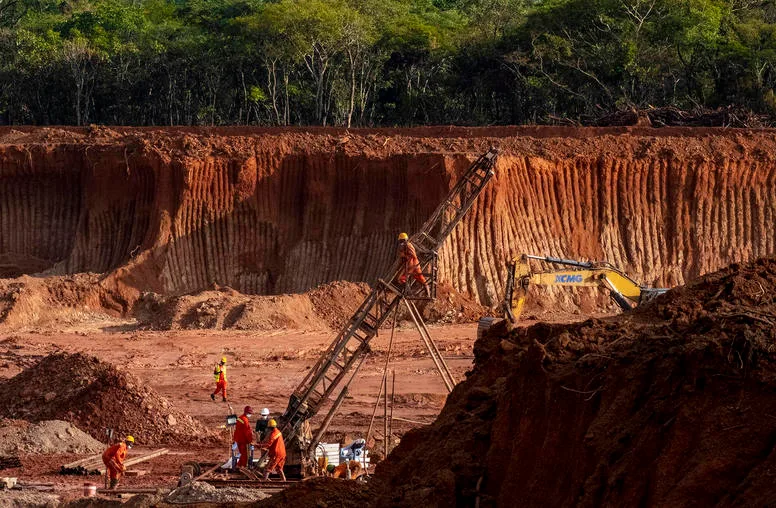
Chinese companies dominate the cobalt production landscape in the Democratic Republic of Congo (DRC), controlling stakes in 15 out of 19 cobalt-producing mines. Given that the DRC accounts for over 70% of global cobalt output, this concentration of control presents a strategic advantage for China. Moreover, China has forged substantial trade partnerships in Zambia, a key copper and cobalt producer in Africa.
In response to these developments, the USIP report advocates for proactive measures to bolster the US presence in African mining centres. This includes ramping up the physical presence of both diplomatic and commercial officers to facilitate strategic engagement and partnership-building efforts.
One of the primary drivers behind the urgency for US engagement in Africa’s mining sector is the nation’s heavy reliance on imported critical minerals. These minerals, essential for applications ranging from electric vehicle batteries to various industrial processes, are sourced predominantly from overseas markets. Key minerals such as cobalt, graphite, and manganese are integral to the functioning of critical sectors within the US economy.
By prioritizing enhanced engagement in African mining hubs, the US aims to diversify its critical mineral supply chains and reduce its dependence on foreign sources. This strategic shift aligns with broader efforts to bolster national security and economic resilience by securing access to essential resources.
As geopolitical competition intensifies and global supply chains face increasing scrutiny, the USIP report serves as a clarion call for the US to recalibrate its Africa policy. By seizing the opportunities presented by Africa’s abundant mineral wealth and expanding its presence in key mining hubs, the US can fortify its strategic position and safeguard its interests in an increasingly competitive global landscape.