TVS Motor Enters Africa With iQube Electric Scooter in Kenya
TVS Motor Company has launched its iQube electric scooter in Kenya, marking the Indian manufacturer’s first entry into the African market. The scooter will be sold through Car & General, which has operated in Kenya for more than two decades and will handle local distribution and after-sales support. The iQube is available in two variants,
TVS Motor Enters Africa With iQube Electric Scooter in Kenya
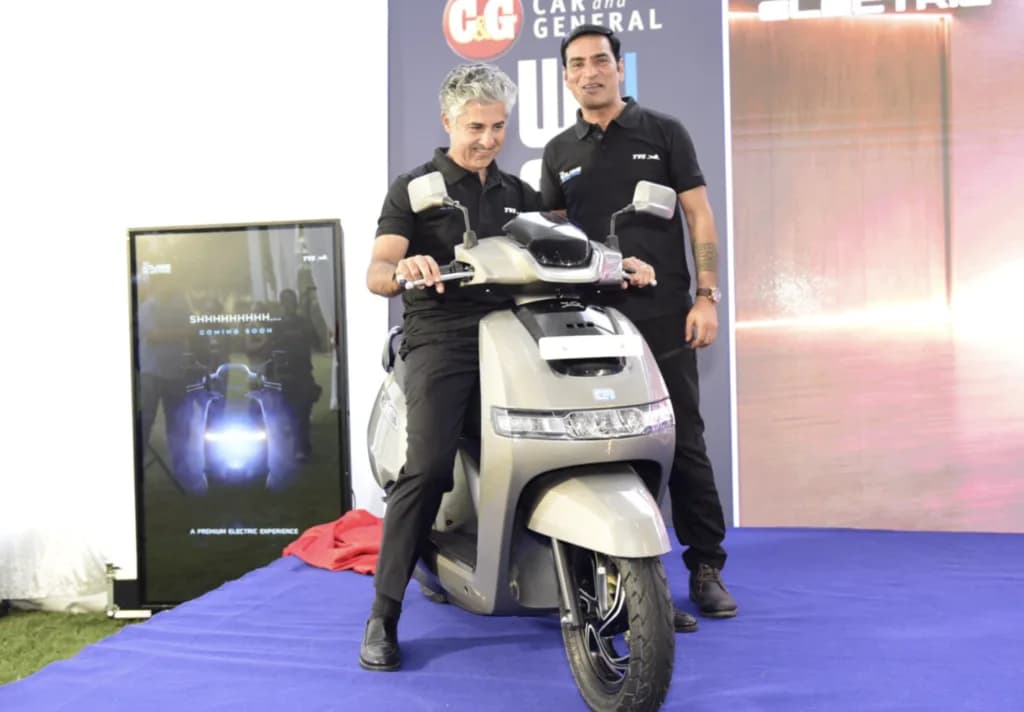
TVS Motor Company has launched its iQube electric scooter in Kenya, marking the Indian manufacturer’s first entry into the African market. The scooter will be sold through Car & General, which has operated in Kenya for more than two decades and will handle local distribution and after-sales support.
The iQube is available in two variants, the 3.5 and 2.2, both powered by a 4.6 kW hub-mounted motor. The 3.5 uses two lithium-ion battery packs with a combined capacity of 3.5 kWh. TVS rates it for a real-world range of 115 km and a top speed of 82 km/h. The 2.2 uses a single 2.2 kWh battery, with a claimed range of 75 km and a top speed of 75 km/h. Both models can be charged from a standard household outlet using a portable charger. The 3.5 takes about three hours to reach 80% charge, while the 2.2 takes around two hours.
iQube Adds Connected Features
The electric scooter also comes with TVS’s SmartXonnect connectivity system. Features include smartphone-linked navigation, ride tracking, anti-theft alerts, geofencing and crash detection. TVS has also included reverse parking assistance and up to 32 litres of under-seat storage, depending on the variant. Madhu Prakash Singh, Vice President of International Business at TVS Motor Company, said the launch forms part of the company’s focus on electric mobility and changing urban transport needs.
“The launch of the TVS iQube in Kenya underscores the company’s commitment to accelerating the transition to electric mobility while catering to the evolving needs of modern urban consumers,” Singh said.
TVS Targets Kenya’s Electric Two-Wheeler Market
TVS said rising fuel prices and growing interest in electric transport in Kenyan cities were among the factors behind the launch. The company estimates that operating an iQube could cost around US$363 (KES47,000) less per year than a comparable 125cc petrol scooter, based on its own energy and maintenance calculations.
For Peyman Kargar, President of International Business at TVS Motor Company, Kenya represents the company’s first step into Africa with its electric portfolio.
“Driven by our vision to transform lives through exciting, responsible, and sustainable mobility, we are proud to introduce the TVS iQube in Kenya, marking our entry into the African market,” Kargar said.
Car & General will manage sales and after-sales support in Kenya. CEO Vijay Gidoomal said the broader African two-wheeler market is expected to grow by around 7% to 10% annually through 2030.
The electric two-wheeler segment is expected to grow faster, with forecasts putting annual growth between 15% and 25% through 2030–31, according to Gidoomal. He said EV penetration remains low compared with the overall two-wheeler market, leaving room for further growth. TVS said the iQube has covered more than 17.8 billion kilometres globally across more than one million units sold. The company estimates that this has helped offset 623,595 tonnes of CO₂.