Volkswagen’s Polo GTI goes electric
The Volkswagen Polo GTI is entering the electric era.Volkswagen has revealed the ID. Polo GTI, an all-electric version of its long-running hot hatch that has been part of the GTI line-up since 1998. For years, the Polo GTI served as the more affordable alternative to the Golf GTI. It built a reputation around a simple
Volkswagen’s Polo GTI goes electric
The Volkswagen Polo GTI is entering the electric era.Volkswagen has revealed the ID. Polo GTI, an all-electric version of its long-running hot hatch that has been part of the GTI line-up since 1998.
For years, the Polo GTI served as the more affordable alternative to the Golf GTI. It built a reputation around a simple formula: compact size, solid performance, and everyday usability. Now Volkswagen is attempting to carry that formula into the EV space.
The ID. Polo GTI uses a 52kWh battery pack paired with a front-mounted electric motor producing 166kW and 290Nm. Volkswagen says the hatch can accelerate from 0-100km/h in 6.8 seconds and reach a top speed of 175km/h. That makes it slightly slower than the current petrol-powered Polo GTI, which produces 147kW and 320Nm from a 2.0-litre turbocharged engine and completes the same sprint in 6.4 seconds. Still, like most electric vehicles, the ID. Polo GTI delivers its power instantly, which should help it feel responsive in everyday driving. Volkswagen claims a driving range of up to 424km. The battery also supports DC fast charging at up to 105kW, allowing it to charge from 10% to 80% in around 24 minutes.
Familiar GTI styling remains
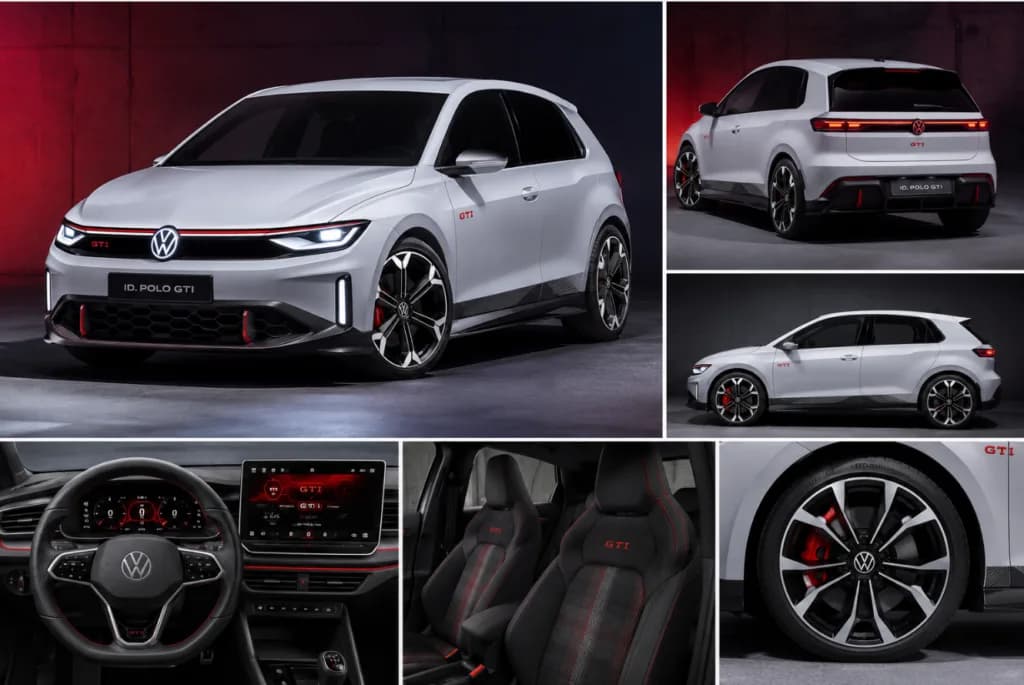
Although the drivetrain has changed, Volkswagen has retained many of the styling details associated with the GTI badge. The front end features the familiar red strip, along with illuminated VW badging and LED matrix headlights. The hatch also rides on 19-inch alloy wheels, while the rear receives a black diffuser and roof spoiler to maintain the sporty look. Inside, the cabin sticks to the usual GTI colour combination of red and black. Red stitching appears on the steering wheel and dashboard, while the interior includes a 10.25-inch digital instrument cluster and a 12.9-inch infotainment screen. Volkswagen has also brought back physical steering wheel buttons, moving away from the touch-sensitive controls that drew criticism in some of its newer models.
Volkswagen says the electric model offers slightly more interior space than the current Polo GTI. Boot capacity has increased to 441 litres, compared to 305 litres in the petrol version. Folding the rear seats expands luggage space to 1,240 litres.
Questions remain over local production
Whether the electric version can match the appeal of the current Polo GTI remains to be seen, particularly among buyers who still prefer the sound and feel of a petrol hot hatch. Volkswagen says the combustion-powered Polo GTI will continue to be sold alongside the electric version for now. The shift could also have implications for South African production in the long term.The ID. Polo GTI is produced at Volkswagen’s Martorell plant in Spain alongside SEAT and Cupra models. Volkswagen’s Kariega plant is not currently equipped for EV production, meaning a full transition away from combustion engines could eventually affect local Polo GTI manufacturing.