TIA Secures R1.2 Billion Settlement From Kapa Biosystems Dispute
The Technology Innovation Agency (TIA) has received R1.2 billion from a settlement linked to the sale of biotechnology company Kapa Biosystems. The payment ends a dispute that lasted more than a decade. The settlement relates to TIA's sale of its 49% stake in Kapa in 2015 for US$4.9 million. Eight months later, Kapa's shareholders sold
TIA Secures R1.2 Billion Settlement From Kapa Biosystems Dispute
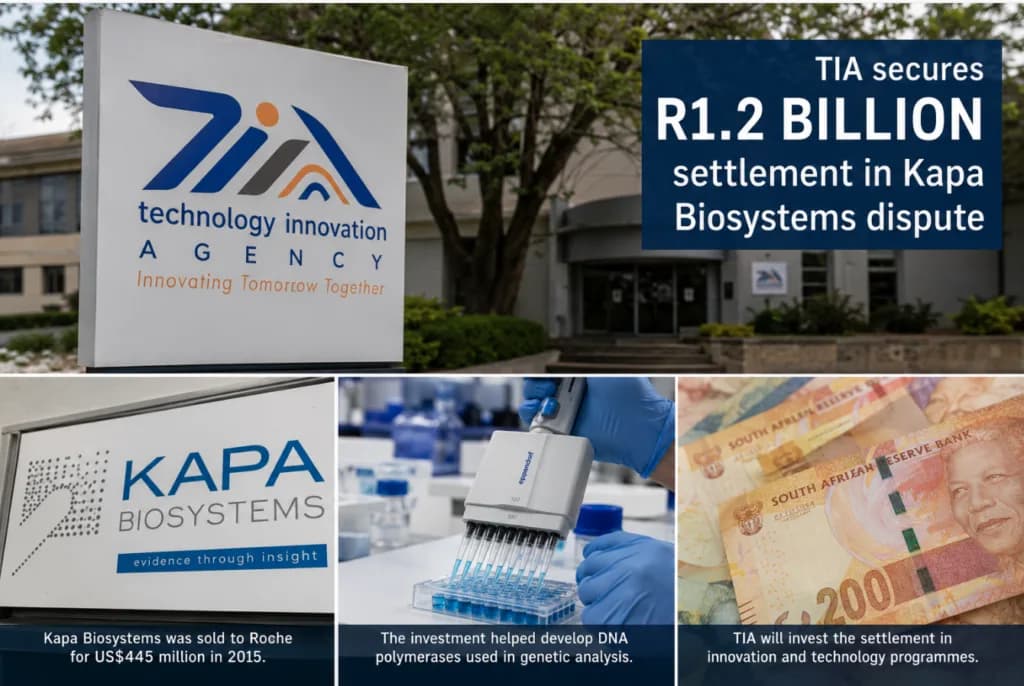
The Technology Innovation Agency (TIA) has received R1.2 billion from a settlement linked to the sale of biotechnology company Kapa Biosystems. The payment ends a dispute that lasted more than a decade. The settlement relates to TIA’s sale of its 49% stake in Kapa in 2015 for US$4.9 million. Eight months later, Kapa’s shareholders sold the company to Swiss pharmaceutical giant Roche for US$445 million. TIA argued that its original investment agreement entitled it to a share of the proceeds from any future sale of the wider Kapa business. After arbitration and a failed appeal by Kapa shareholders, TIA secured US$72.9 million, including interest and legal costs. TIA chief executive Titus Mathe said the agency received the funds in February. TIA will use the money to support a range of technology and innovation programmes.
From Early-Stage Investment to Legal Dispute
The story began in 2006 when the Cape Biotech Trust invested R24 million in the Cape Town-based company. The trust later became part of TIA. The investment funded research that produced specialised DNA polymerases. Scientists use these enzymes in genetic analysis and molecular biology. Kapa’s shareholders bought out TIA’s stake in 2015. At the time, the agency believed its involvement with the company had ended. Later that year, TIA learned about Roche’s acquisition of Kapa. The agency argued that the original agreement still entitled it to a share of the sale proceeds. TIA launched legal action in 2018. The dispute moved to arbitration in 2023, where TIA won its claim. Kapa shareholders appealed the ruling, but the appeal failed. The decision cleared the way for the settlement.
Protecting Public Investments
Mathe said the case highlighted the need for state-backed investors to protect public funds. He also said investment agreements must clearly define how parties share value created by successful businesses. TIA is reviewing its investment agreements and strengthening oversight measures. The agency hopes these changes will help prevent similar disputes in future. According to Mathe, the changes aim to improve accountability and transparency. He said they are not intended to make it harder for entrepreneurs to access funding. Not everyone agrees. Some participants in South Africa’s startup sector view the settlement as a win for taxpayers. Others fear that a more cautious approach could make public funding less attractive to founders.
How TIA Will Use the Money
TIA plans to invest the settlement funds across several programmes over the coming years. The agency has allocated R300 million to investment funds that support growing businesses. The goal is to attract more private capital into the market. TIA will spend R277.4 million on technology stations and facilities. These centres help researchers and small businesses develop and test new products. Community-based projects will receive R233.1 million. TIA has earmarked R220 million for projects focused on electric mobility, climate technologies and critical minerals. The agency will direct another R137.3 million to seed funding and commercialisation programmes. These initiatives help promising ideas reach the market. TIA will use the remaining R61.8 million to support local artificial intelligence infrastructure and skills development.
A Significant Boost for TIA
The settlement comes at a time when many public institutions face growing pressure and limited budgets. The additional funding will allow TIA to support more projects and back a broader range of innovators. The Kapa case ranks among the most significant disputes involving a state backed technology investor. It highlights both the risks and rewards of investing in young companies before their commercial value becomes apparent.