The South African Reserve Bank (SARB) opted to maintain interest rates last week, signaling potential cuts in the coming year.
Before the SARB's decision, annual headline consumer inflation climbed from 5.4% in September to 5.9% in October, marking the third consecutive monthly increase. This uptick was primarily attributed to higher food prices (8.7%), fuel inflation (11.2%), and housing utilities (5.4%). Consumer prices experienced a 0.9% rise in October, driven by cost increases in the milk
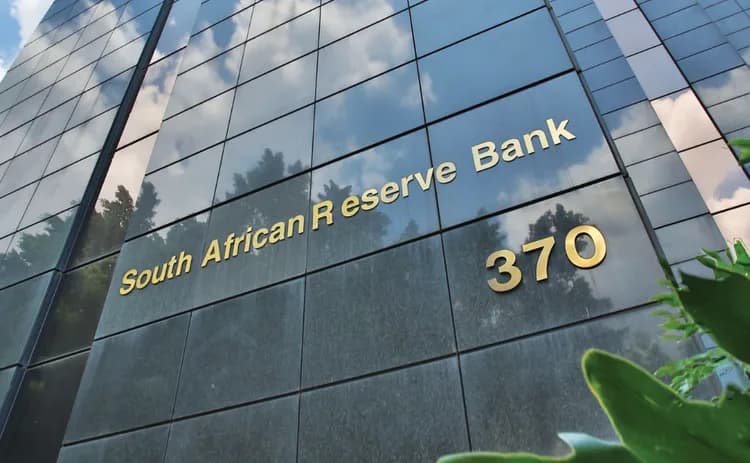
The South African Reserve Bank (SARB) opted to maintain interest rates last week, signaling potential cuts in the coming year.
Before the SARB’s decision, annual headline consumer inflation climbed from 5.4% in September to 5.9% in October, marking the third consecutive monthly increase. This uptick was primarily attributed to higher food prices (8.7%), fuel inflation (11.2%), and housing utilities (5.4%).
Consumer prices experienced a 0.9% rise in October, driven by cost increases in the milk and eggs category (2.5%) due to the bird flu outbreak.
Despite the elevated inflation reading, the SARB’s Monetary Policy Committee (MPC) maintained the repo rate at 8.25%.
“The decision to pause was unanimous, unlike at the previous two meetings when votes were split between a pause and a 25 bps increase,” noted the Bureau for Economic Research (BER).
“The MPC emphasized that risks to inflation remain tilted to the upside.”
The Nedbank Group Economic Unit characterized the unanimous decision to keep interest rates unchanged with a hawkish tone as unsurprising, aligning with global central banks’ actions.
The SARB likely concluded its hiking cycle, as the October inflation figure is unlikely to trigger an upward trend. Pressure on food inflation is expected to ease as the poultry sector improves, and the domestic fuel price benefits from a strengthened rand and lower global oil prices.
“Although the risks to inflation remain on the upside, we expect inflation to ease toward the target’s midpoint in the first half of 2024,” stated the Nedbank Group Economic Unit.
“As a result, we forecast the first cut in March 2024, with four reductions taking the repo rate to 7.25% at the end of 2024.”
Kim Silberman, Economist at Matrix Fund Managers, concurred, stating that interest rates are sufficiently restrictive to guide inflation towards the SARB’s target of 4.5%.
“We expect that the SARB will start to cut rates in line with the US Federal Reserve Bank (Fed) in the first half of 2024. We doubt cuts will materialize ahead of the Fed, as this may negatively impact the value of the USD/ZAR,” Silberman commented.
“The governor explained that SA is forced to keep rates restrictive because of sovereign risks emanating from high levels of public debt, energy supply issues, high administrative prices, and public sector wage inflation, which is not in line with productivity.”
“If these factors were resolved, rates could be structurally lower relative to inflation.”