Digital Twins Without Infrastructure: Can African Mines Make Them Work?
The mining industry’s enthusiasm for digital twins is growing rapidly. Boardrooms, technology vendors and equipment manufacturers increasingly promote simulation platforms that promise to mirror entire operations in real time. From haul trucks and drilling rigs to ventilation systems and processing plants, every component of a mine can theoretically be replicated in a digital environment where
Digital Twins Without Infrastructure: Can African Mines Make Them Work?
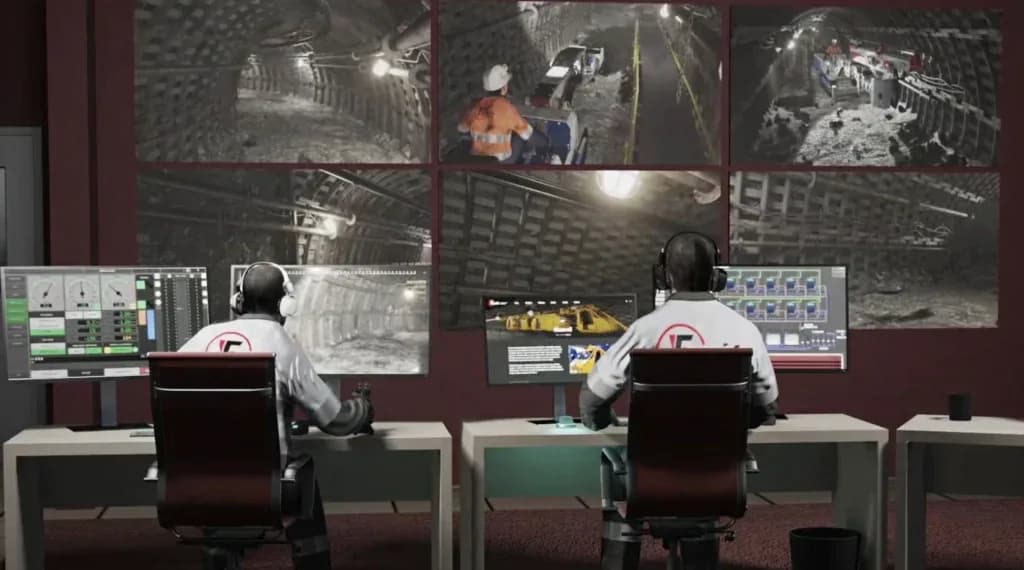
The mining industry’s enthusiasm for digital twins is growing rapidly. Boardrooms, technology vendors and equipment manufacturers increasingly promote simulation platforms that promise to mirror entire operations in real time. From haul trucks and drilling rigs to ventilation systems and processing plants, every component of a mine can theoretically be replicated in a digital environment where performance can be tested, failures anticipated and productivity refined before decisions reach the physical site.
The appeal is obvious. A functioning digital twin allows operators to experiment with blasting sequences, model ore flow, anticipate equipment breakdowns and optimise energy consumption without interrupting production. For mines operating on narrow margins and complex geology, the ability to simulate operational scenarios before implementing them offers clear advantages.
The Infrastructure Gap Beneath the Innovation
But beneath the excitement lies an uncomfortable contradiction. Digital twins depend on something many mining operations across Africa still struggle to secure: stable digital infrastructure.
A digital twin is only as reliable as the data that feeds it. Sensors embedded across fleets, conveyor belts, crushers, drilling equipment and underground networks continuously transmit operational information to simulation platforms. These systems rely on uninterrupted connectivity, reliable power supply and high-capacity data networks to maintain an accurate representation of the physical mine.
Where connectivity falters or electricity supply fluctuates, the digital model begins to drift away from operational reality.
Connectivity and Power Constraints
Large sections of Africa’s mining industry continue to operate in remote regions where communications networks remain uneven and electricity supply is unstable. Even where fibre connectivity reaches mining districts, last-mile infrastructure and redundancy systems are not always robust enough to support the uninterrupted data streams required for real-time simulation.
Major global mining companies have attempted to overcome these constraints through private LTE networks, satellite connectivity and hybrid cloud systems installed directly at mine sites. These investments can stabilise data flows and support advanced automation technologies, but they require significant capital and technical expertise. Smaller operators and junior mining companies seldom have the financial headroom to build similar digital ecosystems.
The consequence is a widening technological gap. Mining companies are encouraged to adopt predictive analytics, autonomous equipment and digital twin platforms while still operating in environments where the foundational infrastructure remains fragile.
This creates an operational paradox: simulation technologies designed to predict and optimise mine performance may be operating on unstable streams of information.
Edge Computing as a Workaround
Mining technology firms are increasingly promoting edge computing as a practical workaround. Instead of sending all operational data to distant cloud platforms, edge systems process information locally at the mine site. Sensors feed into on-site servers that analyse equipment performance, environmental conditions and production metrics before transmitting condensed datasets to central platforms.
This architecture reduces reliance on continuous connectivity while allowing digital twins to remain functional even when networks experience disruptions.
However, edge computing introduces its own complexities. Mines must install secure data centres, deploy cybersecurity protocols and maintain specialised technical teams capable of managing advanced digital systems. For operations already balancing volatile commodity prices, regulatory demands and infrastructure limitations, the cost of building such systems can be difficult to justify.
Skills and Human Capacity Challenges
Another overlooked challenge lies in human capacity. Digital twins require engineers and data specialists who can interpret complex simulation outputs and translate them into operational decisions. Skills shortages across several mining regions continue to slow the adoption of advanced analytics and automation tools.
Despite these barriers, the promise of digital twins should not be dismissed. When properly implemented, simulation technologies can improve ore recovery, streamline haulage logistics, strengthen maintenance planning and reduce safety risks in complex underground environments.
Digital twins can only mirror reality if the systems feeding them remain stable. In environments where connectivity drops, power supply fluctuates and data streams remain inconsistent, the simulated mine may begin to resemble an idealised operation rather than the one engineers manage every day.