Are Hydrogen Haul Trucks Ready for Mining and Are Costs Finally Falling?
The mining industry is under rising pressure to decarbonise, modernise its fleets, and cut the lifecycle costs associated with diesel-heavy operations. Among the technologies gaining global attention, hydrogen-powered haul trucks stand out as one of the most daring and ambitious attempts to rethink mining mobility. But the key questions remain, Is the technology ready, and
Are Hydrogen Haul Trucks Ready for Mining and Are Costs Finally Falling?
The mining industry is under rising pressure to decarbonise, modernise its fleets, and cut the lifecycle costs associated with diesel-heavy operations. Among the technologies gaining global attention, hydrogen-powered haul trucks stand out as one of the most daring and ambitious attempts to rethink mining mobility. But the key questions remain, Is the technology ready, and are hydrogen production costs dropping fast enough to make it viable?
Progress in Hydrogen Truck Development
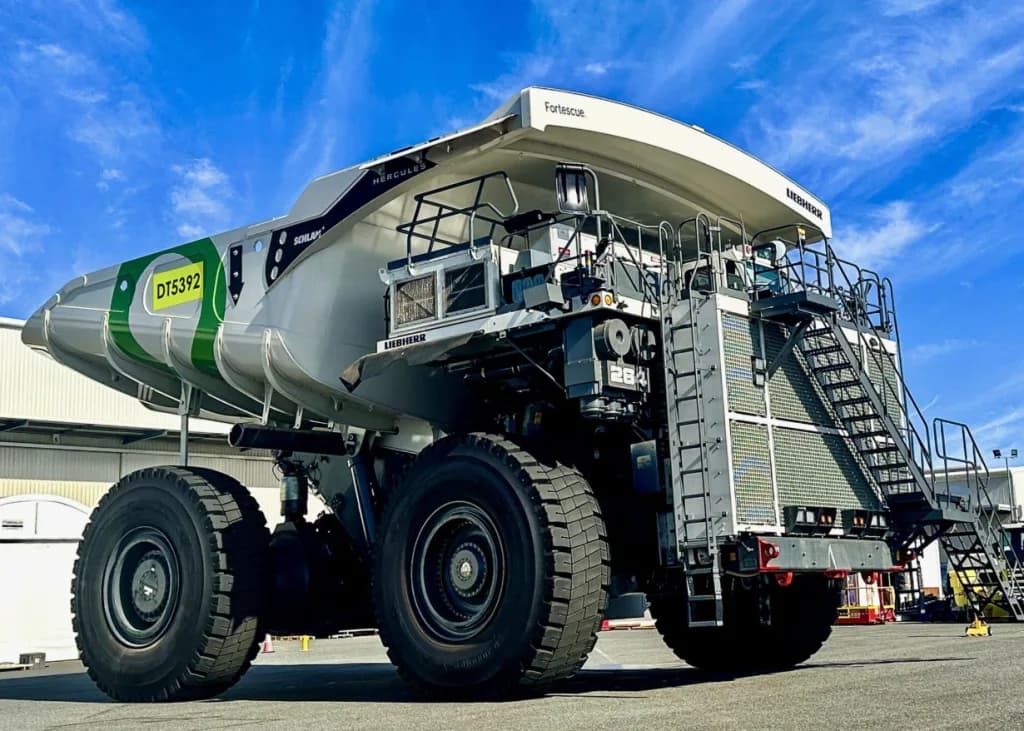
In the past three years, hydrogen-haul-truck innovation has shifted from conceptual blueprints to operational trials. Several major mining houses have already deployed prototype units across active sites. These hybridized machines pairing fuel-cell stacks with high-capacity batteries can haul hundreds of tonnes while eliminating on-site emissions entirely. Early performance indicators are promising, operators report smoother torque delivery, sharper acceleration, and improved thermal stability in demanding underground environments. In some cases, these prototypes are beginning to rival the reliability benchmarks of conventional diesel fleets.
Current Cost Barriers
Still, technical progress alone cannot guarantee widespread adoption. Cost remains the defining constraint. At present, hydrogen-powered haul trucks are more accurately described as pilot-ready than commercial-ready. Mines assessing the technology repeatedly encounter the same hurdle, the high cost of producing clean hydrogen at scale. While electrolyser efficiency has improved and renewable-energy prices have softened, green hydrogen continues to command a noticeable premium particularly in regions lacking dependable renewable capacity or purpose-built hydrogen infrastructure.
Compounding this challenge is the global slowdown in hydrogen investment momentum. Multiple high-profile European and African hydrogen ventures have recently been postponed or scaled back, underscoring how fragile the economics remain. ArcelorMittal, for example, shelved its 2.5 billion Euros initiative to convert two German steel plants to hydrogen despite substantial public subsidies Iberdrola, one of Europe’s largest utilities, also reduced its ambition by cutting its 2030 green-hydrogen production target from 350,000 tons to about 120,000 tons. In Africa, Namibia’s Hyphen project once set to transform the country into a major hydrogen-export hub suffered a significant setback when Germany’s RWE withdrew as an offtake partner in 2025, citing sluggish global demand growth and deteriorating market conditions. These reversals ripple through the mining sector, reinforcing the reality that reliable, competitively priced hydrogen is not yet guaranteed.
Cost Outlook
Despite these hurdles, analysts maintain that hydrogen costs will continue to edge downward throughout the decade, driven by industrial scaling, declining renewable-energy tariffs, and advancements in electrolyser manufacturing. Many projections place green hydrogen within a commercially attractive range by the early 2030s. For now, however, early adopters must absorb higher upfront costs often justified by long-term decarbonisation ambitions, ESG obligations, and a desire to shape the future trajectory of Mine electrification.
Infrastructure Requirements
Infrastructure remains a formidable stumbling block. To operate a hydrogen-haul fleet, a mine requires dependable on-site hydrogen production or secure delivery channels, high-pressure storage systems, refueling infrastructure and specialised maintenance capability. Only a small number of operations have begun assembling this ecosystem, leaving most mines years away from true readiness.
Hydrogen-powered haul trucks are advancing faster than many anticipated, but not yet at a pace that enables mainstream commercial uptake. Their future hinges on accelerated cost reductions, supportive policy frameworks and continued performance improvements in fuel-cell technology. For now, they offer a compelling glimpse of where mining mobility is heading even if full-scale transformation remains on the horizon.
Read more About Hydrogen Haul Trucks HERE