Green Hydrogen Faces Harsh Realities Amidst High Expectations
The introduction of green hydrogen into the industrial engineering sector came with immense promise as the future of green industrialization. However, current developments paint a much less optimistic picture. Green hydrogen has yet to deliver on its promise of large-scale decarbonization in sectors such as steelmaking and long-distance transport. Economic and logistical challenges continue to
Green Hydrogen Faces Harsh Realities Amidst High Expectations
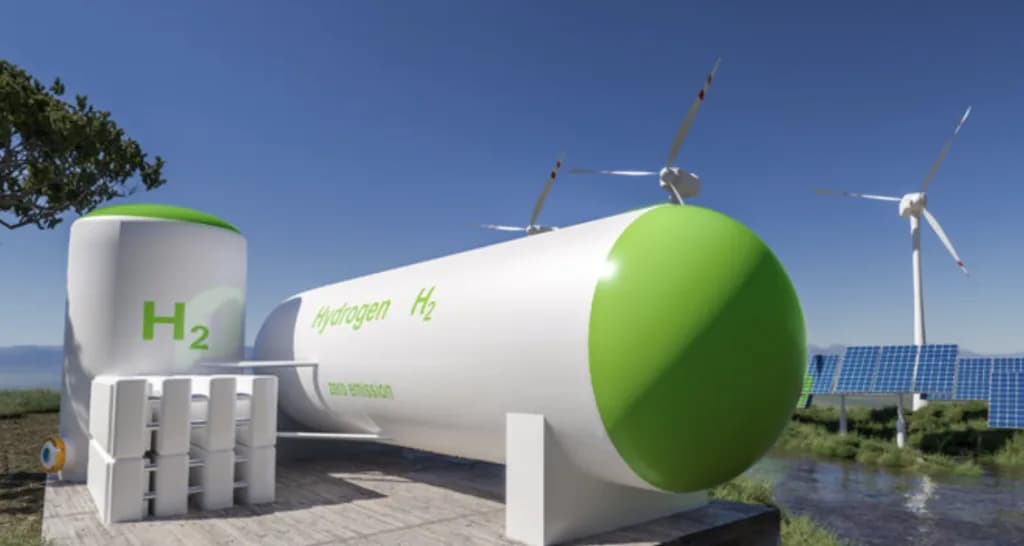
The introduction of green hydrogen into the industrial engineering sector came with immense promise as the future of green industrialization. However, current developments paint a much less optimistic picture. Green hydrogen has yet to deliver on its promise of large-scale decarbonization in sectors such as steelmaking and long-distance transport. Economic and logistical challenges continue to erode this early optimism. High costs, limited demand, and major infrastructure gaps have slowed adoption dramatically, forcing companies and governments to reassess their strategies.
A Gap Between Vision and Viability
Green hydrogen produced through electrolysis powered by renewable energy was positioned as an ideal solution for industries that resist electrification. But actual implementation has proven far more costly than expected. In Europe, for instance, green hydrogen projects set ambitious goals, yet progress has fallen far short. Jun Sasamura of Westwood Global Energy reports that only 12 GW of the European Union’s 40 GW hydrogen production target for 2030 is likely to materialize.
Many companies have paused or canceled their projects. By the end of 2024, roughly 20% of hydrogen projects in Europe had either been delayed or terminated. Countries across Asia and Australia mirrored this trend despite generous government subsidies.
Inflated Expectations and Unmet Demand
Industry leaders now concede that early enthusiasm may have outpaced reality. “Green hydrogen was an inflated expectation that has turned into a valley of disillusionment,” said Miguel Stilwell d’Andrade, CEO of Portugal’s EDP. Although Spain and Portugal have pledged €400 million in subsidies, demand has remained stagnant.
Ana Quelhas, EDP’s head of hydrogen, explained that several advanced projects have stalled simply due to a lack of buyers. Similarly, Iberdrola, another major Spanish energy player, has paused expansion plans for the same reason.
Too Expensive to Compete
Cost remains one of the most significant barriers. Green hydrogen currently costs at least three times more than natural gas for power generation and at least double the cost of grey hydrogen, which relies on fossil fuels. Minh Khoi Le of Rystad Energy emphasizes that this price gap makes widespread adoption economically unfeasible.
For companies like Germany’s Dirostahl heavily dependent on natural gas to run industrial furnaces the green alternative is nowhere near practical. Offers exceeding €150 per MWh contrast sharply with the €30–35 per MWh cost of natural gas. “You might not want to call it economic suicide, but in practice it would be just that,” noted CEO Roman Diederichs.
Governments Rethink Hydrogen Strategies
Rising costs and stagnant demand are now prompting governments to scale back original hydrogen ambitions. France has reduced its 2030 electrolysis target by more than 30%. Portugal slashed its goal by 45%, while Italy diverted over €600 million from hydrogen to biomethane. The Netherlands has also reduced investment, pivoting toward nuclear power and battery development.
Australia faces similar setbacks. Despite pledging over A$8 billion, 99% of green hydrogen projects remain stuck in planning or approval stages, according to Rystad Energy.
Infrastructure Challenges Add to the Burden
Even if cost and demand problems are resolved, hydrogen’s physical properties introduce major infrastructure hurdles. Its volatility requires storage under high pressure or at cryogenic temperatures, which renders most existing gas pipelines incompatible. New systems must be built from the ground up.
Spain’s plan to construct a 2,600 km hydrogen network linking to northwest Europe aims for completion by 2030, yet authorities already anticipate delays of two to three years.
Despite all these setbacks, experts have not written off green hydrogen. Forecasts suggest costs could drop by 30% to 40% over the next 10 to 15 years as technology evolves and economies of scale take effect. Until then, however, green hydrogen will likely remain stuck in a holding pattern, waiting for the industry to catch up with its ambitions.